Composer Category: Classical

1730 – 1820
Marked by clarity, balance, and formality, with the symphony, sonata, and string quartet as popular forms.

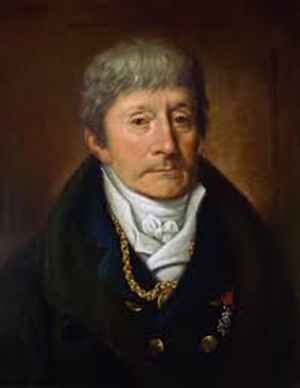
  • Salieri, Antonio

    Salieri, Antonio

    Antonio Salieri was an Italian composer and teacher of the classical period, born on August 18, 1750, in Legnago, south of Verona, in the Republic of Venice. He is known for his significant contributions to the development of late 18th-century opera and was a pivotal figure in the Viennese classical music scene.

    Salieri’s career was marked by his role as a teacher and mentor to many prominent composers, including Franz Liszt, Franz Schubert, Ludwig van Beethoven, Anton Eberl, Johann Nepomuk Hummel, and Franz Xaver Wolfgang Mozart. He was appointed the director of the Italian opera by the Habsburg court in 1774 and held this position until 1792. During his tenure, he dominated Italian-language opera in Vienna and also wrote works for opera houses in Paris, Rome, and Venice.

    His best-known work is the French opera “Tarare” (1787), which was later translated into Italian as “Axur, re d’Ormus.” This opera was preferred by the Viennese public over Mozart’s “Don Giovanni”2. Salieri’s last opera was performed in 1804, after which he devoted himself to composing sacred music.

    Salieri’s relationship with Wolfgang Amadeus Mozart has been a subject of much speculation. Despite rumors that they were bitter rivals and that Salieri had poisoned Mozart—a claim that has been proven untrue—historical evidence suggests that they were at least mutually respectful peers.

    Antonio Salieri passed away on May 7, 1825, in Vienna. His legacy includes a vast body of work that continues to be studied and performed today.

  • Haydn, Franz Joseph

    Franz Joseph Haydn, often referred to as Joseph Haydn, was an Austrian composer born on March 31, 1732, in Rohrau, Austria. He passed away on May 31, 1809, in Vienna12. Haydn is celebrated as one of the most prominent figures in the development of the Classical style in music during the 18th century and is hailed as the “Father of the Symphony” and the “Father of the String Quartet” for his substantial contributions to musical form.

    Haydn spent much of his career as a court musician for the wealthy Esterházy family at their remote Eszterháza Castle. This isolation from other composers and trends in music led him to become highly original in his work. Despite this, his music circulated widely, and for much of his career, he was the most celebrated composer in Europe.

    He was a friend and mentor to Mozart, a tutor to Beethoven, and the elder brother of composer Michael Haydn. His life’s work includes the development of chamber music such as the string quartet and piano trio, and his influence on later composers was profound.

    Haydn’s early life was marked by hardship. He was born to Mathias Haydn, a wheelwright, and Maria, née Koller, who had worked as a cook in the palace of a local aristocrat. Despite his parents’ lack of formal musical training, they were musically inclined, and Haydn’s father taught himself to play the harp. Recognizing their son’s musical talent, Haydn’s parents accepted a proposal from their relative Johann Matthias Frankh, the schoolmaster and choirmaster in Hainburg, to apprentice young Haydn in music.

    Haydn’s musical journey began in earnest when he moved to Vienna at the age of eight to serve as a chorister at St. Stephen’s Cathedral. Although he received little formal instruction in music theory, he acquired a vast practical knowledge of music through constant performances2.

    Throughout his life, Haydn composed numerous works, including the famous “London Symphonies,” “Paris Symphonies,” “The Creation,” and “The Seasons.” His music is characterized by its clarity, precision, and wit, and it laid the groundwork for what would become the standard forms of Classical music.

The Music Realm
Privacy Overview

This website uses cookies so that we can provide you with the best user experience possible. Cookie information is stored in your browser and performs functions such as recognising you when you return to our website and helping our team to understand which sections of the website you find most interesting and useful.