Archives: Composers

  • Mason, Douglas

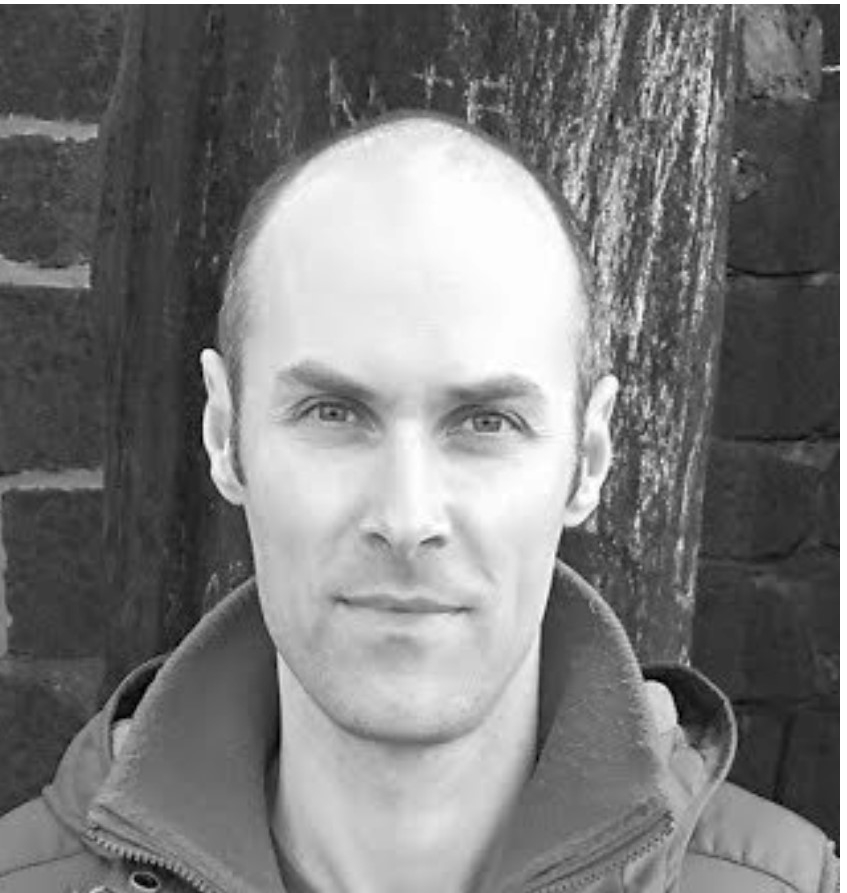
    Mason, Douglas

    Douglas began his musical training as a chorister in Gloucester Cathedral Choir under John Sanders. He subsequently read music at Durham University, and went on to train as a music teacher at Leeds University, also singing professionally as a lay clerk in the Choir of Leeds Parish Church at this time.

    As a composer, Douglas focuses on choral works in particular, and he has also written and arranged music for schools. As a performer Douglas has sung on numerous television and radio broadcasts and appeared on recordings for several labels, including Abbey, Priory and ASC records. For several years he was also a member of the William Byrd Singers directed by Stephen Wilkinson.

  • Pergolesi, Giovanni Battista

    (1710-1736)

    An Italian Baroque composer, violinist and organist, is considered to be one of the greatest Italian musicians of the first half of the 18th-century and is one of the most important representatives of the Neapolitan school. Although he died at the age of 26, he composed a wealth of music in different genres, notably operas, sacred music and instrumental music, much of which has survived to the present day.

  • Bantock, Granville

    1868-1946

    A prolific British composer, writing in most genres, alongside a successful career as a conductor and Professor of Music. He became Principal of the Birmingham and Midland Institute School of Music in 1900, succeeded Edward Elgar as Peyton Professor of Music at University of Birmingham (1908-34), and was influential in founding the City of Birmingham Orchestra (later the City of Birmingham Orchestra).

    Much of Bantock’s orchestral music has been recorded in recent years but is unjustly neglected today and certainly worthy of revival. Impressive and monumental symphonies brim with beautiful melodies and alongside magnificent orchestral textures and Granville Bantock may be the greatest unknown composer today.

  • Ratez, Emile

    Born: November 5, 1851, in Besançon, France.
    Died: May 19, 1934, in Lille, France.

    A French composer, conductor, and violist who played a significant role in the music scene during the late 19th and early 20th centuries. Though not widely known today, he was an active figure in French musical life, particularly in the realm of chamber music and compositions for wind instruments.

    Ratez was educated at the Conservatoire de Paris, where he studied composition under the tutelage of renowned composers such as Jules Massenet and César Franck. He had a solid foundation in both theory and performance, which laid the groundwork for his diverse career.

    He held important musical positions, including that of director of the Conservatory of Lille from 1881 until his death in 1934. During his long tenure, he had a significant influence on the musical education in the region and fostered the development of numerous students.

    Ratez composed in a variety of genres, producing a substantial body of works for chamber ensembles, orchestra, vocal music, and wind instruments. Though he wrote operas and symphonic music, it is his chamber music and wind pieces that have garnered more attention.

    Ratez was a prolific composer of chamber music, and his works in this genre show a refined style that aligns with the French Romantic tradition.

    Ratez composed several string quartets that demonstrate his skill in counterpoint and his ability to blend lyricism with structural clarity.

    His compositions for wind instruments are particularly well-regarded. One of his most popular pieces is the “Divertissement for Wind Quintet, Op. 6,” which showcases his fine understanding of wind instrument textures and timbres. His wind music is still performed today, particularly in educational contexts.

    Ratez also wrote works for orchestra, including symphonies and concertos, although they are less frequently performed today. His orchestral style, like his chamber music, shows a mastery of form, and his works were admired for their elegance and craftsmanship during his lifetime.

    He also composed choral works and songs, which were often performed in local concerts and festivals. His vocal music tends to reflect the French art song tradition, with its emphasis on lyricism and careful word setting.

    Ratez’s music is typically characterized by its clarity of form, melodic inventiveness, and a strong sense of lyricism. He was influenced by the broader French Romantic tradition, and his works often exhibit a refined elegance, a hallmark of French composers of the time. He drew on traditional forms but infused them with a rich harmonic language that was modern for its time, though not avant-garde.

    Though Émile Ratez is not widely recognized today, his chamber music, particularly his works for wind instruments, continues to be performed and appreciated, especially in educational settings and by wind ensembles. His contributions to the musical life in Lille and his long-lasting influence as a teacher and conductor in the region further cement his place in French musical history.

    Ratez’s music, though overshadowed by more famous contemporaries, is still admired for its technical craftsmanship and its contributions to French Romantic chamber and wind music.

  • Capuzzi, Antonio

    Born: August 1, 1755, in Brescia, Italy.
    Died: March 28, 1818, in Bergamo, Italy.

    An Italian composer, violinist, and conductor, best known for his contributions to classical string music, particularly for the double bass. Though not as widely remembered as some of his contemporaries, Capuzzi’s works, especially his Concerto for Double Bass in D major, have remained popular among double bassists and continue to be performed today.

    Capuzzi was an active musician during the Classical period, a time when the styles of Haydn, Mozart, and Beethoven dominated the musical landscape. He worked in Venice, where he held positions as a violinist and conductor. Capuzzi had a successful career as a violinist and eventually became Kapellmeister at the Teatro San Samuele in Venice, one of the major opera houses of the time.

    Capuzzi’s compositions include works for a variety of instruments and ensembles, but he is primarily remembered for his works for string instruments, including his concerto for double bass.

    His most famous work today is his Concerto for Double Bass in D major, particularly for double bassists. The concerto, written in a lively and elegant Classical style, is known for its technical demands and lyrical qualities. It remains a staple of the double bass repertoire, especially for students and professionals alike. The piece showcases the instrument’s capabilities, with flowing melodies, lively rhythms, and passages requiring dexterity and control.

    Capuzzi also wrote violin concertos, string quartets, and symphonies, though many of these works have not achieved the same level of recognition as his double bass concerto. Some of his other chamber works and symphonies are also reflective of the Classical style, with balanced forms and clear, elegant melodies.

    Capuzzi’s music is rooted in the Classical style, marked by clarity, symmetry, and elegance. His compositions often feature lively rhythms and tuneful melodies, typical of the music of his time. Like many of his contemporaries, Capuzzi wrote music that was both enjoyable to play and accessible to a wide audience, with an emphasis on graceful, lyrical passages.

    Capuzzi’s Concerto for Double Bass in D major remains his most enduring work, and it has become an important part of the double bass repertoire. Even though his overall output has not entered the standard repertoire in the same way as the works of composers like Haydn or Mozart, Capuzzi’s music has still found its place, particularly among double bass players. His technical understanding of string instruments, especially the double bass, ensures that his works remain relevant in the study and performance of Classical string music.

    Today, Capuzzi is fondly remembered by the double bass community for giving their instrument one of its most beloved concertos from the Classical period.

  • Nölck, August

    Born: February 9, 1862, in Lübeck, Germany.
    Died: December 12, 1928, in Leipzig, Germany.

    A German cellist, composer, and teacher who made significant contributions to the repertoire of the cello. While he may not be as widely known as some of his contemporaries, Nölck was a prolific composer, particularly for his instrument, and his works are still appreciated by cellists today.

    Nölck’s career was centered around his dual role as a performer and composer, with a special focus on the cello. He studied at the Leipzig Conservatory, one of the leading musical institutions of the time, which helped him develop his skills as both a performer and composer.

    Nölck composed a substantial body of works, with a particular emphasis on the cello, contributing a large number of pieces to the instrument’s solo and chamber repertoire. His compositions are highly regarded for their technical proficiency and expressive qualities, making them ideal for cellists at different skill levels, from students to professional performers.

    His works for cello include etudes, concert pieces, and character pieces, many of which are still performed today. Some of his pieces, such as his “Concertinos” and “Salonstücke” (salon pieces), remain popular among cellists, especially in academic settings.

    Nölck’s compositions often blend lyricism with technical exercises, making them valuable not just as performance pieces but also as pedagogical tools for advancing a cellist’s technique. His works provide a bridge between study pieces and more demanding concert repertoire.

    Nölck’s music fits within the late Romantic tradition. His compositions for cello are marked by a melodic richness, a flair for expressiveness, and the use of virtuosic elements that showcase the technical capabilities of the instrument. While he composed for other instruments as well, it is his works for the cello that stand out, balancing accessibility with technical challenge.

    Although Nölck’s name may not be as prominent as some of the great Romantic composers, his contributions to the cello repertoire are still valued, especially by cellists looking for engaging and technically challenging music. His works continue to be part of the teaching repertoire for students, and he holds a respected place in the world of cello music.

    Nölck’s compositions helped enrich the repertoire for his instrument, ensuring that future generations of cellists would have pieces that both entertain and develop their skill.

  • Laska, Gustav

    Born: September 29, 1847, in Brno, Moravia (modern-day Czech Republic).
    Died: February 16, 1928, in Vienna, Austria.

    A Czech composer, conductor, and bass singer. Though not as widely known as some of his contemporaries, he made notable contributions to the music scene in the late 19th and early 20th centuries. Láska’s career was multifaceted, and his involvement in both composition and performance highlights his versatility as a musician.

    Láska’s musical life was primarily focused on his work as a bass singer and conductor. As a performer, he gained prominence for his deep bass voice, which led him to appear in numerous operatic and concert performances across Europe. His performances were well-regarded in both Czech lands and abroad, particularly in Vienna, where he spent a large part of his career.

    He also worked as a conductor in various musical institutions. Láska’s conducting roles allowed him to engage closely with different types of music, from opera to orchestral works, which influenced his own compositional style.

    Though Láska was primarily known as a performer and conductor, he did compose several works. However, much of his compositional output has been overshadowed by his career as a bass singer and conductor. His compositions were likely in a Romantic style, typical of the era, drawing on the musical traditions of his Czech heritage.

    His works, though less prominent today, contributed to the rich cultural scene in Vienna and the broader Austro-Hungarian Empire, where many Czech musicians made their mark.

    Gustav Láska may not be as well-remembered as other composers of his time, but his contributions to operatic performance, conducting, and composition, particularly within the Viennese musical scene, helped to maintain and develop the traditions of 19th-century classical music. His career also represents the strong connection between Czech musicians and the wider European musical world, particularly in Vienna, which was a major center of classical music during his lifetime.

  • Chandler, Mary

    Mary Chandler was born in Kent on May 16th 1911. She studied music privately and at the Blackheath Conservatoire of Music. Her teachers included Harry Farjeon (composition), Margaret Eliot and Leon Goossens (oboe) and Harold Craxton (piano).

    In the early 1930s she studied English at Oxford University and Education at London University. She then taught English in London schools until 1944. From 1944-58 she was principal oboist with the City of Birmingham Symphony Orchestra with whom she also appeared as oboe and piano soloist and as composer.

    After a short period of freelancing, mainly with her own group the Mercian Trio (flute, oboe and piano), in 1960 she took up an appointment as Area Director of the Kent Music School.

    She retired in 1971 to concentrate on composition, Associated Board examining and organising the Cotswold Baroque Trio (soprano, violin and spinet).

    Her works have been performed and broadcast by artists such as Leon Goosens, Dinah Demuth, Ian Partridge and Philip Jones. They include concertos, suites, chamber music, piano works and both solo and choral vocal music. Her music has been published by Novello and Phylloscopus and currently by Clifton.

  • Lamb, Peter

    Peter Lamb (1925-2013.)was born in London and studied composition at Trinity College of Music, subsequently with Arthur Benjamin, and was awarded a Fellowship of Trinity College for his String Quartet No.1.

    Peter combined a busy career as a professional composer and in music administration, initially working for two international record companies before an appointment as Deputy Manager of Bournemouth Symphony Orchestra. He worked on programme building with the eminent conductor Constantin Silvestri, and also helped to establish Bournemouth Sinfonietta. For ten years he was Head of Music at Peter Symonds’ College in Winchester and, prior to his retirement, lectured at the University of Southampton for over eight years.

    His music has been performed worldwide and his compositional style combines a quintessentially English quality with a clarity of line and expression, incorporating a rich and varied harmonic palette, producing music of strong character and distinction.

    He left a signicant mark on the contemporary classical scene, especially with his dedication to the flute and chamber music. One of his standout works is the Flute Sonata which has been praised for its lyridcal beauty and technical demands. He also composed pieces like the Sonatina for Flute and Piano and the Concerto for Viola and String Orchestra, showcdasing his ability to blend melody and complex harmony seamlessly.

  • Jolliffe, Edmund

    Jolliffe, Edmund

    Born in 1976, Edmund Jolliffe studied music at Oxford University (1994-97) and completed a Masters in Film Composition at the Royal College of Music (1998-99), studying with Joseph Horovitz. He also studied on the Advanced Composition Course at Dartington International Summer School with Pavel Novak in 2004, supported by the RVW Trust.

    Edmund Jolliffe’s music embraces a huge range of styles from contemporary and classical to songs for shows. He writes for television and theatre but is also established and recognised as a concert composer.

    He has written television music for all the terrestrial channels and many of the satellite channels, and his concert works have been performed by many leading musicians and ensembles. Alongside his career as a composer, Edmund Jolliffe is also a composition tutor at Trinity College of Music (Junior Department) and teaches at Westminster Under School, where he is Assistant Director of Music.

The Music Realm
Privacy Overview

This website uses cookies so that we can provide you with the best user experience possible. Cookie information is stored in your browser and performs functions such as recognising you when you return to our website and helping our team to understand which sections of the website you find most interesting and useful.