Archives: Composers

  • Goddard, Mark

    Goddard, Mark

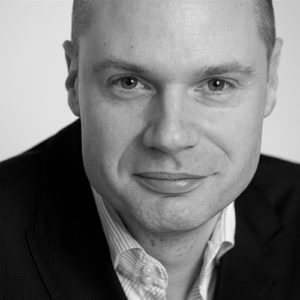
    Mark Goddard, born in 1960, is a distinguished composer and musician. He studied at the Royal Academy of Music (RAM), where he earned the GRSM (hons) and LRAM (piano) degrees. During his time at RAM, he received nine awards for composition, including the prestigious Eric Coates Prize and the Capital Radio Prize

    After completing his studies, Mark married Pat Goddard, a fellow RAM student and bassoonist. They worked in Oxford for ten years, where Mark composed, arranged, and conducted orchestras and choirs. In 1989, they founded Spartan Press, which they later relocated to the Scottish Highlands12.

    In 2018, Mark and Pat sold Spartan Press and moved to Bristol, where they established Clifton Edition Limited in 2023. Mark was honored with the Associate of the Royal Academy of Music (ARAM) in 2015 for his contributions to the music profession

  • Debussy, Claude

    Born Achille-Claude Debussy on August 22, 1862, in Saint-Germain-en-Laye, he became one of the most influential composers of the late 19th and early 20th centuries. Surrounded by the sounds of his modest family (his father ran a china shop which, alas, didn’t quite take off) and his mother a seamstress. Debussy’s true calling lay beyond porcelain and needles and he entered France’s prestigious Conservatoire de Paris at the tender age of ten, where he studied pianoand gained a reputation as a bit of a rebel causing some consternation amongst his professors at the Conservatoire with his unconventional ideas. But Debussy persisted, and it took him years to find his style

    Debussy is often associated with Impressionism, although he didn’t like being labelled as such. His music, like Monet’s brushstrokes, captured fleeting moments, light, and atmosphere. His orchestral works shimmer: “Prélude à l’après-midi d’un faune” (a languid afternoon with a mythical faun), the dreamy “Nocturnes”, and the evocative “Images”. These weren’t just notes; they were watercolors in sound.

    His works on the piano include his “Images” suite — two books, each with three pieces — and takes us on a journey from the rippling reflections in water (“Reflets dans l’eau”) to a tribute to the Baroque master Rameau (“Hommage à Rameau”), and even golden fish darting through musical currents (“Poissons d’or”).

    Debussy’s music was a rebellion against Wagner’s grand operatic waves and the German tradition. He sought new shores, and his symphonic sketches danced like sun-kissed waves in “La mer”. His piano works—24 Préludes and 12 Études—were like secret gardens of harmony. He set poetry to music, his notes caressing verses from various poets, including his own. He Influenced composers From Béla Bartók to Olivier Messiaen, George Benjamin to jazz pianist Bill Evans

  • Boulanger, Lili

    Marie-Juliette Olga “Lili” Boulanger (French: [maʁi ʒyljɛt lili bulɑ̃ʒe]) was born on August 21, 1893, in the 9th arrondissement of Paris, France. She left an indelible mark on music during her tragically short life. Lili’s musical talent bloomed early. By the age of two, she was already singing melodies by ear—a little musical oracle in the making! Her parents, both musicians, recognized her gift and encouraged her musical education. Her mother, Raissa Myshetskaya, a Russian princess, married Ernest Boulanger, her Paris Conservatoire teacher and a Prix de Rome winner. Lili’s grandfather, Frédéric Boulanger, had been a noted cellist, and her grandmother, Juliette, a singer. Music flowed through her veins. Lili’s older sister was none other than the remarkable composer and composition teacher, Nadia Boulanger, Lili’s devoted friend, championed her talents. They shared not only sisterhood but also a deep musical bond.

    In 1912, Lili competed in the prestigious Prix de Rome, but illness struck during her performance, causing her to collapse. Undeterred, she returned in 1913 at the age of 19 and achieved a historic victory: Lili became the first woman to win the prize with her cantata “Faust et Hélène”. The text was based on Goethe’s Faust. Her compositions resonated, and she gained a contract with the music publisher Ricordi.

    Lili played multiple instruments; piano, violin, cello, and harp. She was a true Renaissance woman of sound. Her works, including choral motets and cantatas, shimmered with emotion and innovation.

    Lili’s brilliance was cut short. She battled tuberculosis and passed away on March 15, 1918, in Mézy-sur-Seine, Yvelines, France, at the tender age of 24. Yet her legacy endures. Her compositions continue to inspire, reminding us that even brief lives can create eternal melodies.

  • Parsons, Robert

    c. 1535 – 25 January 1572

    Born during the Tudor period, Parsons composed against the backdrop of England’s shifting religious landscape. His music danced through the reigns of King Edward VI, Queen Mary I, and Queen Elizabeth I. Church Music Maestro: Parsons’s claim to fame lies in his compositions of church music. He wove intricate harmonies that resonated within sacred spaces. His earliest known work, the First Service, set text from the 1549 Prayer Book of King Edward VI. Imagine those notes echoing through ancient stone cathedrals—the dawn of English-language liturgy. This service included canticles for Morning and Evening Prayer, a Credo, and Responses for the Holy Communion service. Parsons was actively composing from at least the early 1550s.

    Parsons’s choral motets were his pièce de résistance. He mastered polyphonic writing, skillfully weaving voices like threads in a rich fabric. His setting of Ave Maria remains a gem—a celestial tapestry of devotion, especially the anthem “Deliver me from mine enemies”—a plea set to harmonies that touched souls.

  • Palestrina, Giovanni Pierluigi da

    c. 1525–2 February 1594

    Born somewhere between 3 February 1525 and 2 February 1526 (we like to keep composers on their toes with those date uncertainties!), Palestrina was a central figure in the world of late Renaissance music. He stands tall as the leading composer of late 16th-century Europe, alongside luminaries like Orlande de Lassus and Tomás Luis de Victoria.

    Palestrina’s legacy rests primarily on his masses and motets. He composed over 105 masses and a staggering 250 motets—a testament to his prolific output. But it’s not just about quantity; it’s about quality. Palestrina’s compositions had a profound influence on both sacred and secular music across Europe. His mastery lay in counterpoint, that intricate dance of voices interweaving harmoniously. He wove melodies together like a skilled artisan, creating intricate tapestries of sound.

    Palestrina was the central representative of the Roman School, a group of composers who left an indelible mark on music during the late Renaissance. His compositions embodied the ideals of this school: clarity, balance, and reverence for the sacred.

    Born in the town of Palestrina (near Rome), he grew up in the Papal States. His early musical education took place at the Basilica of Santa Maria Maggiore in Rome, where he learned both literature and music. He studied under various masters, including the Huguenot Claude Goudimel and the influential Orlando di Lasso. In 1551, Pope Julius III appointed him maestro di cappella (musical director) of the Cappella Giulia at St. Peter’s Basilica. His first published compositions—a book of Masses—were dedicated to Pope Julius III.

    Palestrina’s success lay in reconciling the functional and aesthetic aims of Catholic church music during the post-Tridentine period.

  • Tallis, Thomas

    c. 1505 – 23 November 1585)

    Tallis was an influential composer during the High Renaissance period. His compositions primarily focused on vocal music, and he holds a special place in the anthologies of English choral works. Born around the early 16th century (historians estimate between 1500 and 1520), Tallis lived through the reigns of several English monarchs, including Henry VII, Edward VI, Mary I, and Elizabeth I. Unfortunately, details about his early life and origins remain elusive. We know very little about his family, childhood, or upbringing. However, it’s believed that he hailed from Kent, England, as both the surnames “Sayer” and “Tallis” have strong connections to that county.

    As a young musician, Tallis may have sung in the Chapel Royal, the same institution where he later joined as an adult. His musical journey might have included time at the Benedictine Priory of St. Mary the Virgin and St. Martin of the New Work in Dover.

    Throughout his career, Tallis served as a composer and performer at the English court, working for successive monarchs. He skillfully adapted his compositions to suit the preferences of each ruler, making him a versatile artist. Interestingly, despite the religious controversies of his time, Tallis remained an “unreformed Roman Catholic.” His music transcended these conflicts, leaving a lasting impact.

    He stood out among his contemporaries, including other notable composers like Christopher Tye and Robert White. Ernest Walker, an author and composer, praised Tallis for his versatility and consistent handling of material. Notably, Tallis taught other musicians, including William Byrd and Elway Bevin.

    His legacy endures, and he is rightfully celebrated as one of England’s greatest composers.

  • Keyper, Franz

    In his history of the Danish Royal Orchestra 1648-1848, Carl Thrane writes that Franz Keyper was born in Neurode, County Glatz, Silesia, with no date of birth suggested, but in the Danish census of 1801 he is listed as being 45 years old, with the occupation ‘Hofviolon’ (Court Musician), and 1756 as a possible year of birth is probably correct.

    Thrane includes little information about Keyper’s life before he arrived in Copenhagen but does state that he was intended to be a monk and that he received much of his musical education in a monastery. After dancing at his sister’s wedding he faced punishment and fled the monastery, entering the service of a unnamed Polish nobleman.

    Apparently Keyper did not enjoy working for the nobleman and preferred to tour and arrived in Copenhagen in the spring of 1788. His playing was admired and he stayed on as part of the court orchestra, where he was promoted following the death of double bassist Gottfried Schreiber.

    In 1788, Keyper became a touring musician and eventually arrived in Copenhagen. He settled there and joined the court orchestra, where he contributed significantly to the repertoire for double bass.

    Keyper’s compositions for double bass include seven concertos. These concertos are notable for their unique virtuosity and their adherence to classical idiom and structure. Interestingly, Keyper had an advanced understanding of the geography of an instrument tuned in fourths, and he made imaginative use of harmonics1.

  • Franck, Cesar

    Born in Liège in 1822 and died in Paris in 1890.

    FRanck was an important composer, organist and teacher of his day and from the early 1870s was organ professor at the Paris Conservatoire. Franck was a prolific composer, writing symphonic, chamber and keyboard works, particularly for the organ, and much of his music has remained in the repertoire into the 21st-centrury.

  • Mulligan, Ruth

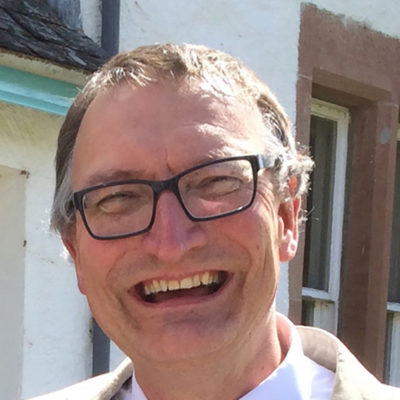
    Ruth Mulligan is a music teacher, piano accompanist and composer based in Cheltenham, England. She plays the viola, performing regularly with the Cheltenham Symphony Orchestra and participates in a local choir.

    She completed her B.Mus (hons) at the University of Wales, Bangor and her PGCE in secondary music at Oxford Brookes University. Ruth has composed and arranged Christmas choral music for children and adults and has been directing choirs since she was 17. She has written 2 musical nativity plays which have been performed at the school attended by her 6 children, where she has also directed a choir since 2007.

    In 2024, she was the musical director for an Easter passion play which was performed in Cheltenham, for which she wrote 10 songs, directed a children’s choir, a community choir for adults, and a community orchestral ensemble. Ruth is passionate about music education and has developed an initiative which allows children to access free instrumental hire and lessons.

  • Wylkynson, Robert

    Robert Wylkynson [Wilkinson] (c.1450-1515?) was at Eton Chapel from 1496 to 1515, first as parish clerk and then from 1500 as master of the choristers. His nine-part Salve Regina and his Apostles’ Creed (Jesus Autems Transiens) for 13 voices are the last entries in the manuscript and possibly were copied by him. Wylkynson’s work has suffered severe losses, for only three of his eight works survive complete; but what remains shows Wylkynson to have been an extremely ambitious composer and a more than competent one.

    All that remains of his work is an early 16th-century manuscript in the Eton College Library. The index shows that it originally contained 97 compositions, and of the 43 which remain 4 are by Wylkynson.

The Music Realm
Privacy Overview

This website uses cookies so that we can provide you with the best user experience possible. Cookie information is stored in your browser and performs functions such as recognising you when you return to our website and helping our team to understand which sections of the website you find most interesting and useful.