Archives: Composers

  • Wilson, Jeffery

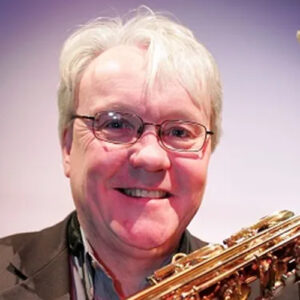
    Wilson, Jeffery

    Jeffery Wilson is one of the country’s foremost composers and educators in music, especially in the field of jazz. He studied composition at the Royal College of music with John Lambert and Herbert Howells, later with Aladar Majorossy, Gordon Jacob and Olivier Messiaen.

    From 1986 until recently he was visiting lecturer in composition, improvisation and saxophone at the Utrecht Conservatorium. He is a professor at the Guildhall School of Music and Drama’s Junior School, supervisor on the music faculty of Cambridge University and advisor on matters Jazz and Saxophone for Trinity Guildhall exams.

    He has been commissioned by dozens of top artists in both classical and jazz fields, and a growing number of his works are available on CD.

  • Tulacek, Rudolf

    Czech bassist-composer, Rudolf Tuláček (1885-1954) studied at Prague Conservatoire with František Černý, was solo double bass of Zagreb Philharmonic Orchestra for many years and in 1937 moved to Brno (Czech Republic) where he was appointed Professor of double bass at the Academy of Music. Tuláček wrote a number of lyrical and characteristic works for double bass at the beginning of the 20th-century and wrote in a tonal and late-romantic style, reminiscent of much salon music of the time.

  • Wagenhauser, Wolfgang

    Wolfgang Wagenhäuser – pianist, organist, composer – was born in Frankfurt am
    Main (Germany) in 1953. At his insistence the four-year-old Wolfgang asked his
    father to taught him piano and theory, and his first concert appearance was at the
    age of five. He was organist in his hometown from the age of nine and, as a 13-year-
    old gave concerts with his own improvisations. He won various first prizes in youth
    competitions, followed by concert invitations in Poland, Hungary and Austria.

    Wolfgang Wagenhäuser studied with Wendelin Rückel and Norbert Brecht and
    subsequently studied piano with Gisela Sott and Leonard Hokanson at the Frankfurt
    University of Music, at the same time studying composition with Kurt Hessenberg
    and Hans – Dieter Resch. In 1974 he was the winner of the German University
    Competition and in 1980 and 1981 won first prize at international competitions in
    Florence and Paris. Over the years he has received special prizes for his Mozart,
    Beethoven and Schubert interpretations.

    His concerts have taken him throughout Europe from Russia to Spain and from
    Sweden to Italy, and has also played in various tours to Morocco, Tunisia, Namibia
    and South Africa, Japan, Korea and China. On many tours he played his own
    compositions. He has made numerous radio and television appearances, alongside
    live recordings, and, in recent years, streaming concerts have been a fascination.

    Wolfgang Wagenhäuser has had major world premieres and successful
    performances of his works by orchestras and chamber ensembles. Since 1987 he
    has been Professor of piano at the State University of Music in Trossingen and from
    2015 he has also held a Visiting Professorship in Shanghai at Tongji University,
    where he is also one of the senior Rectors of the Interdisciplinary Sound Research
    Centre.

  • Turetzky, Bertram

    Born on 14 February 1933 in Norwich, Connecticut Bertram Turetzky took up the` tenor banjo at the age of 12 or 13, he switched to the guitar in high school, having fallen in love with jazz, and then changed to the double bass which he described as ‘…the core of everything, the glue between the harmony and the wind instruments.’ He subsequently studied at New York University and Hartt College of Music of the University of Hartford and slowly changed direction from jazz to everything else a bassist is asked to do – symphony, opera, contemporary, jazz, teaching and recitals, featuring many of the new works that were being written for him. For many years he combined his hectic performance schedule with teaching, first at the Hartt School of Music and from 1968 as Professor of Music at the University of California, San Diego, where he retired as ‘Distinguished Professor Emeritus’ only a few years ago.

    Alongside his passion for contemporary music, Bert has also played a wealth of music from the 15th and 16th-centuries. He has transcribed works for every possible combination of instruments, but usually including the flute which was always played by his wife Nancy, and the husband and wife partnership have been fearless in their promotion of music for this rare instrumental duo. The vast majority of repertoire for flute and double bass today was either written for Bert and Nancy, or inspired by them. Bert has an interest in any repertoire which features the double bass and has championed many chamber works which are unknown or have been forgotten.

    Bert has composed and transcribed many works for double bass. For some years his interest in the music of Domenico Dragonetti (1763-1846) was a passion and in the early 1960s he edited six waltzes for unaccompanied double bass by the great Venetian bassist. Although Bert Turetzky has spent most of his life playing modern music and creating every possible sound and noise that the double bass can produce, his own compositions, on the whole, are far more traditional and accessible. He has composed a whole range of music for double bass, probably for his own use or for his students, and into his 80s the desire to compose and perform are as strong as ever.
    [David Heyes/June 2015]

  • Vanherenthals, Jacques

    Jacques Vanherenthals (b.1948) began his musical career as a double bassist at Antwerp Opera, now Flemish Opera, in 1969. From 1973-1988 he was at the RTBF Symphony Orchestra, in 1988 he became Director of the Academy of Nivelles and the following year was appointed Director of the Academy of Music, Dance & Spoken Arts of Forest, where he headed the educational team until June 2010. He also held the post of instructor in chamber music at the Brussels Conservatory from 1984- 2006.

    Along with his activities as a virtuoso double bassist, he wrote numerous works for the instrument and in 1982 created the Brussels Double Bass Quartet, with which played, for ten years, over 300 concerts with the Jeunesses Musicales and many others in Louisiana, Quebec, Ontario, France, Italy and Belgium. From 1987-2005 he was Artistic Director and Principal Conductor of La Chapelle des Minimes, where he conducted more than 160 cantatas as well as the great choral works of J.S. Bach.

    He is also founder and Artistic Director of the Ensemble Orchestral de Bruxelles which he created in 1994 with fellow bassist Eric Demesmaeker and musicologist Richard Dehon.

  • Vivaldi, Antonio

    Antonio Vivaldi was an Italian Baroque composer, virtuoso violinist, and teacher born on March 4, 1678, in Venice1. He is best known for his contributions to the development of the concerto form and for his numerous concertos for violin and other instruments. Vivaldi’s most famous work is “The Four Seasons,” a series of violin concertos that depict scenes appropriate for each season of the year.

    Vivaldi’s early life was marked by his musical talent, which was evident from a young age. He began studying for the priesthood at the age of 15 and was ordained at 25. However, due to a health problem, he was given dispensation to no longer say public Masses.

    Throughout his career, Vivaldi composed over 500 concertos, more than 40 operas, and numerous sacred choral works. Many of his compositions were written for the all-female music ensemble of the Ospedale della Pietà, a home for abandoned children in Venice.

    Vivaldi’s influence during his lifetime was widespread across Europe, giving origin to many imitators and admirers. He pioneered developments in orchestration, violin technique, and programmatic music. Despite his success during his lifetime, Vivaldi died in poverty in Vienna on July 28, 1741.

    After almost two centuries of decline, Vivaldi’s musical reputation underwent a revival in the early 20th century. Many of his compositions, once thought lost, have been rediscovered and continue to be performed and celebrated today.

  • Wilberg, Mack

    Mack J. Wilberg is an American composer, arranger, conductor, and choral clinician who has been the music director of the Tabernacle Choir at Temple Square since 20081. He was born on February 20, 1955, in Price, Utah1. Wilberg’s early life was marked by his musical talent, which was evident from a young age. He learned how to play the piano at the age of four and served as a missionary for the Church of Jesus Christ of Latter-day Saints (LDS Church) in South Korea.

    Wilberg attended Brigham Young University (BYU) after finishing his missionary service, and earned a bachelor of music in piano performance and composition in 1979. He then completed graduate study in choral music at the USC Thornton School of Music, earning both master of music and doctor of musical arts degrees.

    Throughout his career, Wilberg has been a professor of music at BYU from 1984 to 1999, where he directed the Men’s Chorus and Concert Choir. He was also a member of the American Piano Quartet, which toured internationally and commissioned many original works1. Wilberg’s numerous choral compositions and arrangements are performed and recorded by choral organizations throughout the world.

  • Verdi, Giuseppe

    Giuseppe Fortunino Francesco Verdi was an Italian composer, one of the most influential figures in the world of opera, and a key figure in the development of the Italian Romantic movement. He was born on either October 9 or 10, 1813, in Roncole, near Busseto, in the Duchy of Parma, Italy, and passed away on January 27, 1901, in Milan, Italy.

    Verdi’s early life was marked by musical education with the help of a local patron, Antonio Barezzi, and despite being rejected by the Milan Conservatory, he studied privately with Vincenzo Lavigna. His career took off after the success of his early opera Nabucco in 1842, and he became known for his sympathies with the Risorgimento movement, which sought the unification of Italy.

    Throughout his career, Verdi composed many operas that remain staples of the operatic repertoire today, including Rigoletto (1851), Il trovatore (1853), La traviata (1853), Don Carlos (1867), Aida (1871), Otello (1887), and Falstaff (1893). His Requiem Mass (1874) is also a significant work in the choral repertoire.

    Verdi’s later years were marked by a return to composing with three late masterpieces after the success of Aida. He became a landowner and sought a quieter life, but his music continued to be celebrated. The bicentenary of his birth in 2013 was widely commemorated, reflecting his enduring legacy in the world of classical music. His works are known for their emotional depth, memorable melodies, and dramatic character, making him a beloved composer whose music continues to be performed worldwide.

  • Walton, William

    Sir William Turner Walton OM was an English composer who had a significant impact on British classical music. He was born on March 29, 1902, in Oldham, Lancashire, England, and passed away on March 8, 1983, in Ischia, Italy1. Walton’s career spanned over sixty years, during which he composed music in several classical genres and styles, from film scores to opera.

    Walton’s early life was steeped in music; his father was a musician and his mother a singer. He was a chorister and then an undergraduate at Christ Church, Oxford. After leaving university, he was supported by the literary Sitwell siblings, who provided him with a home and a cultural education.

    His early work, “Façade,” initially brought him notoriety as a modernist, but it later became a popular ballet score. In his middle age, Walton moved to Italy with his young wife Susana, settling on the island of Ischia. By this time, he was no longer seen as a modernist, and some of his compositions from the 1950s were criticized as old-fashioned.

    Walton’s best-known works include “Façade,” the cantata “Belshazzar’s Feast,” the “Viola Concerto,” the “First Symphony,” and the British coronation marches “Crown Imperial” and “Orb and Sceptre.” Despite being a slow worker and perfectionist, Walton’s most popular compositions continue to be frequently performed in the 21st century.

  • Russell, Armand

    Armand Russell was born in Seattle, Washington in 1932. He received the Bachelor of Arts and Master of Arts degrees from the University of Washington, with a major in music composition, and a Doctorate in music composition from the Eastman School of Music. He studied double bass with Leslie Martin, who played in the Seattle Symphony and Boston Symphony Orchestras, and at the Eastman School of Music with Oscar Zimmerman. His composition studies were with John Verrall and George McKay at the University of Washington, and with Bernard Rogers and Howard Hanson at the Eastman School.

    Professionally, Armand Russell played double bass in many orchestras including the Seattle Symphony Orchestra, Boston Pops Tour Orchestra, Rochester Philharmonic and Civic Orchestras, and Honolulu Symphony. For five years he taught as a visiting Professor at the Eastman School of Music. From 1961 to 1994 he taught at the University of Hawaii Music Department and retired as Professor emeritus in 1994.
    While at the University of Hawaii he taught music theory, composition and double bass and also served as Chair of the Music Department for seven years.

    Armand Russell’s compositional style is confident and direct with a clarity of line and texture always to the fore. A modern, yet lyrical and accessible style, has created works which communicate equally to performers and audiences alike and he has made, and continues to make, a unique and valuable contribution to the double bass literature throughout a long and successful career.

The Music Realm
Privacy Overview

This website uses cookies so that we can provide you with the best user experience possible. Cookie information is stored in your browser and performs functions such as recognising you when you return to our website and helping our team to understand which sections of the website you find most interesting and useful.