
German bassist Oswald Schwabe (1846 -1909) was Professor of Double Bass at Leipzig Royal Conservatoire and Principal Bass of the Leipzig Gewandhaus Orchestra. He studied with Emanuel Storch and was a successful teacher in his own right.
Schwabe’s works for double bass include a book of Technical Studies alongside three short pieces for double bass and piano Romanze Op.3, Adagio Op.4 and Cavatina.
Archives: Composers
-
Schwabe, Oswald
-
Rutter, John
(b.1945)
John Rutter studied music at Clare College, Cambridge and first came to notice as a composer and arranger of Christmas carols and other choral pieces during those early years; today his compositions, including such concert-length works as Requiem, Magnificat, Mass of the Children, The Gift of Life, and Visions are performed around the world. John edits the Oxford Choral Classics series, and, with Sir David Willcocks, co-edited four volumes of Carols for Choirs. In 1983 he formed his own choir The Cambridge Singers, with whom he has made numerous recordings on the Collegium Records label, and he appears regularly in several countries as a guest conductor and choral ambassador. John holds a Lambeth Doctorate in Music, and was awarded a CBE for services to music in 2007.
-
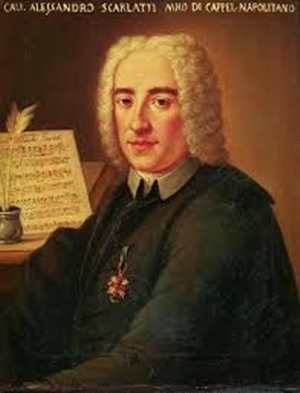
Scarlatti, Alessandro
Alessandro Scarlatti was an Italian Baroque composer, born on May 2, 1660, in Palermo or Trapani, Sicily. He is renowned for his operas and chamber cantatas and is considered the most important representative of the Neapolitan school of opera1. Scarlatti’s career spanned both Naples and Rome, where he received his training. He is often credited with founding the Neapolitan school, although he was its most illustrious representative1.
Scarlatti’s contributions to music were significant; he brought the Italian dramatic tradition to its peak development and designed the final form of the Da capo aria, which was imitated throughout Europe. He was also the inventor of the Italian overture in three movements and the four-part sonata, which was a precursor to the modern string quartet1.
He was a model for musical theater during his time and influenced composers like Handel. Scarlatti’s eclectic work included genres such as sonatas, concertos, motets, masses, oratorios, and cantatas. He was also the father of two other composers, Domenico Scarlatti and Pietro Filippo Scarlatti1.
Scarlatti passed away on October 22, 1725, in Naples1. His legacy includes more than 100 operas and a lasting influence on both Italian and European music.
-
Scriabin, Alexander
Alexander Scriabin was a Russian composer and pianist, born on January 6, 1872, in Moscow1. He is known for his innovative and influential contributions to music, particularly in the late Romantic period. Scriabin’s early works were influenced by the music of Frédéric Chopin and composed in a relatively tonal, late-Romantic idiom1.
However, Scriabin later developed a much more dissonant musical language that transcended usual tonality but was not atonal. This new style was deeply connected to his personal brand of metaphysics and his interest in synesthesia, where he associated colors with the various harmonic tones of his scale1. He also created a color-coded circle of fifths inspired by theosophy1.
Scriabin’s music often included elements of mysticism and Russian Cosmism, and he sought to create a Gesamtkunstwerk, or total work of art, that would combine music with other art forms1. His most famous work is “Prometheus: The Poem of Fire,” which was the first composition in history to include notation for lights and colors based on his scale of synesthetic colors2.
Despite his fame during his lifetime, Scriabin’s importance in the Russian (subsequently Soviet) musical scene and internationally declined after his death. However, his musical aesthetics have been reevaluated since the 1970s, and his works have garnered significant acclaim in recent years1. He passed away on April 27, 1915, in Moscow.
-
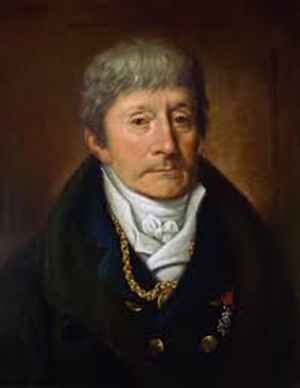
Salieri, Antonio
Antonio Salieri was an Italian composer and teacher of the classical period, born on August 18, 1750, in Legnago, south of Verona, in the Republic of Venice. He is known for his significant contributions to the development of late 18th-century opera and was a pivotal figure in the Viennese classical music scene.
Salieri’s career was marked by his role as a teacher and mentor to many prominent composers, including Franz Liszt, Franz Schubert, Ludwig van Beethoven, Anton Eberl, Johann Nepomuk Hummel, and Franz Xaver Wolfgang Mozart. He was appointed the director of the Italian opera by the Habsburg court in 1774 and held this position until 1792. During his tenure, he dominated Italian-language opera in Vienna and also wrote works for opera houses in Paris, Rome, and Venice.
His best-known work is the French opera “Tarare” (1787), which was later translated into Italian as “Axur, re d’Ormus.” This opera was preferred by the Viennese public over Mozart’s “Don Giovanni”2. Salieri’s last opera was performed in 1804, after which he devoted himself to composing sacred music.
Salieri’s relationship with Wolfgang Amadeus Mozart has been a subject of much speculation. Despite rumors that they were bitter rivals and that Salieri had poisoned Mozart—a claim that has been proven untrue—historical evidence suggests that they were at least mutually respectful peers.
Antonio Salieri passed away on May 7, 1825, in Vienna. His legacy includes a vast body of work that continues to be studied and performed today.
-
Saint-Saens, Camille
Camille Saint-Saëns was a French composer, organist, conductor, and pianist of the Romantic era, born on October 9, 1835, in Paris1. He is best known for his symphonic poems, the opera “Samson et Dalila,” and the orchestral piece “The Carnival of the Animals.” Saint-Saëns was a musical prodigy, making his concert debut at the age of ten. After studying at the Paris Conservatoire, he became a church organist and later a successful freelance pianist and composer.
Saint-Saëns was enthusiastic for the most modern music of his time, particularly that of Schumann, Liszt, and Wagner. His own compositions were generally within a conventional classical tradition, but he was also a scholar of musical history and remained committed to the structures worked out by earlier French composers1. This sometimes brought him into conflict with composers of the impressionist and expressionist schools of music in his later years.
He held only one teaching post at the École de Musique Classique et Religieuse in Paris and remained there for less than five years. However, it was an important institution in the development of French music, with his students including Gabriel Fauré1. Saint-Saëns’s influence on later composers is widely recognized, and he is revered as a genius by many.
-
Satie, Erik
Erik Alfred Leslie Satie, known as Erik Satie after 1884, was a French composer and pianist born on May 17, 1866, in Honfleur, Normandy, France. He passed away on July 1, 1925, in Paris. Satie was a significant figure in early 20th-century music, particularly in France, known for his spare, unconventional, and often witty style that influenced many composers, including Maurice Ravel, Claude Debussy, and Francis Poulenc.
Satie’s early years were marked by his studies at the Paris Conservatoire, where he was an undistinguished student and obtained no diploma. He worked as a pianist in café-cabarets in Montmartre, Paris, and began composing works, mostly for solo piano, such as his famous Gymnopédies and Gnossiennes1. He also wrote music for a Rosicrucian sect to which he was briefly attached.
After a period of composing little, Satie entered Paris’s second music academy, the Schola Cantorum, as a mature student, where his studies were more successful than those at the Conservatoire. From about 1910, he became the focus of successive groups of young composers attracted by his unconventionality and originality, including the group known as Les Six1. A meeting with Jean Cocteau in 1915 led to the creation of the ballet Parade in 1917 for Serge Diaghilev, with music by Satie, sets and costumes by Pablo Picasso, and choreography by Léonide Massine.
Satie’s music is characterized by unresolved chords, sometimes dispensing with bar-lines, as in his Gnossiennes, and his melodies are generally simple and often reflect his love of old church music. He gave some of his later works absurd titles, such as Veritables Preludes flasques (pour un chien) and Sonatine bureaucratique, and most of his works are brief, with the majority being for solo piano.
Never married, Satie lived most of his adult life in a single small room, first in Montmartre and then in Arcueil, a suburb of Paris. He adopted various images over the years, including a period in quasi-priestly dress, another in which he always wore identically colored velvet suits, and is known for his last persona, in neat bourgeois costume, with bowler hat, wing collar, and umbrella. He was a lifelong heavy drinker and died of cirrhosis of the liver at the age of 59.
-
Schubert, Franz
Franz Peter Schubert was an Austrian composer born on January 31, 1797, in Himmelpfortgrund, near Vienna, Austria. He passed away on November 19, 1828, in Vienna1. Despite his short life, Schubert left behind an extensive oeuvre, including more than 600 secular vocal works (mainly lieder), seven complete symphonies, sacred music, operas, incidental music, and a large body of piano and chamber music.
His major works include the art songs “Erlkönig,” “Gretchen am Spinnrade,” and “Ave Maria”; the “Trout Quintet”; the Symphony No. 8 in B minor (“Unfinished”); the Symphony No. 9 in C major (“Great”); the String Quartet No. 14 in D minor (“Death and the Maiden”); the String Quintet in C major; the Impromptus for solo piano; the last three piano sonatas; the Fantasia in F minor for piano four hands; the opera “Fierrabras”; the incidental music to the play “Rosamunde”; and the song cycles “Die schöne Müllerin,” “Winterreise,” and “Schwanengesang”.
Schubert showed uncommon gifts for music from an early age. His father gave him his first violin lessons, and his elder brother gave him piano lessons, but Schubert soon exceeded their abilities. At the age of eleven, he became a pupil at the Stadtkonvikt school, where he became acquainted with the orchestral music of Joseph Haydn, Wolfgang Amadeus Mozart, and Ludwig van Beethoven. He left the Stadtkonvikt at the end of 1813 and returned home to live with his father, where he began studying to become a schoolteacher. Despite this, he continued his studies in composition with Antonio Salieri and still composed prolifically.
In 1821, Schubert was admitted to the Gesellschaft der Musikfreunde as a performing member, which helped establish his name among the Viennese citizenry. He gave a concert of his works to critical acclaim in March 1828, the only time he did so in his career. He died eight months later at the age of 31, the cause officially attributed to typhoid fever, but believed by some historians to be syphilis.
Appreciation of Schubert’s music while he was alive was limited to a relatively small circle of admirers in Vienna, but interest in his work increased greatly in the decades following his death. Felix Mendelssohn, Robert Schumann, Franz Liszt, Johannes Brahms, and other 19th-century composers discovered and championed his works. Today, Schubert is ranked among the greatest composers in the history of Western classical music, and his work continues to be admired and widely performed.
-
Sibelius, Jean
Jean Sibelius, born Johan Julius Christian Sibelius, was a Finnish composer of the late Romantic and early-modern periods. He was born on December 8, 1865, in Hämeenlinna, Grand Duchy of Finland, and passed away on September 20, 1957, in Järvenpää, Finland1. Sibelius is widely regarded as Finland’s greatest composer, and his music is often credited with having helped Finland develop a stronger national identity during its struggle against Russification in the late 19th century.
Sibelius’s core oeuvre includes a set of seven symphonies, which, like his other major works, are regularly performed and recorded in Finland and around the world. His best-known compositions include Finlandia, the Karelia Suite, Valse triste, the Violin Concerto, the choral symphony Kullervo, and The Swan of Tuonela (from the Lemminkäinen Suite). His other works feature pieces inspired by nature, Nordic mythology, and the Finnish national epic, the Kalevala; over a hundred songs for voice and piano; incidental music for numerous plays; the one-act opera The Maiden in the Tower; chamber music, piano music, Masonic ritual music, and 21 publications of choral music.
Sibelius composed prolifically until the mid-1920s, but after completing his Seventh Symphony (1924), the incidental music for The Tempest (1926), and the tone poem Tapiola (1926), he stopped producing major works in his last 30 years—a period commonly referred to as the “silence of Järvenpää”. Although he is reputed to have stopped composing, he attempted to continue writing, including abortive efforts on an eighth symphony. In later life, he wrote Masonic music and re-edited some earlier works, while retaining an active but not always favorable interest in new developments in music.
The Finnish 100 mark note featured his image until 2002, when the euro was adopted. Since 2011, Finland has celebrated a flag flying day on December 8, the composer’s birthday, also known as the Day of Finnish Music. In 2015, in celebration of the 150th anniversary of Sibelius’s birth, a number of special concerts and events were held, especially in Helsinki, the Finnish capital.