Category: Educational

Educational

  • Music Theory for Parents – or anyone looking for ideas.

    Playing an instrument is fun… or at least it should be. Theory? Well, the existence of any fun factor can be a little more difficult to find, but we have to try if only “because you have to” will only get you so far! Fortunately, there are things that can help.

    So, what is the fun stuff you can do?

    I like flash cards because they can be a really fun way to learn. What on earth, you may well ask, are flash cards? Well, basically, they are small cards which have various musical symbols (notes, key signatures, intervals etc) printed on one side with the answer to what that symbol is on the other side of the card. This means you can have some fun with guessing game type questions. And (possibly) pretend to know more than you really do! My personal favourites are the Poco Studio series by Ying Ying Ng. They are a little bit dearer than some of the others, but are well-thought out, with lots of content, and kids seem to love the colours. Not me so much though – my cataracts are kicking in!

    One of the pioneers of this approach was Maureen Cox. Her “Theory is Fun” series have been best sellers since they were first published in the early 1990’s, and her series of books are regularly up-dated to take account of changes to the exam board syllabus requirements. They are useful back up books to help give students extra help, and are aimed at getting through an exam. These days there is much more to choose from. Lina Ng’s colourful Theory of Music Made Easy and My First/Second/Third Theory are designed at a pre-grade 1 level and are packed with examples and exercises. Well worth looking at.

    Sooner or later, your child (or you) will have to or want to take grade exams with either the ABRSM, Trinity or the London College of Music. Written specifically for string players, the Hey Presto books by respected teacher Georgia Vale are excellent in this respect, and are available to download here. There also there are lots of extra books which can help. Guy Cremnitz’s book have loads of examples to work through which make them good value. I also particularly like Loh Phaik Kheung’s “Theory of Music Made Easy” series, which is one of the few books published independently of the examination boards that actually goes up to Grade 8. And if I were doing Grade 8 music theory, I would take all the help I could get!     
    Buy from Amazon

  • Which Bass Rosin Should I Buy?

    Not a problem, I’ll look online – BUT: suddenly I am faced with dozens and dozens of different rosins, so which is the right one for me?

    There are so many factors to take into account. If you are an orchestral player, you will probably need one of the stronger rosins but if you are a beginner, maybe a more general rosin might be better. Baroque players need something different again, some soloists prefer violin rosin, so where do I start?

    Do you live in a hot or cold country? That will determine which rosins are most suitable for your climate, and possibly which ones to avoid.

    There are so many questions but also a similar number of answers. Over the years I have used rosins by Hidersine, Eugene Cruft, Pops, Carlsson, Nyman and Leatherwood Bespoke, maybe even more, and at the time the one I was using was my favourite. For many, many years I used Nyman’s rosin, which most of my students also liked, and which seemed ideal for the British climate, apart from the hottest spells when many a bass or bow case has been covered in a sticky rosin residue, which seems to glue everything together for weeks, but overall, it was good for all my playing needs – solo, chamber music and the occasional orchestral date.

    A few years ago everyone was raving about the new Leatherwood Bespoke rosin (the amber range), which seemed inordinately expensive, but many friends from around the world raved about the rosin, so I ordered two pots from Australia and settled on 20% and 25%, because I do more solo than orchestral playing nowadays, and waited for the post to arrive. It duly did and I absolutely fell in love with the 25% which produced a clear tone across all the registers and suited my bass and strings perfectly. I now only use Leatherwood and love everything about the rosin and am about to order two new pots, although I see they no longer produce a 25% mix so I’ll buy a 20% and 30% and use one swipe from each to hopefully create something like a 25% rosin which I like.

    Which rosin is best for you? There are so many different ones to choose from, alongside different string types, playing styles and temperatures, and my advice would be to ask your teacher, a friend or colleague, who will give you good advice from a local perspective, or read some of the online reviews (like this one 😊) and take a chance that it’s the right one for you. Rosin, on the whole, is inexpensive so it isn’t such a big investment if you don’t like the one you have bought.

    Personal recommendation is a good starting point and my first pot of rosin was at the back of a cupboard in our music department at school alongside a hardback copy of the Simandl Method, and that’s how I started. I can’t remember which rosin it was but it would have been old, I am certain of that, but other bassists and teachers were happy to help with suggesting different rosins and I never looked back. I know what I like, I know what I don’t like, but there is something out there for everyone.

    Happy rosin hunting.

    David Heyes
    D’Addario Performing Artist
    4 September 2024

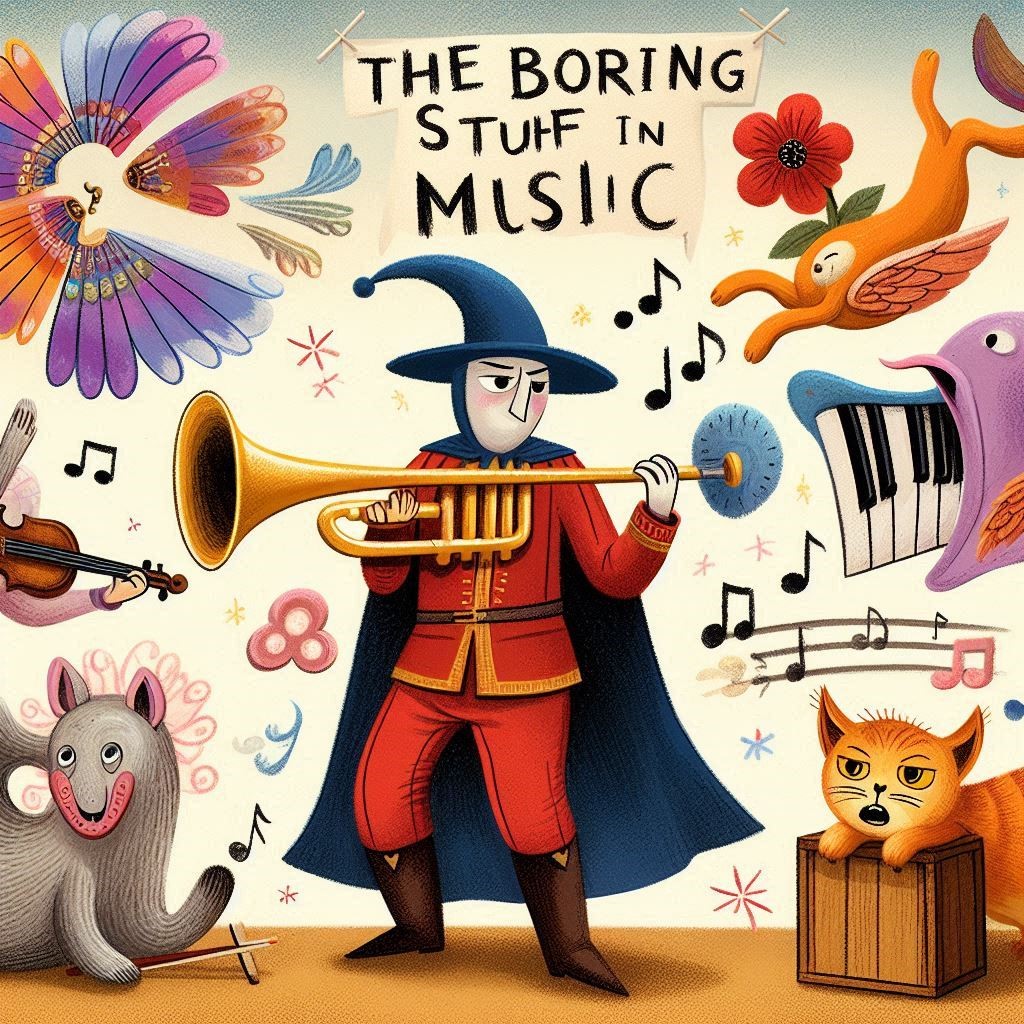
  • Scales, Arpeggios & the boring stuff – Pt 2

    Scales, Arpeggios & the boring stuff – Pt 2

    I’d decided to concentrate on my other academic love, Science. I wanted to do a degree in Physiology and Biochemistry but my Physics A-Level was one grade lower than I needed, so I thought I’d get a job as a lab tech at a local hospital and resit the next year. This was when I discovered I had defective colour vision and, even if I got the Degree I wanted, I was unemployable in that sphere. Giving up music now looked like the worst decision I’d ever made, possibly ever would make.

    A year later my best friend from School called on me an told me that a local Church, which he’d started attending with his girlfriend, were looking for someone who played the piano to support the organist. I refused, but threats were made and so on the Wednesday I turned up at the church for a rehearsal. Sitting at a piano for the 1st time in 5 years I played the only thing I could remember; a scale in C Major, both hands together. A bit shaky, but still there. Turns out this particular church, although CofE didn’t use the Hymns Ancient and Modern (where Modern means “written 200 years ago”) all that much, just at Easter and Christmas. They had their own book of devotional music collected by the worshippers over several years. If you were lucky some of them had the melody line scored, but many just gave a key and time signature. There weren’t really all that many, just a hundred or so and the rehearsal tended to focus on the songs to be sung that weekend. It wasn’t just me and the organist either. No choir, but anywhere between 3 and 5 guitarists, a cellist, flautist and even a drummer (who once played in The Shadows). The organist wasn’t an expert player and just tended to play the chords for the song. It was my job, as pianist, to provide some frills to those chords which meant, you’ve guessed already, playing arpeggios, scales and other frilly stuff based a little on the exercises in Bachs works. Bachs music can, IMO, be loosely categorised as Educational, Devotional and Earners, so two elements could be borrowed from for the role I was playing.

    So after all this time, the stuff that I hated doing the most was pretty much what I wound up doing every rehearsal and twice on Sundays. The irony of this was not lost on me.

    But something in me changed. As the months passed and became years and I grew to know the songs what I could play changed as well. You could add grace notes into the arpeggios, spice up the scales a bit perhaps by playing one hand a 3rd or 5th above the other, go contrapuntal, play off the organist, or play to support the guitarists if any turned up (they didn’t always). In other words just started having some fun playing. But everything was still based on those scales and arpeggios I’d hated.

    Strange isn’t it? Being able to play the Moonlight Sonata counted for nothing, being able to improvise or riff off a scale or chord did, and it’s difficult to improvise on any instrument unless you’ve got a good grounding in the basics, and the only way to get those basics under your belt is hard work on the boring stuff. Only when your fingers can flow from one note to another within the song structure, and without you having to think what note comes next will you be able to improvise with ease,

    I received a newsletter recently from an internationally known guitar teacher in which he says that when growing up he wanted to be able to improvise like Hendrix and B.B. King. He wanted to play from the heart. He didn’t realise that these guys had a firm grounding in technique and rhythm and had a lot of stock phrases under their belts.

    I recall seeing a film of Eric Clapton around the time he was in Cream where he talks about having a load of stock phrases , little riffs, scales, broken chords, which he used when playing. Putting these together in different ways is what made his music sound fresh and exciting.

    But none of that just happens. It all takes work. You need a solid foundation to be able to build successfully on it. When, as a guitarist, you are so comfortable with the B being only 3 semitones above the G where every other string has a 5 semitone gap that you don’t stumble over it, you don’t get caught out by it, it’s just natural to you.

    Classical scales, Blues scales, Pentatonic scales, Jazz scales: learn them, play them, make them part of what you are and what you can become is limitless.

  • Scales, Arpeggios & the boring stuff – Pt 1

    Scales, Arpeggios & the boring stuff – Pt 1

    Scales, arpeggios, exercises. Why bother? I mean they’re so absolutely boring right? Who uses them? Who, in their right mind, would use them? Why on earth would I want to spend time learning Bach two and three part inventions? (Keyboard players know what I mean. they were written, after all, just to teach his kids keyboard techniques).

    The blog post on this site about being over rehearsed describes part of the process of becoming a martial artist. That you practise a move time and time again until it becomes second nature. Scales and arpeggios come into the same category in that you do them over and over, every day, until you don’t have to think about playing them. but are they any good, any use? Beethoven, Sonata in C minor, OP. 13, bar 4 – a descending scale, bar 10 a descending chromatic scale, both played at speed. If you haven’t practised your scales on the piano, well good luck with those two bars. Yeah well, that’s Classical Music innit? Full of that sort of ***t, I’m a Rock’n’Pop guy and we don’t do that. Ok, don’t. You won’t be playing Cockney Rebels ‘Make Me Smile’ then ‘cos you won’t get past the first bar. you’re also ruling out some Creedence Clearwater Revival songs, and quite a few of Bob Dylans. Mr Bojangles contains a very nice series of chords where each chord can be preceded by a note in a descending C major scale.

    Back when I was 8 years old my piano teacher gave me a series of exercises to play that really were boring. I hated them. But, as I said in Over Rehearsed, there are no muscles in your fingers so every finger movement has to be controlled by the muscles in your forearm. Playing a musical instrument isn’t natural. If it was everyone could do it. Except they can but choose not to. So now you have an advantage because you actually want to play. Eventually I graduated from those exercises and was allowed to play some of the Bach two part inventions. I felt pretty much the same way about them as I had the original exercises. I didn’t know back then that many were written in a modal form. Wouldn’t have made any difference; I still hated doing them. At 14 I stopped taking lessons and stopped playing the piano.


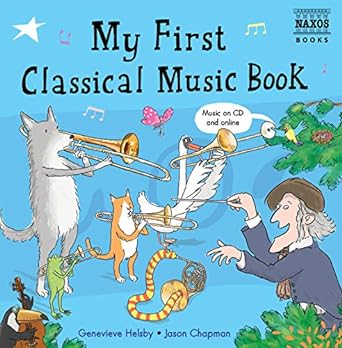
  • My First Classical Book

    My First Classical Book

    Aimed at introducing young children to classical music with information about the composers and their works as well as instruments of the orchestra. Shame it only comes with a CD rather than audio access. Nonetheless with music ranging from Mozarts’ Magic Flute to Williams’ Harry Potter and the Philosopher’s Stone there’s a range of music worth listening to even if you’re a kid of 40. Learn about the different instrument groups and how the play together – nicely for the most part.

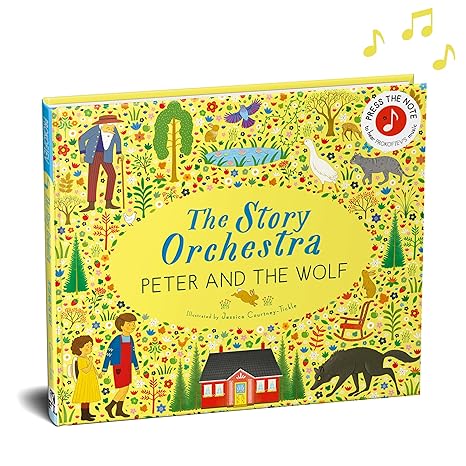
  • Story Orchestra

    Story Orchestra

    A great way of introducing your children to classical music. A range of well known favourites that we at The Music Realm listened to ourselves when we were young…which was, admittedly many years ago, but they are timeless classics for a reason!

    In this series you’ll find Prokofievs’ Peter and the Wolf, Holsts’ Planets Suite, Tchaikovskys’ The Nutcracker, Swan Lake and The Sleeping Beauty, Saint-Saens’ Carnival of the Animals, Vivaldis’ Four Seasons, The Hall of the Mountain King by Grieg, Mozarts’ The Magic Flute, A Mid-Summers Night Dream by Mendelssohn and you can even learn to play some of the music yourself.

    We also listened to Led Zeppelin, Deep Purple and Jimi Hendrix, but that’s for another post.

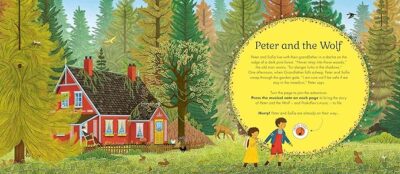
    These are some of the most popular pieces of classical music ever written. Listen to them and you’ll understand why. Add to that an interactive book where you press (it apparently requires some pressure) on the page to hear excerpts from the music.

    Peter the Wolf

    Naturally this doesn’t require an Internet connection, but I’d be wary of using it on public transport. There are some strange people out there who just don’t appreciate good music.

The Music Realm
Privacy Overview

This website uses cookies so that we can provide you with the best user experience possible. Cookie information is stored in your browser and performs functions such as recognising you when you return to our website and helping our team to understand which sections of the website you find most interesting and useful.