Category: General Interest

This is for those general interest articles that don’t relate to a specific product. They might just be ideas, concepts or just something fun that we felt like putting in.

  • Caring for your Instrument

    Caring for your Instrument

    We know – what can possibly be more boring than cleaning? Watching paint dry maybe, but we don’t have to worry about that here! Unfortunately, there are no shortcuts; you have to keep cleaning in order to maintain your instrument in its’ optimum condition. Some instruments require less attention than others (pianos, for example, just need to keys dusted and the wood polished from time to time – Henle do a lovely polishing cloth) while wind and brass instruments need far more attention.

    Remember, always follow the manufacturer’s advice and if you’re not sure what to do seek advice.

    Here are some general tips and guidelines, with links to products you may find helpful. And remember to keep your cleaning products clean – no point in cleaning with a mucky cloth!            

    Guitars:
    cleaning2 1

    We’ve started with guitars simply because there are so many guitarists around, and because they seem to be some of the worst cared for instruments I’ve come across, as anyone who has had to clean a guitar with cobwebs inside the guitar will tell you!

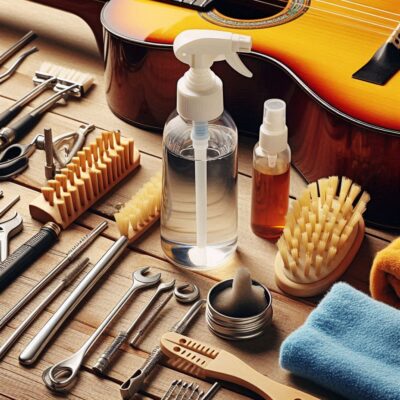
    Each time you replace your strings it’s worth cleaning the fretboard with some lemon oil as this will remove any debris (your own skin, usually). Dunlop, Kyser and D’Addario have good offerings. For the wood of the guitar itself, use a guitar polish, but be careful not to overdo it. Axe Wax is one of the best offerings on the market for this. GSH Fast Fret is probably the best way to keep your strings in good condition; I prefer this to products like the Swipe, but this is just personal preference. Dunlop and D’Addario also have a range of maintenance items, with polish, cloths, fretboard conditioner, and string cleaning products all being readily available.

    For electric guitars, remember to remove dust and dirt from the pickup with a dry cloth.

    Complete kits such as the Ernie Ball Musicians Toolkit or the D’Addario Guitar Maintenance kit are useful but probably more for the professional or very serious amateur. The question you have to ask is are you happy for your expensive instrument to be trusted to a courier and do you trust the luthier who’s doing your maintenance? It can be very cost effective, not to say satisfying, to do this work yourself.

    Mandolin:

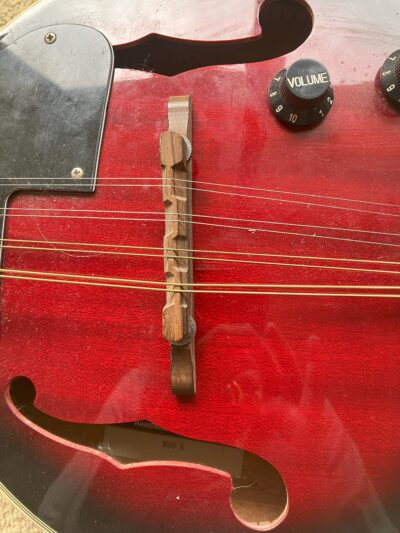
    Generally, treat a mandolin like you would a guitar. BUT, there’s one quite important difference. Check out the pic. Notice that the bridge isn’t square? It shouldn’t be, or at least probably won’t be when you’ve finished with it.
    Mandolin

    The bridge should, at the D strings be the same distance from the 12th fret as the 12th fret is from the headstock. Or to put that another way, the 12th fret is half way on the strings playing part length. You can check that using harmonics at the 12th fret. it should be the same note. Now if the bridge is at 90 degrees to the strings and you try the harmonics on the E strings you’ll note that the harmonic at the 12th fret is off tune. Move the bridge towards the head until the harmonic and the open string sounds match. Of course this is best done without the strings being at full tension. You’ll need a ruler to make sure the bridge is the correct distance from the 12th fret. 17.5 cms on mine.

    Orchestral Strings:

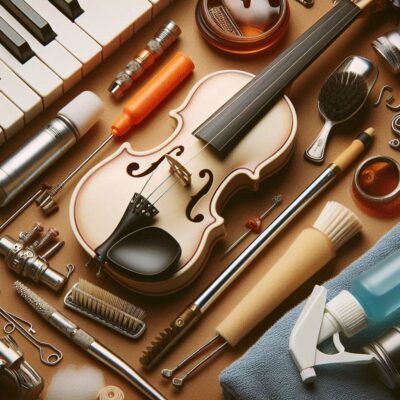
    Compared to wind and brass there is much less to be done, mainly because you don’t blow into them, and they are less complicated in their construction. However, there are some useful things to know about.
    cleaning4

    A soft polishing cloth will keep the body of the instrument in fair condition (Ernie Ball and D’Addario Microfibre cloths are good options), and I would definitely recommend Hill Premium Conservation Wax, which has the added benefit of the most wonderful smell of any cleaning product anywhere!

    Over time rosin from the bow will fall onto the instrument. This can be cleaned off with Viol Instrument Cleaner or Hill Varnish Reviver.  I’ve tried Hidersol but found it to be a bit thin and not so effective. Lapella string and fingerboard wipes are also useful to keep things in good order.

    Pegs can be another thing that need attention, as they can shrink and expand when the weather changes which makes it difficult for you instrument to stay in tune.. There are 2 types of peg paste: one which helps the pegs slip, and one that prevents them from slipping. Hill peg paste help lubricate the pegs and Hidersine Hiderpaste prevents the pegs from slipping. Always use sparingly.

    Wind Instruments:
    cleaning7

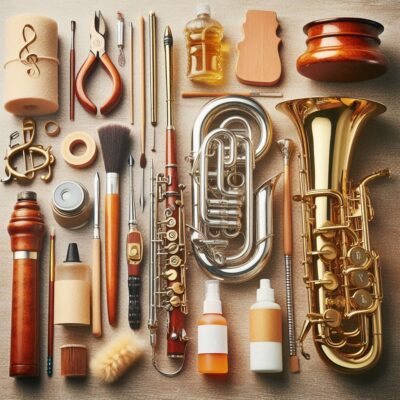
    There is a bit more care to be taken with wind instruments due to the nature of moisture in our breath interacting with instrument, especially the pads and cork. Be carefull when taking the instrument apart. It’s not a cracker, so don’t pull your instrument but gently twist the component section apart.

    And if you are a parent of a child who plays, try and avoid letting them eating anything sweet before practice – it’s not just their teeth that will rot!

    Always clean the inside of your instrument at the end of your practice, lesson or concert, and remember to be careful not to damage the keywork – the repairs can be costly.

    I’m also a bit wary of things left in the instrument such as pad savers. In theory these are supposed to absorb any moisture, but they can trap the moisture in the instrument, especially if you leave them in for too long, when what you are trying to do is make sure the inside of the instrument is dry. Making sure the inside of any wind (and brass) instrument is allowed to dry is crucial to keeping your instrument in good repair.

    Before you start make sure you have basic cleaning materials; pull-throughs or swabs, mouthpiece brushes, cleaning cloths and pad dryers. You can easily get cheap cleaning wipes and swabs, but I tend to be a bit wary of these.

    Flutes:

    You will need a flute cleaning rod, a gauze cloth and a microfibre cloth.

    Disassemble the flute by taking the head and foot joint off (if in doubt check with the manufacturer or more instructions). As with all wind instruments, avoid putting pressure on the keys and gently twist the parts apart – don’t pull them like a cracker. Clean the inside of the flute with by threading the gauze cloth through the eye of the cleaning rod. Personally, I prefer wood or plastic rods to the metal ones.  Wrap the cloth around the rod so it is completely covered and gently insert into the flute and rotate gently so any moisture is removed. Do the foot joint first as this is usually the driest part of the flute. Follow the same process for the main body of the flute taking care to avoid getting the cloth caught in the keys. To clean the head joint, hold the head joint with the embouchure and lip plate are facing you. Be careful not to disturb the tuning cork as the placement of this is quite precise. Push the wrapped cleaning rod into the head joint and, as with the body, gently rotate. When the rod passes the embouchure hole, slow down and stop the moment you feel it has reached the tuning cork.  Carefully withdraw the rod, and repeat the process until the head joint is dry. Clean the outside of the polishing cloth, and gently wipe the tenons (the bit where the flute parts join together) so that any grease dirt is removed; even the tiniest speck of grit can cause the joints to become stuck which will almost certainly need a repairer to sort out.  Periodically use a silver polishing cloth to give your flute extra shine, but don’t overdo it.

    Flute Rods:

    BG Pull throughs are excellent with the A32F for the body of the flute or the A32FG for the body and head joint:

    or the A32FK which will do the body and the head joint:

    Clarinets:

    Carefully disassemble the clarinet (remember to gently twist the parts apart rather than pull them apart). Remove the ligature and the reed, which you can dry by placing on the back of your hand, and which ideally should be stored flat and dry in a reed case, separate the mouthpiece and barrel and wipe the outside with a soft cloth. Clean the inside with a mouthpiece brush. Clean the bore of your clarinet (upper and lower joints and the bell) with a weighted pull through. Work from the bottle of the bell up. These can, on occasion snag on the inside of the keys, so don’t force anything if the cloth gets caught. If it doesn’t free up easily, consult a repairer. Your local music shop, if you have one, will probably be able to help. Use cleaning papers to dry the pads.

    Remember to apply cork grease to the cork such as Rico, Champion or Vandoren on the joints as this helps parts of the instrument to ensure a good seal at the joints which prevents air leaking when being played.

    Or the Yamaha cleaning kit will give you cork grease, swab, pad papers, a mouthpiece brush, tone hole cleaner, and a small polishing cloth

    Saxophones:

    Remove the ligature and the reed from the mouthpiece. As with the clarinet, the reed can be dried by placing I on the back of your hand after which it should be stored flat and dry in a reed case). Remove the mouthpiece and clean with a mouthpiece brush. Dry with a soft cleaning cloth. Remove the neck of the saxophone and dry with a suitable pull-through such as the BG A31, which is specially designed for saxophone neck. Clean the main body of the instrument with a specialist weighted pull-through or swab by inserting the pull=through into the bell of the saxophone. Flip the sax around so the rope end of the swab can slide through the body of the instrument. Follow this process 2 or 3 time to make sure all moisture is removed. Before putting the sax back into the case, remember to put the octave key cap protector back in as the octave key can easily be bent out of alignment.

    Swabs and Pull Throughs:

    Saxophone Pad dryers:

    Oboes:

    As with clarinets and saxophones, remove the reed and dry before placing them in a reed case.

    Drop a weighted oboe pull-through into the bell of the instrument to clean the pipe.

    Wipe the outside of the instrument with a silk cloth or a polishing clothe, and remove any moisture from the pads.

    Brass Instruments

    cleaning6

    Before you start you will need an appropriate valve oil, or lubricant, mouth piece brush and appropriate snake. Valves should be lubricated with valve oil, and mouthpieces cleaned with a mouthpiece brush, and the body of the instrument with a specialist trumpet, trombone or French horn snake.

    A soft cloth should be used on the outside of the instrument. A good quality glass cleaner can be used to remove grime and fingerprints, and a silver polishing cloth to maintain the shine.

    Brass instruments should be given a monthly wash with soapy, lukewarm water followed with a cold water rinse. Allow to dry before putting the instrument back in the case.

    Trumpets:

    Carefully remove the mouthpiece slides and valves – keep the valve caps and felt pieces to one side so they don’t get wet. Submerge the instrument in soapy, lukewarm water, and clean the inside of the instrument with the snake brush. (Note to reader; under no circumstances use a live snake. That would be dangerous to the snake, to you, and you would almost certainly get a visit from an animal protection officer). Rinse in cold water and allow to dry.

    Clean the bottom halves of the valves with soapy water and a soft cloth. Take care to keep the felt or cork bits dry. Rinse with clean water. Once your instrument is completely dry re-grease the slide and re-oil the valves. In general, the valves should be oiled daily and the slides once a week or so.

    Trombones:

    Disassemble the trombone by separating the mouthpiece, tuning slide and bell.

    The slide and bell should be wiped down after each use, and the slide oiled regularly to ensure smooth movement.

    As with trumpets, wash with lukewarm soapy water, and soak for about 15 minutes Clean the inside with a trombone snake brush, rinse with clean water and allow to dry. Clean the mouthpiece from and allow to dry. Apply a slide cream or lubricant to the slide.

    Percussion:

    Make sure anything made of wood is polished and avoid using strong chemicals on anything metallic, such as cymbals. Avoid using anything abrasive and keep soft polishing and microfibre cloths to hand. For drum heads, remove the hoops and heads, wipe the top and bottom of the bearing edge, and clean the shell. Lubricate the pedals, and periodically check the tension rods and wing nuts to make sure they are in good working order.

    Meinl does an extensive range of cleaning products (and very good quality accessories in general), and Zildjian and Dunlop have good quality polishes.

    And finally….

    Lastly, there’s a couple of things you should do to keep your instrument in good nick. When you’ve stopped using it, cover it. Put a dust sheet over it, or for non-digital pianos, close the lid. If you don’t have an instrument stand please, don’t leave the case lid shut or in the gig bag zipped up. There’s a reason those cases get shipped with a silica gel or crystals in them. They absorb moisture and that can damage your instrument, the finish, the wood and the pegs. If you play brass or woodwind, well I wouldn’t want to think what could happen to your valves, slides or other mechanisms. as for your reeds/strings/rosin….

    I hope I don’t need to draw pictures*, because I won’t be able to sleep at nights.

    DisintegrationofPersistence

    This, from Salvador Dali, may give you some idea, and if that doesn’t work check out some of Hieronymus Bosch.

    • because my drawing is worse than my singing voice, and that’s classified as an offensive weapon.

  • What is it with guitar strings?

    What is it with guitar strings?

    Why are there so many different gauges to choose from?

    I mean choosing a brand is easy ‘cos there’s only a couple of hundred of them, but then there’s gauges and there’s coatings and every brand has a couple of dozen and none of them are the same gauge and none of them use the same coatings and why are there NO standards? After all with every manufacturer doing their own thing how do you choose?

    OK so lets see if we can help you choose. Two questions.

    1. What type of guitar are you playing?
    2. What sort of guitarist are you?

    There are rational reasons for asking those questions. One is because certain types of guitar just won’t work with certain types of string, or not for very long anyway. For instance if you try to string a classical guitar with heavy gauge steel strings it won’t be too long before your neck departs your body. I’m talking about your guitars neck and body here, but if that just happened to be an expensive guitar, well it might be that you achieve anatomical separation soon after.

    Nylon Strings

    Lets start with the non-metal string guitars. Two types here Classical and Flamenco. Although they look superficially the same the Flamenco is made of thinner wood, the body is shallower than the Classical, the action is lower and the sound is brighter, percussive and loud. That lower action allows a bit quicker playing technique and there’s a tap plate to protect the wood from your nails. The Classical sound is warmer, somehow richer, the body is deeper and you’re going to have to learn not to hit the wood with your fingers.

    So strings. Flamenco strings are usually low to medium tension, classical medium to high. But, that’s your choice, though I wouldn’t want to risk high tension strings on a flamenco, for reasons given above. It’s your neck though.

    So what about the type of string? Well, up to the 1940s most strings were made from animal gut. Then came nylon and after that fluorocarbon. Nylon is less dense than gut and fluorocarbon is the densest of all three. AS for guages there are 3 of those as well, light medium and heavy, but as I said earlier, there are no standards for these and each manufacturer will have their own versions. So what’s the difference. Well, in general the lighter the string the softer the sound. That’s because a heavier string is more massive (weight is just mass responding to gravity) and that allows it to transfer mor energy through vibrations, so they sound louder. And that applies to the 6 strings on your guitar, not just the different gauges. The downside is that the heavier strings don’t sound as bright. So, louder and duller (where’ve I heard that before?) or quieter and brighter.

    Not all nylons are the same. Depending on the base materials (and the resultant number of carbon atoms in the material) two strings of the same size can have different qualities. In addition the lower strings are usually metal wound over a nylon core and the alloy used there can also make a big difference. Some manufacturers will also use different nylons as the core for those lower strings than they do for the upper ones.

    Some types of string may be coloured red or black. They’re usually aimed at the folk/flamenco market probably because they look a bit funkier than boring, transparent “Classical” strings. Scientists tell us they don’t sound any different. Individual choice again. Personally, I like to see my strings against my fretboard. These, like ball ended strings really just come down to a marketing ploy.

    Fluorocarbon strings are made of a polymer called polyvinylidine fluoride (PVDF). This gives a brighter sound than nylon and even gut, which it is closer to in sound, but you don’t get the feeling you’re wallet has been mugged and the care, longevity and tuning problems are greatly reduced. However, nothing is perfect in this world and with PVDF strings that can be heard most commonly on the G string. The added stiffness cause uncomfortable, unpleasant sounds best described as inharmonious. And that’s just playing the string by itself, so if you bought a set don’t get any airs about it. The sound is also unsustainable. No, I mean it, there is just reduced sustain.

    Longevity. A week after you’ve restrung with nylon your top strings won’t sound as bright as they did. They’ll have stretched. For personal use you can probably live with that. If your performing or recording that can work out ot be expensive.

    So the choice is down to you. Good or poor sustain. Dull or Bright sound? Longevity or doesn’t it matter?

    Metal Strings

    3 types of guitar here all with slightly(!) different characteristics and very different needs. We’ll be looking at acoustic, electric and bass guitars. I hope you’ve read through the item on nylon strings because much of the science is identical. To reiterate, the heavier the string, the louder, but duller it will sound.

    Looking at these instrument types then, obviously bass will be louder and duller, and that’s before you crank your volume control past breaking point. You can get a bit of attack back by using a pick or by pulling, but you just don’t have that top end. If you want something that’s got a lot of high frequencies play something else.

    One thing that most guitarists will want to take into consideration is bending of the note. Here we come down to why the gauge is important. Whether you’re playing bass, acoustic or lead, somewhere down the line you’ll want to bend a note. How easy that’s going to be will depend on two, related, things. These are the string thickness – the gauge and the tension. The thicker the string the greater the tension. You may find your bass guitar hs a steel rod running from the body to the top of the neck to cope with the higher tensions of its strings. So thinner strings, lower tension, greater bends. You can do a full tone bend, or more, on an electric with extra-light strings and light strings on an acoustic might get you to a 3/4 tone bend depending on how strong you are.

    Leaving basses out for the moment (I’ll come back to you guys, honest) lighter strings are better suited to beginners or lead guitarists because they don’t hurt your fingers so much and they’re easier for that full tone bend in Wish You Were Here . If you’re more into the power sound, you’re a rhythm guitarist or you want some good chunky chord sounds then you might want a heavier gauge. It will need a bit more strength to bend a note but you should have developed some of that over the years.

    The tones of the various gauges follow the rules set out in the Nylon String part above – lighter brighter, thicker warmer. Choose what type of sound you want and pick the gauge range. On an acoustic if you want chunky chords and warm sound you’d aim for the heavier gauges. factor that in with the type of playing you do. Are you a jazz/blues type or folk/rock/pop chordie?

    Then you need to check out the coating on the strings, if any. Uncoated will give you a brighter tone, are usually a bit cheaper, but don’t last quite as long. Corrosion from sweat (acid in nature) and air moisture, as well as skin cells from your fingers will cause degradation. You’ll wind up buying them more frequently, but for studio or live performance work that might not be a bad thing. But again it all depends on what sound you want when you play. Don’t be afraid to try things out. You might find you like a cheaper set than the ultra high price set labelled “Pro” by the marketing department.

    Last but not least, we come back to the Bass Player. The one instrument that never stops playing in any single, often forgotten even if your riffs aren’t. For you we’re looking at 3 major string types – round-wound, flat-wound and half-round.

    Round-wound; bright, edgy almost piano-like in sound. Lots of very good bass players have and still do use them. Those that are still alive, anyway. If you’re playing rock, pop, punk or funk you’ll most likely use these.

    Flat-wounds tend to used on fretless basses. They’re less damaging to the fretboard and are better at emulating the double bass sound. Bends and slides are easier with strings that don’t try to rip your fingers to shreds.

    Half-rounds. Considered by many to be an abomination and with good reason. When they came out, the round wound bit was below the fretboard and supposed to give you the brightness of the full round-wound since the round bit is over your pick-ups. For some reason it doesn’t work out that way so you either go full flat or full wound and feel much happier about your decision. Some more modern half-wounds have the winding not quite as flat as a flat-wound. That too just doesn’t seem to work, not really pleasing anyone.

    The links below will take you to some pages where you can see our recommendations but remember, no matter what we or anyone else tells you this is your choice. Buy what suits you, what fits your style of playing and your pocket. Just because John Entwistle help Rotosound design the Swing Bass series doesn’t mean you have to buy them.

  • Scales, Arpeggios & the boring stuff – Pt 2

    Scales, Arpeggios & the boring stuff – Pt 2

    I’d decided to concentrate on my other academic love, Science. I wanted to do a degree in Physiology and Biochemistry but my Physics A-Level was one grade lower than I needed, so I thought I’d get a job as a lab tech at a local hospital and resit the next year. This was when I discovered I had defective colour vision and, even if I got the Degree I wanted, I was unemployable in that sphere. Giving up music now looked like the worst decision I’d ever made, possibly ever would make.

    A year later my best friend from School called on me an told me that a local Church, which he’d started attending with his girlfriend, were looking for someone who played the piano to support the organist. I refused, but threats were made and so on the Wednesday I turned up at the church for a rehearsal. Sitting at a piano for the 1st time in 5 years I played the only thing I could remember; a scale in C Major, both hands together. A bit shaky, but still there. Turns out this particular church, although CofE didn’t use the Hymns Ancient and Modern (where Modern means “written 200 years ago”) all that much, just at Easter and Christmas. They had their own book of devotional music collected by the worshippers over several years. If you were lucky some of them had the melody line scored, but many just gave a key and time signature. There weren’t really all that many, just a hundred or so and the rehearsal tended to focus on the songs to be sung that weekend. It wasn’t just me and the organist either. No choir, but anywhere between 3 and 5 guitarists, a cellist, flautist and even a drummer (who once played in The Shadows). The organist wasn’t an expert player and just tended to play the chords for the song. It was my job, as pianist, to provide some frills to those chords which meant, you’ve guessed already, playing arpeggios, scales and other frilly stuff based a little on the exercises in Bachs works. Bachs music can, IMO, be loosely categorised as Educational, Devotional and Earners, so two elements could be borrowed from for the role I was playing.

    So after all this time, the stuff that I hated doing the most was pretty much what I wound up doing every rehearsal and twice on Sundays. The irony of this was not lost on me.

    But something in me changed. As the months passed and became years and I grew to know the songs what I could play changed as well. You could add grace notes into the arpeggios, spice up the scales a bit perhaps by playing one hand a 3rd or 5th above the other, go contrapuntal, play off the organist, or play to support the guitarists if any turned up (they didn’t always). In other words just started having some fun playing. But everything was still based on those scales and arpeggios I’d hated.

    Strange isn’t it? Being able to play the Moonlight Sonata counted for nothing, being able to improvise or riff off a scale or chord did, and it’s difficult to improvise on any instrument unless you’ve got a good grounding in the basics, and the only way to get those basics under your belt is hard work on the boring stuff. Only when your fingers can flow from one note to another within the song structure, and without you having to think what note comes next will you be able to improvise with ease,

    I received a newsletter recently from an internationally known guitar teacher in which he says that when growing up he wanted to be able to improvise like Hendrix and B.B. King. He wanted to play from the heart. He didn’t realise that these guys had a firm grounding in technique and rhythm and had a lot of stock phrases under their belts.

    I recall seeing a film of Eric Clapton around the time he was in Cream where he talks about having a load of stock phrases , little riffs, scales, broken chords, which he used when playing. Putting these together in different ways is what made his music sound fresh and exciting.

    But none of that just happens. It all takes work. You need a solid foundation to be able to build successfully on it. When, as a guitarist, you are so comfortable with the B being only 3 semitones above the G where every other string has a 5 semitone gap that you don’t stumble over it, you don’t get caught out by it, it’s just natural to you.

    Classical scales, Blues scales, Pentatonic scales, Jazz scales: learn them, play them, make them part of what you are and what you can become is limitless.

  • Scales, Arpeggios & the boring stuff – Pt 1

    Scales, Arpeggios & the boring stuff – Pt 1

    Scales, arpeggios, exercises. Why bother? I mean they’re so absolutely boring right? Who uses them? Who, in their right mind, would use them? Why on earth would I want to spend time learning Bach two and three part inventions? (Keyboard players know what I mean. they were written, after all, just to teach his kids keyboard techniques).

    The blog post on this site about being over rehearsed describes part of the process of becoming a martial artist. That you practise a move time and time again until it becomes second nature. Scales and arpeggios come into the same category in that you do them over and over, every day, until you don’t have to think about playing them. but are they any good, any use? Beethoven, Sonata in C minor, OP. 13, bar 4 – a descending scale, bar 10 a descending chromatic scale, both played at speed. If you haven’t practised your scales on the piano, well good luck with those two bars. Yeah well, that’s Classical Music innit? Full of that sort of ***t, I’m a Rock’n’Pop guy and we don’t do that. Ok, don’t. You won’t be playing Cockney Rebels ‘Make Me Smile’ then ‘cos you won’t get past the first bar. you’re also ruling out some Creedence Clearwater Revival songs, and quite a few of Bob Dylans. Mr Bojangles contains a very nice series of chords where each chord can be preceded by a note in a descending C major scale.

    Back when I was 8 years old my piano teacher gave me a series of exercises to play that really were boring. I hated them. But, as I said in Over Rehearsed, there are no muscles in your fingers so every finger movement has to be controlled by the muscles in your forearm. Playing a musical instrument isn’t natural. If it was everyone could do it. Except they can but choose not to. So now you have an advantage because you actually want to play. Eventually I graduated from those exercises and was allowed to play some of the Bach two part inventions. I felt pretty much the same way about them as I had the original exercises. I didn’t know back then that many were written in a modal form. Wouldn’t have made any difference; I still hated doing them. At 14 I stopped taking lessons and stopped playing the piano.


  • Why Am I Disorganised?

    Why Am I Disorganised?

    OK, why don’t you tell me why you think you are disorganised? Letters on a postcard please.

    The excuse I hear most often is “I’m disorganised because I’m artistic”. Really? Lets look at 5 artists, Beethoven, Turner, Piers Anthony, Damien Hirst and Elvis Costello.

    Starting with Mr Hirst, I don’t like his works, but then I don’t believe I’m required to either. But, and it’s a big BUT, I do admire his organisational skills. After all do you really think a guy who employs between 150 and 200 people creating his “visions” is unorganised? He knows what’s going on, he knows what steps need to be done to get from A to Z. He knows who’s working on what and at what stage they are. To be blunt he’s artistic and organised. And successful. Successful enough to be able to employ all those people.

    Then there’s Elvis Costello. I was told a tale by a publisher of one of Costellos visits to him. He had a file that contained what he’d been working on for the last two weeks. That was close to 200 songs. He pulled piece after piece out of the file finishing with “… and here’s one I did in the taxi on the way here”.

    Like Schubert, who couldn’t stop writing and never got to actually hear most of what he wrote before he died. But then maybe some of it wasn’t that good right then. But it would nag on him until he pulled it out and rewrote it. Like Beethoven.

    Now Ludwig was a man who carried a notebook with him every where he went. When he got an idea for a tune or a snippet of a melody he pulled out his notebook and pencil and sketched out the idea. Back home he’d perhaps work that into a sonata, or the 6th Symphony. Or maybe he decided he didn’t like it after all so did nothing with it. But it was there, in his notebook. Much has been written about Beethovens’ 9th Symphony with some arguing that because he was rewriting it, without the Choral elements, that he didn’t really intend those to be in the final cut. But then Beethoven was constantly rewriting pieces. A piano concert turns into a violin concert (or the other way around – you decide). Which did he intend to be “the one”? But the original themes are all there in his notebooks. Like Turner.

    I seriously suggest you go have a look at Turners’ sketchbooks on the Tate website. You’ll find in there sketches that remind you of some of his work, because they were turned into some of his work. Sometimes several sketches would become a single piece, so several sketches of, say, a mill from different sides and angles becomes one single view in oils. Organised from the start.

    But I’ve missed one. Piers Anthony. You may know him as a prolific author of what are often called Science Fantasy, but many of which I just think of as Fantasy – The Xanth novels, Blue Adept and the Tarot series. He has said that he never suffers from writers block, and that’s because he doesn’t work on a single book at any one time. He’ll have one in it’s initial stage where he’s outlining the story and the characters, another in 1st draft, another post editorial review and another in final pre-prelease mode. He allocates a set number of hours a day to each stage. If he gets stuck in one he goes on to the next.

    All of these very successful artists have one thing in common. They’re organised. Well organised, and if you look at so many successful artists lives they are all well organised. So what’s your excuse? There are any number of methodologies out there to help you get organised, even project management disciplines like Prince 2 have ways to help you get organised, and Microsoft has a package called Project Manager that can help you with that. Or you can use Trello, as we do on this site. But have you checked out the help you can get in Microsoft Word if you’re a writer? You can start with an outline and then turn that into chapters then flesh each chapter out.

    You can borrow that concept for music and work out how you want the piece to progress. There was a documentary on how Paul Simon wrote the songs for Graceland which gives insights as to how he wrote those, again organisation was the key.

    So all these artists are organised and it could be argued that their success was because they were organised. So why aren’t you? What’s holding you back? Is it because you think it might stifle your creativity? Beethoven was organised, yet in demand because of his improvisational ability. He would rock up at a dinner, eat then play something that had never been heard before yet was of equal quality to his published material. Did being organised stifle his creativity or did it feed it? After all he had a wealth of material that he could call on.

    All jazz musicians fall into a similar vein, blues and many rock musicians likewise. They develop a stock of phrases, changes, progressions, riffs. sequences, that they stitch together seemingly at random, but because they’re organised they can flow from one to another easily, or hearing something someone else has just played, create a variation. I saw a TV interview with Eric Clapton (as a young long-haired guitarist) where he stated precisely that he had built up a set of Stock Phrases. As a musician, jam sessions are a great stimulus for your creativity, but you’ve got to have some of those stock phrases at your beck and call to make it work. I’m not saying you always use that stock stuff, but it can inspire you, you can build on it.

    Do you think Ed Sheeran or Taylor Swift aren’t organised? Just look at what’s been written about both of them over the last few years. What comes out is that they are indeed well organised.

    So! Just as you practise your scales and arpeggios, just as you hone your brushwork, or your carving skills (all examples of being organised) polish your organisational skills. Use a notebook or a notes app and catalogue and categorise what you write, or paint, or indeed any ideas you might have.

    Terry Pratchett said that you can do what people tell you and follow your dream, but in the end you will still lose out to those who’ve worked hard and got themselves organised, and developed the skills. Till the ground, fertilise it, sow the seeds – if you want to reap the results. Otherwise you’re left to glean what grows wild, and that’s very slim pickings.

  • Can you ever be over-rehearsed?

    Can you ever be over-rehearsed?

    Sooner or later everyone in music is going to put on a performance. I’m not talking about playing for family and friends, but for those who don’t know you and are likely to be somewhat critical. But what constitutes a performance? Strutting your stuff in front of 20,000? Getting on stage in front of a couple of hundred at well known London clubs? Or playing those three pieces in front of that solitary individual known as a Grade Examiner? Yes, all three constitute an audience, and all three expect you to put on the best show you can. The first two expect it because they’re paying money to you, while that last one holds your future in their hands. Whatever your audience, you’re likely to be a bit nervous, and that’s natural. If you ever get to the stage where you’re not nervous before you’ve played the first note then maybe you’re not doing the best you can.

    But there are things you can do about those nerves. One is to channel them into the intensity of your performance. Another is to rehearse. Practise! And keep practising. By the time you get up to Grade 5 that should be at least an hour a day, and I don’t mean just give all the pieces a quick run through from start to finish. Pay attention to the awkward bits. You know, the ones that cause you trouble, that your fingers stumble over, that you know you don’t play quite as smoothly as you know you should.

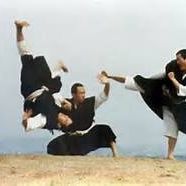
    In addition to being a musician I’m also a martial arts instructor (in a style that doesn’t require you to break bricks with your bare hand) and let me tell you, no-one starts out as a black belt. In the style I teach it’s going to be a year to Shorinji Kempo 1 2 years before you get your first grade and you’re going to spend much of that time on just 5 techniques, each of which has around 4-5 movements. You’re going to do those again, and again and again until you don’t have to think about what you’re doing. Only when you reach that stage are you ready to take the test. But those techniques will form the basis of everything you’ll do thereafter, and you’ll also practise them for the rest of your life.

    (Yes the image is of the style I practise).

    Ring any bells? That boring Grade 1 piece? Something no more complex that Twinkle, Twinkle Little Star. But here’s the point. You don’t have any muscle in your fingers, they’re all in your forearm, and you have to train those up until you can move each finger with ease. At this point I have a challenge to throw out to anyone Grade 6 and above. Go back and pick out a grade 1 piece and play it. Not easy is it? At least, not to the level where you could play it in public. There’s nowhere to hide with a simple piece. Anything less than perfection stinks, and because everyone knows what you’re playing every bum note stands out. Every timing issue, every little place where the phrasing isn’t quite right

    But now, you’ve got that performance coming up and you want to know how you can deal with the nerves. So practise. In front of an examiner you’ve only got three pieces to play so there’s no real room for mistakes. In live performances in front of lots of people, especially if you’re in a band, one or two mistakes can be (and probably will be) overlooked – at least until people get to know your set. After all, you could be playing up to twenty pieces, and all from memory. The band I was in would spend an entire 10 hour day before a gig just doing starts and finishes and the hand over from one song to another. In the days before the gig everything gets practised – even the improvisations. Yes, I know it’s a bit of a let down to realise that those long rambling solos Eric Clapton did were practised over the previous couple of months long before they ever got on to stage. And that’s because you have a rigid time slot to fill. If you’re on for an hour, that means you have exactly 60 minutes to fill, and that must include your encore, because either someone’s waiting to come on after you or the lights have to be switched off and the venue locked up.

    So you practise, and you keep practising, and then you do it again. Then maybe one day you’ll realise that all you’re really nervous about is getting that first note right, because everything flows right after that, and all that rehearsal? It’s been worth it, because you’ve come off stage knowing you’ve done the best you can, you’ve enjoyed it, and so has everyone else. Everywhere you look there are smiles, and that’s what you play for.

    That and the money ?

  • My First Classical Book

    My First Classical Book

    Aimed at introducing young children to classical music with information about the composers and their works as well as instruments of the orchestra. Shame it only comes with a CD rather than audio access. Nonetheless with music ranging from Mozarts’ Magic Flute to Williams’ Harry Potter and the Philosopher’s Stone there’s a range of music worth listening to even if you’re a kid of 40. Learn about the different instrument groups and how the play together – nicely for the most part.

  • Story Orchestra

    Story Orchestra

    A great way of introducing your children to classical music. A range of well known favourites that we at The Music Realm listened to ourselves when we were young…which was, admittedly many years ago, but they are timeless classics for a reason!

    In this series you’ll find Prokofievs’ Peter and the Wolf, Holsts’ Planets Suite, Tchaikovskys’ The Nutcracker, Swan Lake and The Sleeping Beauty, Saint-Saens’ Carnival of the Animals, Vivaldis’ Four Seasons, The Hall of the Mountain King by Grieg, Mozarts’ The Magic Flute, A Mid-Summers Night Dream by Mendelssohn and you can even learn to play some of the music yourself.

    We also listened to Led Zeppelin, Deep Purple and Jimi Hendrix, but that’s for another post.

    These are some of the most popular pieces of classical music ever written. Listen to them and you’ll understand why. Add to that an interactive book where you press (it apparently requires some pressure) on the page to hear excerpts from the music.

    Peter the Wolf

    Naturally this doesn’t require an Internet connection, but I’d be wary of using it on public transport. There are some strange people out there who just don’t appreciate good music.

The Music Realm
Privacy Overview

This website uses cookies so that we can provide you with the best user experience possible. Cookie information is stored in your browser and performs functions such as recognising you when you return to our website and helping our team to understand which sections of the website you find most interesting and useful.