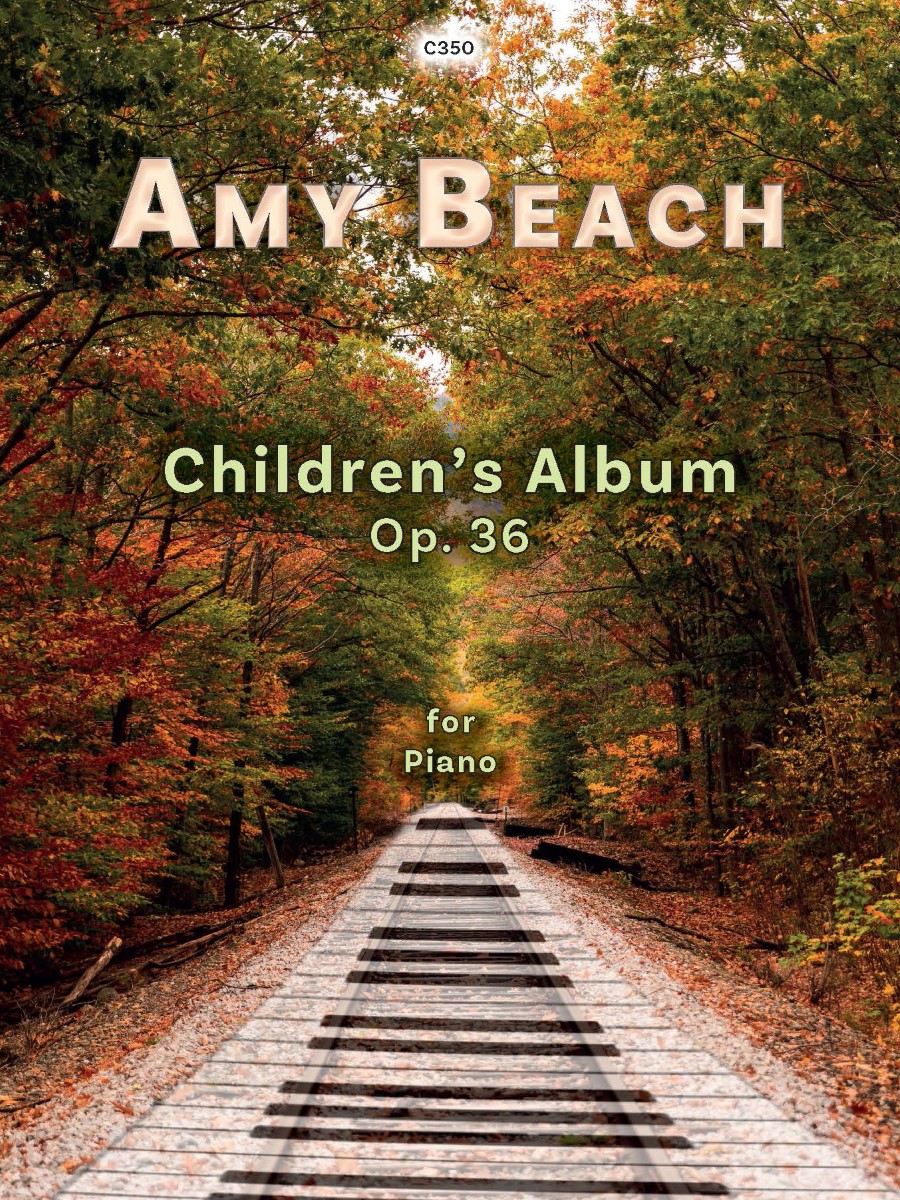
Beach: Children’s Album Op. 36
Digital Download – PDF
R.R.P £7.95
Our Price: £6.76
Composer: Beach, Amy
Instrumentation: Piano Solo
Publisher Clifton Edition
About: Beach, Amy
Beach, Amy
Amy Beach (1867-1944) was an American composer and pianist. She composed in many genres, writing in a late romantic style, and her Symphony in E minor (Gaelic), premiered by the Boston Symphony Orchestra in 1896, was the first symphony to be composed and published by a female American composer. In her later works she experimented with new tonalities, by using whole tone scales alongside exotic harmonies and techniques. Despite much success during her lifetime, Amy Beach’s music was neglected for decades but towards the end of the 20th-century there has seen a resurgence of interest in her entire oeuvre. Her enduring impact undeniably continues to inspire new generations of musicians.
Amy Beach was a pioneering force in American classical music as a composer, pianist, and trailblazing advocate for women’s musical expression. Born Amy Marcy Cheney on September 5, 1867, in Henniker, New Hampshire, she demonstrated prodigious talent from a very early age, quickly establishing herself as one of the foremost musical prodigies in the United States. Not only did she possess an uncanny ability to absorb and reproduce musical ideas, but she also composed original pieces during childhood, foreshadowing a career that would eventually redefine the possibilities for American composers. 1.
Growing up in a family that valued both music and intellectual pursuits, Amy’s early exposure to the art was as nurturing as it was challenging. Even in her infancy, hints of her extraordinary skill were evident as she absorbed and improvised melodies with ease. By age four, she was already experimenting with simple compositions, and as a teenager she rapidly honed her skills in both piano performance and composition. The family’s relocation to Boston in 1870 provided her with a richer cultural environment and access to quality musical resources. This vibrant atmosphere helped solidify her foundation as a musician, setting the stage for her future accomplishments. 2.
In October 1883, at just 16 years old, Amy Beach made her public debut at the Boston Music Hall and captivated audiences with her extraordinary skill. The success of these early recitals paved the way for further opportunities, including a performance with the Boston Symphony Orchestra in 1885—a landmark event in her career. That same year, she married Dr. H.H.A. Beach, an accomplished surgeon and passionate musician. Dr. Beach encouraged her to shift her focus from extensive public performance to composition, which allowed her creative talents to flourish in new directions and laid the groundwork for her subsequent achievements 1. 3.
One of Amy Beach’s most significant early works was her Mass in E flat, Op. 5, composed during the early 1890s. This piece garnered substantial attention when performed by prestigious ensembles such as the Handel and Haydn Society, marking her entry into large-scale concert music. However, it was the premiere of her innovative Gaelic Symphony by the Boston Symphony Orchestra in 1896 that truly cemented her reputation. As the first symphony composed and published by an American woman, this work not only broke new ground artistically but also challenged long-held gender norms in the musical world, opening doors for countless future women composers. 2.
Amy Beach’s compositional style was defined by a synthesis of American themes with the structure of European classical traditions. Despite a lack of extensive formal study in Europe, she achieved a level of technical mastery and emotional expressiveness that resonated deeply with audiences. Her Piano Concerto in C sharp Minor is another prime example of her ability to blend virtuosic passages with lyrical, expressive themes. Over the course of her career, she composed over 300 works spanning orchestral, chamber, choral, and solo piano literature, leaving an enduring mark on American music. 2.
The death of her husband in 1910 marked a turning point in Beach’s life. Unburdened by earlier constraints, she resumed performing and embarked on tours that brought her music to European audiences, where she received widespread acclaim. During her later years, Amy devoted much of her time to composition and philanthropy. She spent many summers nurturing her creative spirit at the MacDowell Colony, eventually designating it as the executor of her estate—a decision that continues to support emerging artists and secure her legacy. 3
1. Wikipedia.org
2. Britannica.com
3. amybeach.org
Composed in 1897, Amy Beach’s Children’s Album, Op. 36 is a delightful collection of five short piano pieces composed in 1897 that continues to charm both…
Page ? of ?