Antonín Dvořák was a Czech composer born on September 8, 1841, in Nelahozeves, Bohemia, which is now part of the Czech Republic. He is renowned for his contributions to the Romantic era of music and is considered one of the most prominent composers of his time. Dvořák’s music is characterized by its incorporation of Bohemian and Moravian folk music elements, which he skillfully blended with classical forms.
Dvořák’s early life was marked by his musical talent, which was evident from a young age. He became an accomplished violinist and contributed to the amateur music-making in his father’s inn. Despite facing financial difficulties, Dvořák pursued his passion for music and studied at the Institute for Church Music in Prague.
Throughout his career, Dvořák composed a wide range of works, including symphonies, chamber music, operas, and choral pieces. Some of his most famous compositions include the “New World Symphony,” “Cello Concerto in B Minor,” and the opera “Rusalka.” His work had a significant impact on the development of nationalistic music in Bohemia and beyond.
Dvořák’s legacy continues to be celebrated today, with numerous performances and recordings of his music. His influence can be seen in the works of many composers who followed him, and he remains a beloved figure in the world of classical music.
Composed in 1889 Symphony No. 8 in G major Op. 88 is a celebrated orchestral work by Antonín Dvořák. Known for its lyrical beauty and…
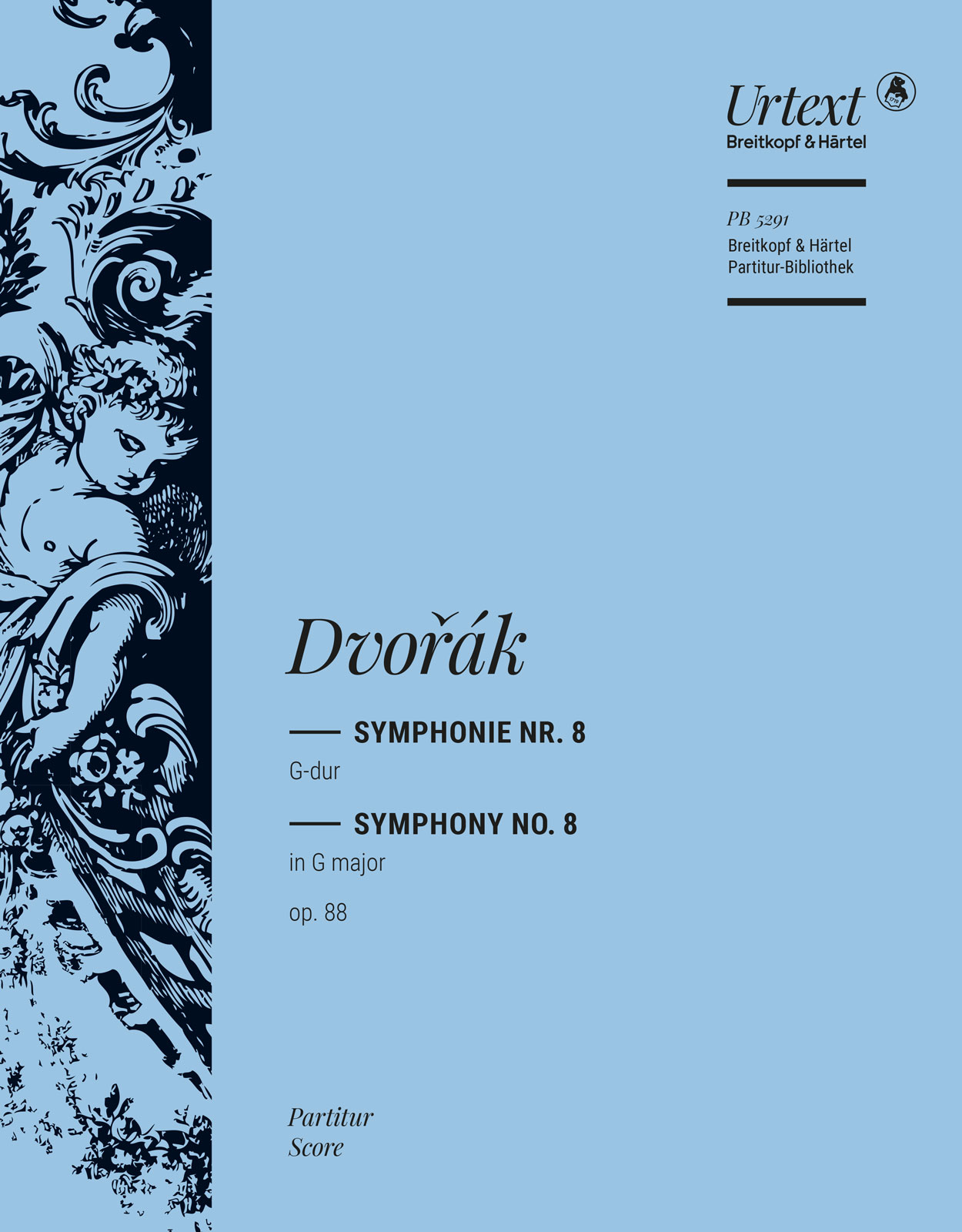
Composed in 1889 Symphony No. 8 in G major Op. 88 is a celebrated orchestral work by Antonín Dvořák. Known for its lyrical beauty and sunny, optimistic character, it stands in stark contrast to the composer’s more stormy Seventh Symphony.
The premiere took place in Prague on 2 February 1890 and was conducted by Dvořák himself.
“Oh the tempi, how terrible!” Dvořák often complained bitterly about tempi, and with good reason, as the respected Dvořák expert Klaus Döge discovered while preparing his edition of the Eighth.
The composer’s conducting score, which also served as the engraver’s copy, has resurfaced again and offers sensational findings for performers. The copy contains an entire series of added tempo entries that were not all incorporated into the first edition. Döge’s edition now sheds light into the previously misleading tempo markings.
Breitkopf’s new edition is also the first performing material to this key work of late-romantic orchestral literature that can be purchased in its entirety as sales material. Following the New World Symphony, the Slavonic Dances op. 46 and the VioloncelloConcerto, Dvořák’s fourth major orchestral work is now available in Breitkopf’s customary high quality.
Digital Download – PDF
Shipping costs: No shipping
Please Note: This product is not fulfilled by The Music Realm Ltd. Breitkopf and Hartel have requested that all purchases are referred to them for watermarking before downloading. This usually takes 1-3 days.We regret that this means you will not be able to download your purchase immediately.
R.R.P £82.00
Our Price: £69.70
Please create and forward a copy of this publication to the customer