Ludwig van Beethoven was a German composer and pianist, a pivotal figure in the transition between the Classical and Romantic eras in classical music. He was baptized on December 17, 1770, in Bonn, Germany, and died on March 26, 1827, in Vienna, Austria.
Beethoven is widely regarded as one of the greatest composers in the history of Western music. His works rank among the most performed pieces in the classical music repertoire. His career is conventionally divided into early, middle, and late periods. The early period, where he honed his craft, is typically considered to have lasted until 1802. His middle period, sometimes characterized as “heroic,” showed individual development from the styles of Joseph Haydn and Wolfgang Amadeus Mozart and lasted until around 18. During this time, Beethoven began to grow increasingly deaf. His late period, from 1812 to his death, extended his innovations in musical form and expression.
Some of his most notable works include the Symphony No. 5 in C Minor, the Symphony No. 9 in D Minor with the famous “Ode to Joy,” the “Moonlight” Sonata, the “Emperor” Concerto, and the “Archduke” Trio. His only opera, Fidelio, was first performed in 1805 and revised to its final version in 1814.
Beethoven’s personal life was marked by struggles, including his gradual hearing loss, which led to total deafness. Despite this, he continued to compose masterpieces, and his music remains a testament to his genius and the enduring power of human creativity.
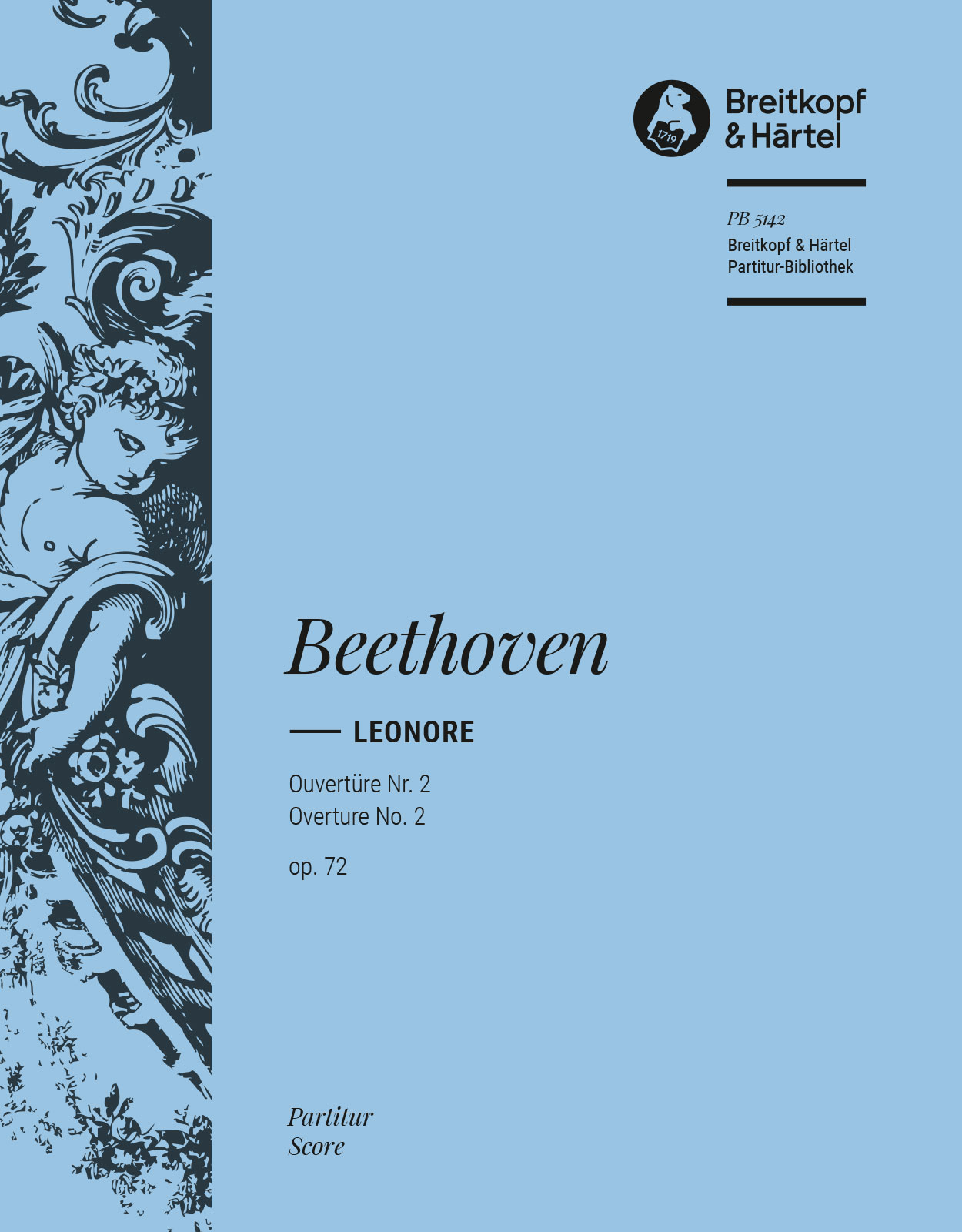
Despite the numbering, the overture Leonore No. 2 was Beethoven’s first effort to precede his only opera with an adequate introduction. It had been composed last minute…
Despite the numbering, the overture Leonore No. 2 was Beethoven’s first effort to precede his only opera with an adequate introduction. It had been composed last minute and in between the rehearsals for the premiere of the opera Leonore oder Der Triumph der ehelichen Liebe (Leonore, or The Triumph of Marital Love) on 20 November 1805 at the Theater an der Wien. This comprehensive, programmatic work was met with incomprehension at first performances just like the opera itself. Beethoven felt compelled to re-write Leonore completely and presented it under its new title “Fidelio”. In 1806 he revised the overture to such an extent that a symphonic sonata movement emerged; with another incorrect numbering, Leonore No. 3 has gone down in music history and above all it has achieved a regular place in concert repertory. And in order to complete the confusion: written in 1806/07, only Overture “No. 1” is Beethoven’s chronologically last effort to write an overture for Leonore, before he – many years later – put an end to this infinite subject with the so-called Fidelio overture for the third version of the opera. After all, thanks to the search after a dramaturgically convincing beginning of the opera, the music world has been enriched by four quite different orchestra scores.
The music text of the present score is based on Volume 11 of the “Supplements to the Complete Edition”. The performance material of the Fidelio and Leonore No. 3 overtures is available in “Breitkopf Urtext” editions.
R.R.P £46.00
Our Price: £39.00
Digital Download – PDF
Shipping costs: No shipping
Please create and forward a copy of this publication to the customer