Although manuscripts bearing Michael Haydn’s name exist, the Concerto in E-flat Major for 2 Horns is a case of misattribution, with modern scholarship showing that the…
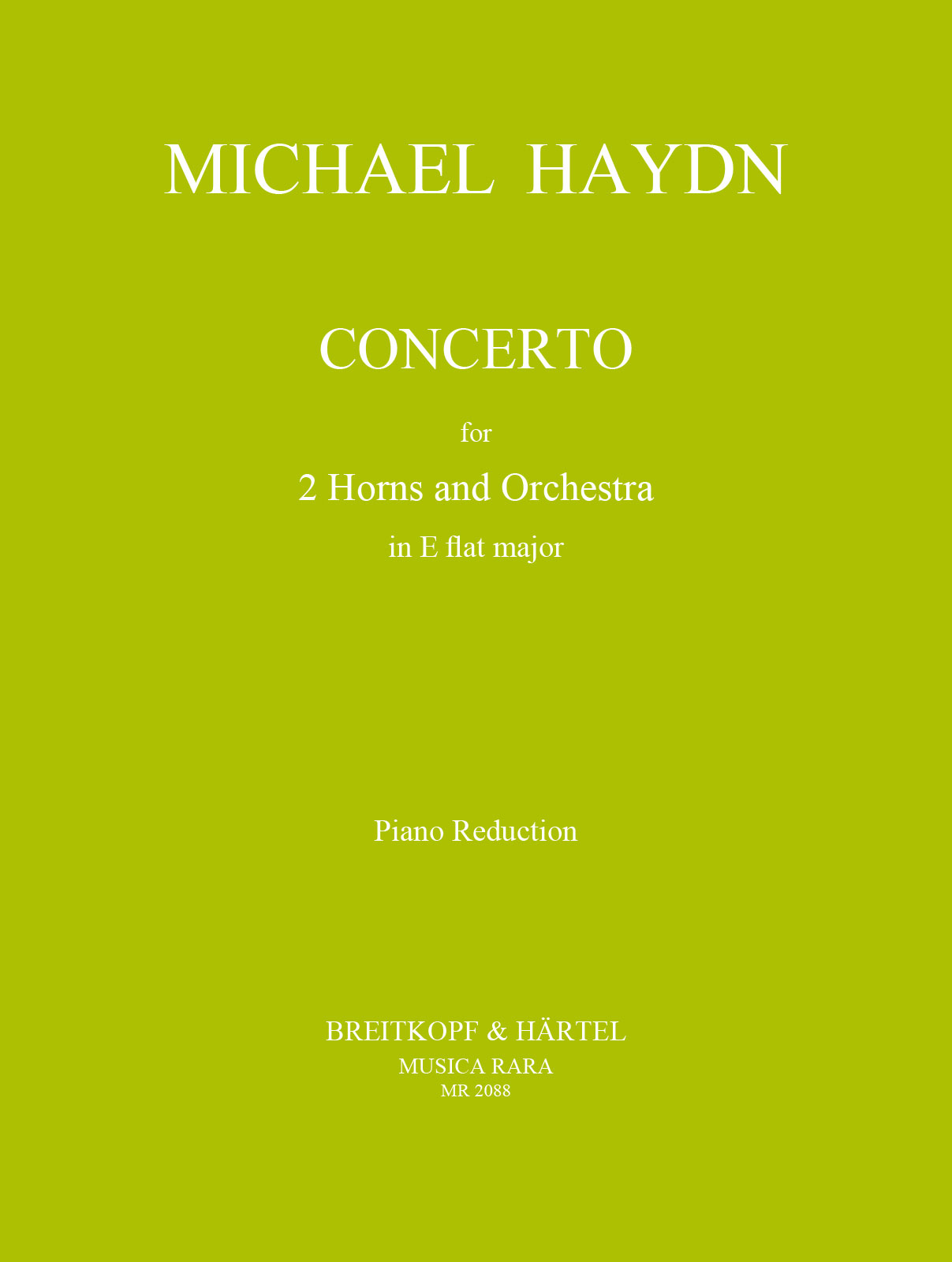
Although manuscripts bearing Michael Haydn’s name exist, the Concerto in E-flat Major for 2 Horns is a case of misattribution, with modern scholarship showing that the work was actually composed by Antonio Rosetti (1746–1792.
The Concerto was attributed to Michael Haydn as manuscripts in Harburg, Germany bear his name, although written not in his hand. Additionally, Joseph Haydn also linked and the concerto was catalogued under Joseph Haydn’s works (Hob. VIId:6). However, stylistic analysis and historical evidence confirm Rosetti as the composer, and that the work was composed around 1784.
It is a 3 movement work scored for two solo horns and orchestra which exploits the natural horn’s range and timbre, with interplay between the two soloists. The first horn often leads, while the second provides harmonic and rhythmic support. The elegant, lyrical, and festive style is typical of Rosetti’s horn concertos, which were admired by contemporaries like Mozart. It remains a popular Classical-era horn concerto, celebrated for its lyrical slow movement and lively finale.
Allegro maestoso – Grand opening with orchestral introduction, horns entering in octaves.
Romanza: Adagio – Lyrical, cantabile slow movement, hymn-like in character.
Rondo: Allegretto – Spirited finale with dance-like rhythms.