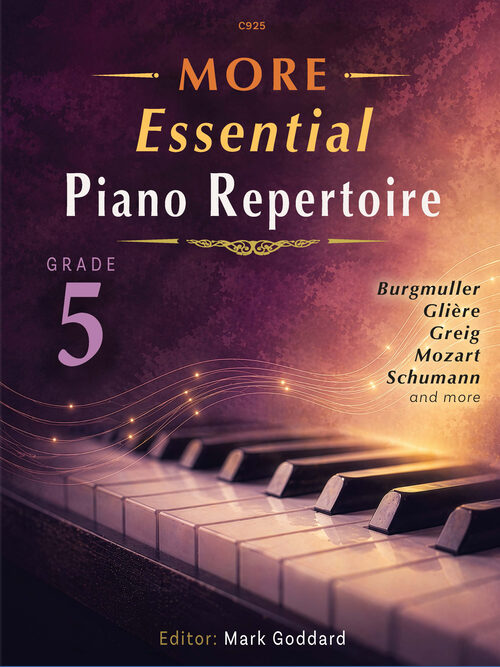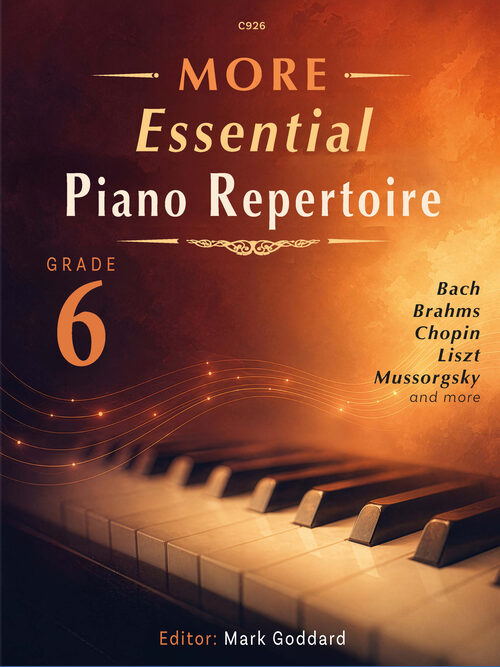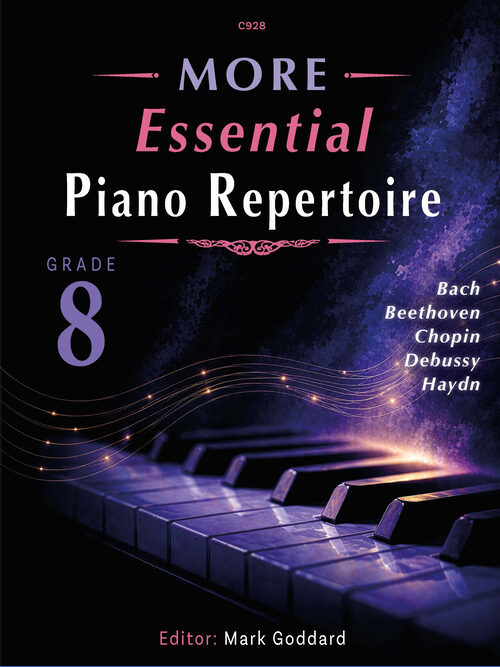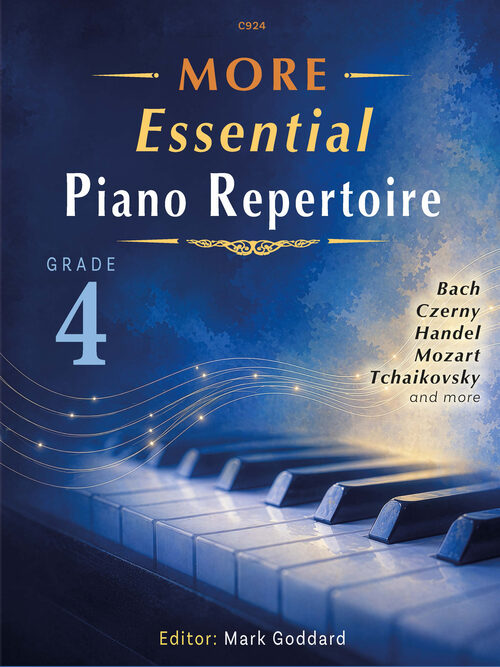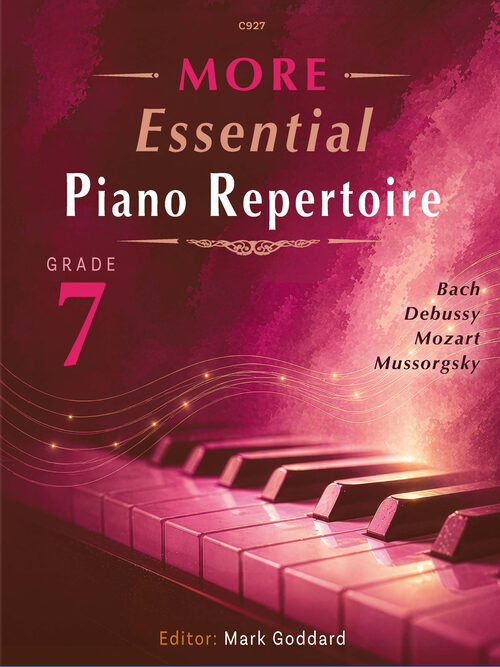
More Essential Piano Repertoire – Grade 7
Digital Download – PDF
R.R.P £7.50
Our Price: £6.38
Composer: Bach, Johann Sebastian; Mozart, Wolfgang Amadeus; Mussorgsky, Modest; Debussy, Claude;
Instrumentation: Piano Solo
Editor: Goddard, Mark
Publisher Clifton Edition
About the Composers
Bach, Johann Sebastian
Johann Sebastian Bach was a German composer and musician of the late Baroque period, born on March 31, 1685 (O.S. March 21), in Eisenach, Thuringia, Ernestine Saxon Duchies (now Germany). He passed away on July 28, 1750, in Leipzig.
Bach is now generally regarded as one of the greatest and most prolific composers of all time and is celebrated as the creator of the Brandenburg Concertos, The Well-Tempered Clavier, the Mass in B Minor, the St John and St Matthew Passions, the Christmas Oratorio and more than 300 cantatas (although only around 200 are extant. He numerous other masterpieces of church and instrumental music.
Bach’s abilities as an organist were highly respected throughout his lifetime, although he was not widely recognized as a great composer until after his death. Today, he is considered to be the master of fugue, the inventor of the solo keyboard concerto, and the greatest composer of the Baroque era.
His compositions include a wide variety of music such as orchestral music (e.g., the Brandenburg Concertos), solo instrumental works (e.g., the Cello Suites and Sonatas and Partitas for Solo Violin), keyboard works (e.g., the Goldberg Variations and The Well-Tempered Clavier), organ works (e.g., the Schübler Chorales and the Toccata and Fugue in D Minor), and choral works (e.g., the St. Matthew Passion and the Mass in B Minor).
Bach came from a highly musical family and was the last child of a city musician, Johann Ambrosius. After being orphaned at the age of 10, he lived with his eldest brother, Johann Christoph, and continued his musical education in Lüneburg. His career included working as a musician for Protestant churches in Arnstadt and Mühlhausen and at courts in Weimar and Köthen before becoming Thomaskantor (cantor at St. Thomas’s) in Leipzig.
In Leipzig, he composed music for the principal Lutheran churches of the city and for its university’s student ensemble Collegium Musicum. Despite difficult relations with his employer, Bach’s music flourished, and he enriched established German styles through his mastery of counterpoint, harmonic, and motivic organization, and his adaptation of rhythms, forms, and textures from abroad, particularly from Italy and France.
Bach’s legacy is immense, having enriched the German musical tradition and set a precedent in composition that would influence subsequent generations of composers.
Mozart, Wolfgang Amadeus
Wolfgang Amadeus Mozart, born in Salzburg on January 27, 1756, remains one of history’s most celebrated composers and musical geniuses. Growing up in a household steeped in music, Mozart was introduced to the art of creating melody and harmony by his father, Leopold Mozart, himself a respected musician. From a very tender age, Mozart demonstrated extraordinary musical prowess, composing intricate pieces that belied his youth. As a child prodigy, he embarked on extensive tours across Europe, captivating royal courts and common audiences alike with his sublime compositions and dazzling virtuosity. It was during these early years that Mozart absorbed a diverse array of musical influences ranging from Italian opera to German symphony, each style enriching his own unique musical language.
In his adolescent years, Mozart’s creative output and technical command of music rapidly evolved, setting new standards for the art form. His early works, composed under the bright lights of European audiences, combined technical brilliance with an intimate emotional depth. Whether drafting lively sonatas or elaborate symphonies, Mozart’s compositions sparkled with a refined elegance that was both accessible and sophisticated. His ability to blend innovation with classical form revolutionized the musical world. In the vibrant salons and opera houses of his time, audiences were treated to works that pushed the boundaries of traditional composition, introducing new dynamics, intricate counterpoints, and a playful use of melody that still resonates today. This period of experimentation not only solidified his reputation as a prodigious talent but also laid the groundwork for the many masterpieces that would emerge in his later life.
While Mozart’s early works laid a strong foundation, it is his mature compositions that truly define his legacy. In operas such as “The Marriage of Figaro,” “Don Giovanni,” and “The Magic Flute,” Mozart showcased his ability to blend humour, drama, and human emotion into a tapestry of sound that captured the complexities of human nature. Each opera is a masterful amalgamation of libretto, orchestration, and vocal prowess, revealing a deep understanding of the human condition that is both timeless and universally appealing. Mozart’s symphonies and concertos further extend his genius, featuring layers of tonal beauty and structural innovation that challenge and inspire musicians and audiences alike. His music, characterized by its clarity, balance, and emotional depth, continues to evoke powerful responses, transcending the confines of time and geography to touch listeners worldwide.
Beyond his technical brilliance, what truly sets Mozart apart is the sheer emotional range and expressive power embedded in his works. His compositions often move effortlessly between moments of joyful exuberance and profound melancholy, reflecting the duality of life itself. Despite living a relatively short life—Mozart passed away at the young age of 35—his musical output was incredibly prolific, leaving behind a legacy of over 600 works that span every genre of his era. The enduring popularity of these works is a testament to their universal appeal. Whether performed in grand concert halls or intimate chamber settings, Mozart’s music continues to inspire both seasoned musicians and new audiences. His ability to convey complex human emotions through the language of music creates a bridge between cultures and eras, making his art as relevant today as it was centuries ago.
Mozart’s profound influence on the evolution of Western music is undeniable. His innovative approach to composition redefined the possibilities of musical structure and storytelling, paving the way for future generations of composers. Many of Mozart’s contemporaries and successors, including Ludwig van Beethoven and Franz Schubert, were deeply inspired by his work, incorporating aspects of his style into their own compositions. Moreover, Mozart’s deft handling of form and structure has been studied by music scholars and educators for generations, with his works serving as quintessential examples of balance, clarity, and ingenuity. Today, his music is not only a staple of the classical repertoire but also a living document of the creative spirit that propelled the Classical era into modern consciousness.
In reflection, Mozart’s life and music embody the pinnacle of artistic expression, where technical mastery meets emotional sincerity in a celebration of life’s intricacies. His journey from a precocious child prodigy to a mature, innovative composer is a narrative filled with both brilliance and poignant struggle, providing insight into the nature of genius itself. Even though Mozart’s life was tragically brief, his relentless pursuit of excellence in every musical endeavor left behind an oeuvre that continues to evoke admiration and introspection. As listeners and performers alike delve into the intricate techniques and heartfelt emotion woven throughout his compositions, they not only experience the beauty of the music but are also reminded of the timeless connection between art and human experience. Mozart’s story is a continuous call to embrace creativity and passion, inspiring generations to push beyond conventional boundaries in their own artistic pursuits.
Mozart’s enduring genius forever continues to inspire music lovers worldwide.
Mussorgsky, Modest
Modest Mussorgsky was a significant Russian composer born on March 21, 1839, in Karevo, Russia, and he passed away on March 28, 1881, in St. Petersburg. He was a prominent figure in the Russian music scene during the Romantic period and was part of “The Five,” a group of composers dedicated to creating a distinctly Russian style of classical music.
Mussorgsky’s compositions often drew inspiration from Russian history, folklore, and other national themes. His innovative approach to composition sought to reflect the spirit and identity of Russia, sometimes challenging the established conventions of Western music. Among his most notable works are the opera “Boris Godunov,” the orchestral tone poem “Night on Bald Mountain,” and the piano suite “Pictures at an Exhibition”.
His life was marked by a deep connection to Russian culture, which he absorbed from an early age through fairy tales and the music of the people. This influence profoundly shaped his musical improvisations and compositions. Despite his lack of formal training in his early years, Mussorgsky’s natural talent for music was evident, and he eventually became one of the most original composers of his time.
Mussorgsky’s legacy is complex; for many years, his works were mainly known in versions revised or completed by other composers. However, his original compositions have posthumously gained recognition for their intrinsic value, and some of his original scores are now available, allowing a greater appreciation of his unique musical voice.
Debussy, Claude
Claude Debussy (1862–1918) was a pioneering French composer whose works significantly shaped the course of modern music. Often associated with Impressionism (though he personally rejected the label) Debussy developed a unique harmonic language that broke away from traditional Western classical structures. His compositions are characterized by fluidity, rich textures, and an innovative approach to tonality, which broke away from the dominant German tradition of the Nineteenth Century.
Early Life and Education: Debussy was born in Saint-Germain-en-Laye, France, into a modest family. His musical talent was evident from an early age, and he entered the Paris Conservatoire at ten years old. Initially trained as a pianist, he gradually shifted his focus to composition, despite resistance from the conservatory’s conservative professors. His early influences included the orchestration used in Russian music, particularly the works of Mussorgsky and Rimsky-Korsakov, as well as the exotic sounds of the Javanese gamelan, which he encountered at the 1889 Paris Exposition.
Musical Style and Innovations: Debussy’s music is often (and accurately) described as atmospheric and evocative.
Debussy used what were, for the time, unconventional scales, such as the whole-tone scale, and ambiguous harmonies. He sought to move away from the rigid structures of German Romanticism, particularly the influence of Wagner, whom he admired but ultimately distanced himself from. His compositions often feature delicate orchestration, subtle shifts in dynamics, motivic variation and an emphasis on achieving colour and mood rather than strict formal harmonic development.
Major Works:
Debussy’s output spans various genres, including orchestral music, piano works, opera, and chamber music. Some of his most celebrated compositions include the following:
Orchestral Works:
Prélude à l’après-midi d’un faune (1894): Inspired by a poem by Stéphane Mallarmé, this symphonic poem is considered a landmark in modern music. Its dreamy, fluid melodies and innovative orchestration set the stage for 20th-century musical developments.
Nocturnes (1897–1899): A set of three orchestral pieces—Nuages, Fêtes, and Sirènes—that explore different moods and textures, showcasing Debussy’s mastery of orchestral color.
La Mer (1905): Often described as “symphonic sketches,” this work captures the movement and essence of the sea through shimmering orchestration and dynamic contrasts.
Piano Works:
Suite Bergamasque (1890–1905): This suite includes Clair de Lune, one of Debussy’s most famous pieces, known for its delicate, impressionistic harmonies.
Préludes (1909–1913): A collection of 24 pieces that explore a wide range of moods and textures, including Des pas sur la neige, La fille aux cheveux de lin, La Cathédrale Engloutie and Feux d’Artifice.
Études (1915): A set of technically demanding pieces that push the boundaries of piano technique and harmonic exploration.
Opera and Vocal Works:
Pelléas et Mélisande (1902): Debussy’s only completed opera, based on Maurice Maeterlinck’s play. It eschews traditional operatic conventions, favouring subtle vocal lines and orchestral textures that enhance the drama.
Mélodies: Debussy composed numerous songs, often setting texts by Symbolist poets such as Paul Verlaine and Charles Baudelaire.
Chamber Music:
Sonata for Flute, Viola, and Harp (1915): A delicate and intimate work that showcases Debussy’s late style, characterized by refined textures and harmonic subtlety.
Cello Sonata (1915): One of his final compositions, demonstrating his continued innovation in chamber music
Debussy’s impact on music was profound. His harmonic innovations paved the way for later composers such as Ravel, Stravinsky, and Messiaen. His rejection of traditional symphonic forms influenced the development of modern orchestration and composition techniques. His works remain central to the classical repertoire, admired for their beauty, complexity, and emotional depth.
Debussy’s music continues to captivate audiences worldwide, offering a glimpse into a world of shimmering harmonies and evocative soundscapes. His legacy endures as one of the most influential composers of the late 19th and early 20th centuries.
More Essential Piano Repertoire – Grade 7 contains nine works by Bach , Mozart, Debussy, and Mussorgsky including 'Footsteps in the snow' and 'The Girl…
Page ? of ?