Composer: Purcell, Henry
Arranger: Franklyn, Caroline
Arranged for: Flexible Wind Ensemble
Publisher:
| Product Code: | 979-0-570-81771-9 |
| ISMN: | 979-0-570-81771-9 |
| Publishers Number: | C771 |
| Series: | Flexible ensemble |
| Difficulty: | Grades 4 – 6 |
| Language: | English |
| Page count: | 48 |
| Condition: | New |
Purcell’s father was a gentleman of the Chapel Royal and sang at the coronation of King Charles II of England. After his father’s death in 1664, Purcell was placed under the guardianship of his uncle Thomas, who showed him great affection and kindness. Thomas arranged for Henry to be admitted as a chorister, where he studied first under Captain Henry Cooke, Master of the Children, and afterwards under Pelham Humfrey, Cooke’s successor, who was a pupil of Lully.
Purcell is said to have been composing at nine years old, but the earliest work that can be certainly identified as his is an ode for the King’s birthday, written in 1670. His compositions include more than 100 songs, the tragic opera Dido and Aeneas, and his incidental music to a version of Shakespeare’s A Midsummer Night’s Dream called The Fairy Queen.
In 1677, Purcell succeeded Matthew Locke as the composer for Charles II’s string orchestra and in 1679 was appointed organist of Westminster Abbey in succession to John Blow. A further appointment as one of the three organists of the Chapel Royal followed in 1682. He retained all his official posts through the reigns of James II and William III and Mary.
Purcell married in 1680 or 1681 and had at least six children, three of whom died in infancy. His son Edward was also a musician, as was Edward’s son Edward Henry (died 1765). Purcell seems to have spent all his life in Westminster. A fatal illness prevented him from finishing the music for the operatic version of John Dryden and Sir Robert Howard’s verse tragedy The Indian Queen (1664), which was completed after his death by his brother Daniel.
Purcell’s legacy includes a vast array of compositions that have had a lasting impact on English music and are still celebrated today for their originality and inventiveness.
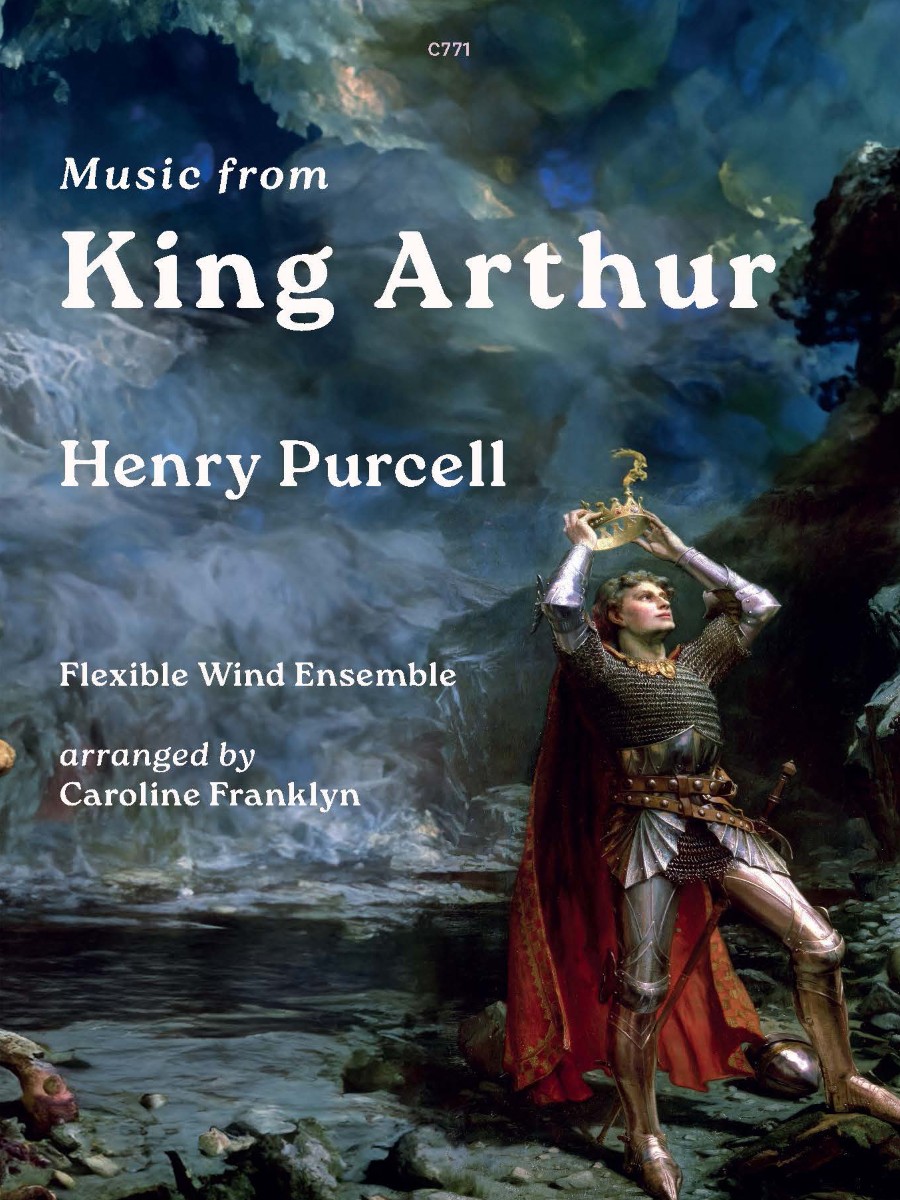
Music from King Arthur: Purcell (with Dryden) completed the ‘semi-opera’ King Arthur in 1685, to celebrate the twenty-fifth anniversary of the Restoration. After some private… performances, the premiere had to be postponed, due to the death of King Charles II. When it was finally performed publicly, it proved too controversial, due to the rebellion of the Duke of Monmouth, and the work was shelved until the 1690’s when it was staged many times, and well into the early years of the next century. The story bears little resemblance to the legends of King Arthur as they are generally known today. After many battles with the Saxons headed by Oswald, King Arthur has regained his entire Kingdom, except for Kent. He is betrothed to Emmeline, the blind daughter of Conon, the Duke of Cornwall. After many adventures, involving Merlin, magic spells, various good and bad spirits, shepherds, priests, sirens and peasants, Emmeline regains her sight, and Arthur gains Kent. The song ‘Fairest Isle’ – which has become one of Purcell’s most loved – is sung by Venus near the end of the opera, when all Arthur’s problems have been solved, and his and England’s virtues are being extolled by both gods and mortals. Previously published by Spartan Press Former catalogue number: SP740 Instrumentation This set contains: Full score plus the following parts: Part 1: in C (Flute) and/or in B Flat (Clarinet/Soprano Saxophone) Part 2: in C (Flute/Oboe) and/or in B Flat (Clarinet/Soprano Saxophone) Part 3: in B flat (Clarinet) and/or in E Flat (Alto Saxophone) Part 4: in C (Bassoon) and/or in B Flat (Tenor Saxophone) and/or in B Flat (Bass Clarinet)
R.R.P 14.95
Our Price: 12.71
Digital Download – PDF
Shipping costs: No shipping
Your basket is currently empty!
Notifications