Composer: Sibelius, Jean
Editor: Middleton, Andrew
Arranged for: 2 Fl, 2 Ob, 2 Clar, 2 Bsn, 2 Hn, Db
Publisher:
| Product Code: | 979-0-004-81912-8 |
| ISMN: | 979-0-004-81912-8 |
| Publishers Number: | MR 2306D |
| Page count: | 98 |
| Condition: | New |
Sibelius’s core oeuvre includes a set of seven symphonies, which, like his other major works, are regularly performed and recorded in Finland and around the world. His best-known compositions include Finlandia, the Karelia Suite, Valse triste, the Violin Concerto, the choral symphony Kullervo, and The Swan of Tuonela (from the Lemminkäinen Suite). His other works feature pieces inspired by nature, Nordic mythology, and the Finnish national epic, the Kalevala; over a hundred songs for voice and piano; incidental music for numerous plays; the one-act opera The Maiden in the Tower; chamber music, piano music, Masonic ritual music, and 21 publications of choral music.
Sibelius composed prolifically until the mid-1920s, but after completing his Seventh Symphony (1924), the incidental music for The Tempest (1926), and the tone poem Tapiola (1926), he stopped producing major works in his last 30 years—a period commonly referred to as the “silence of Järvenpää”.
Although he is reputed to have stopped composing, he attempted to continue writing, including abortive efforts on an eighth symphony. In later life, he wrote Masonic music and re-edited some earlier works, while retaining an active but not always favorable interest in new developments in music.
The Finnish 100 mark note featured his image until 2002, when the euro was adopted. Since 2011, Finland has celebrated a flag flying day on December 8, the composer’s birthday, also known as the Day of Finnish Music. In 2015, in celebration of the 150th anniversary of Sibelius’s birth, a number of special concerts and events were held, especially in Helsinki, the Finnish capital.
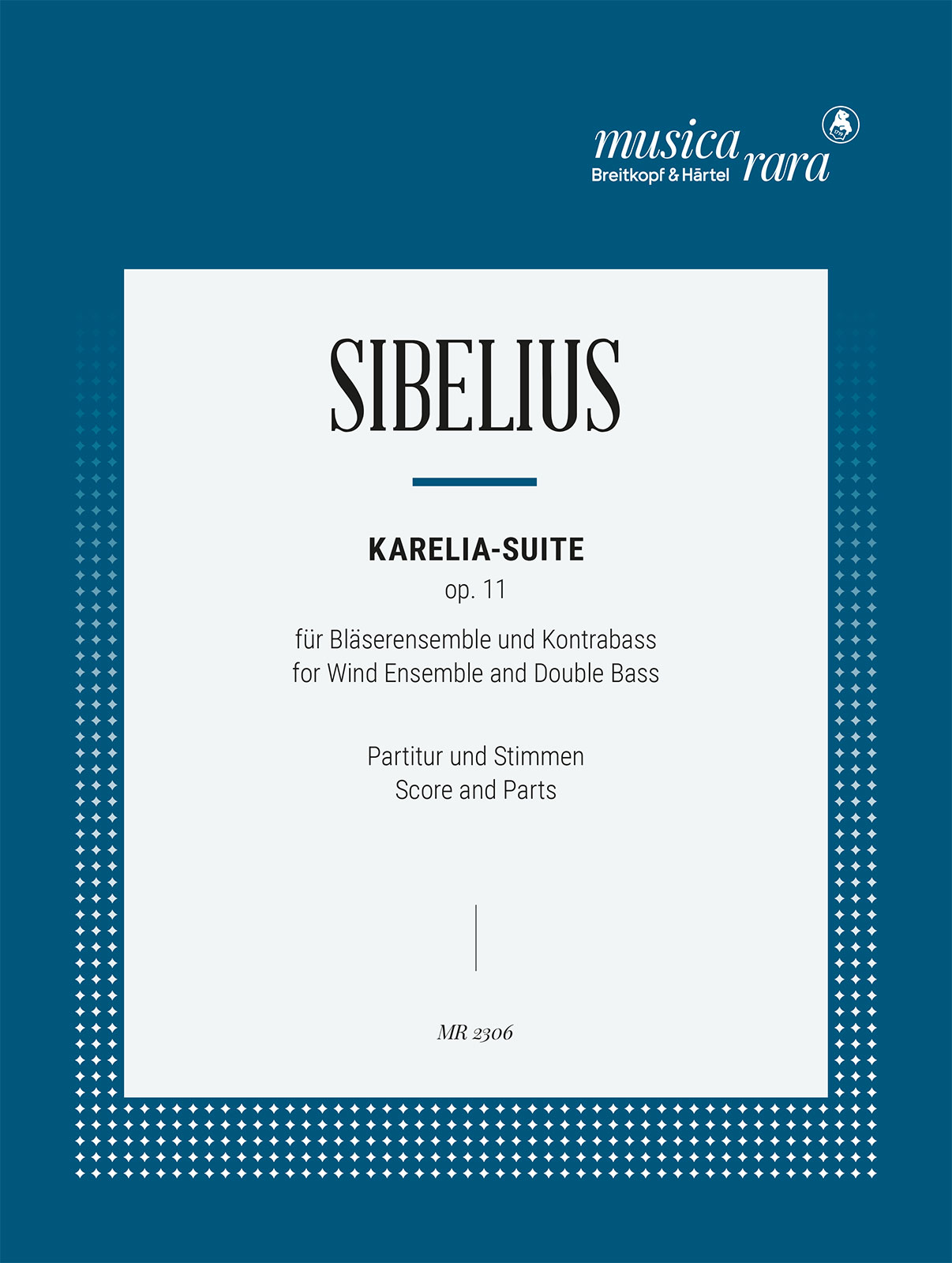
The Karelia Suite Op. 11, by Finnish composer Jean Sibelius, is a set of three orchestral movements derived from incidental music he wrote in 1893…
In this transcription, arranger Andrew Middleton aimed to use the instrumental timbres in a way that retains the original patriotic qualities but within a smaller ensemble consisting of 2 Flutes, 2 Oboes, 2 Clarinets, 2 Bassoons, 2 Horns, Double Bass.
The first movement is dominated by the brass with their march-like melody, which emerges dramatically from the fragmented phrases first heard on the horns. In the melancholic second movement, the lyrical qualities of the oboes and bassoons capture the reflective nature of the music. In the rousing final movement “Alla Marcia” of the suite, sweeping arpeggios in the flutes and clarinets come to the fore in the concluding, exhilarating march.
R.R.P 47
Our Price: 40
Digital Download – PDF
Shipping costs: No shipping
Please create and forward a copy of this publication to the customer
Your basket is currently empty!
Notifications