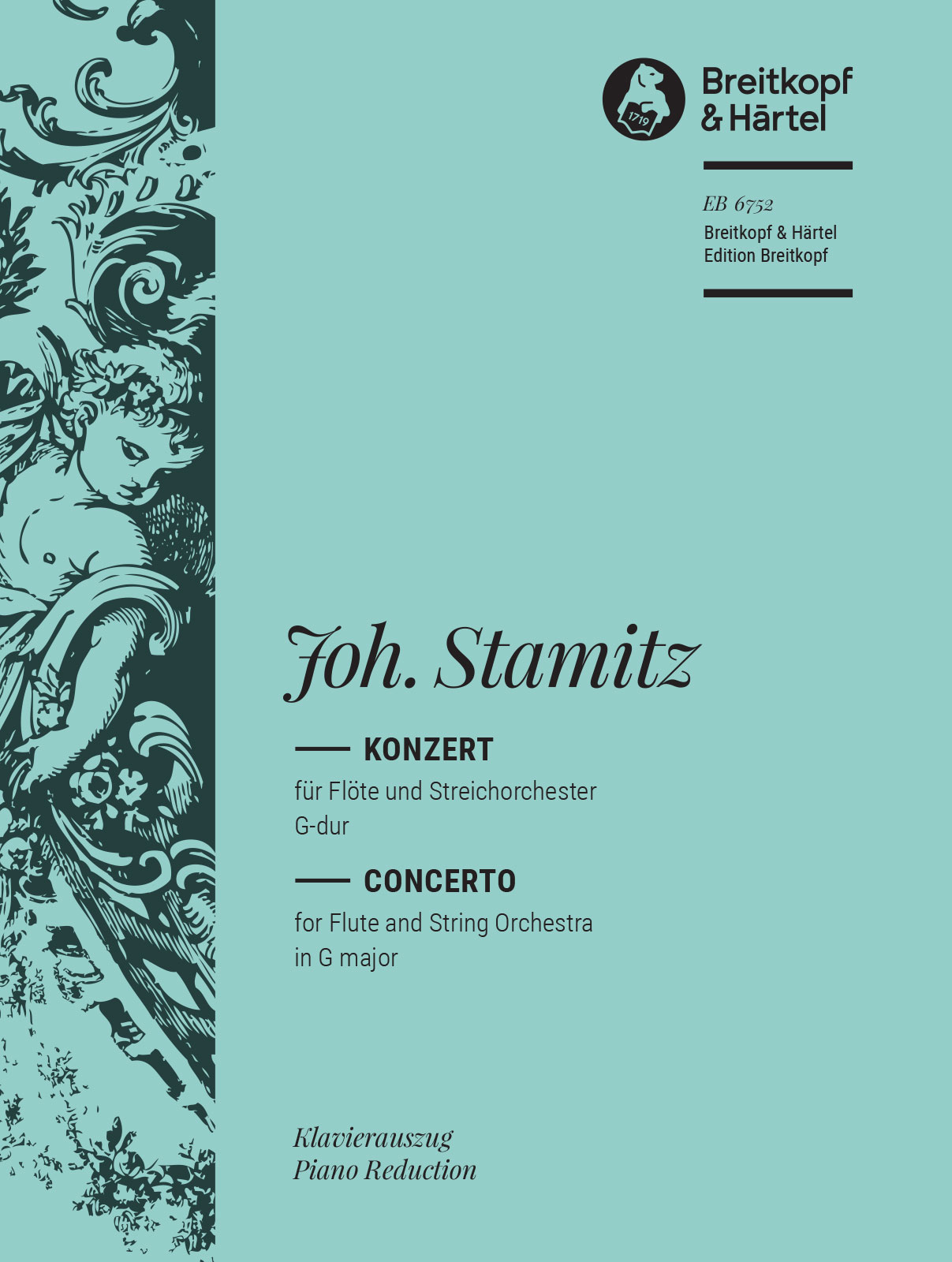
Johann Stamitz’s Flute Concerto in G Major (often associated with his son Carl as Op. 29) is a quintessential piece of the early Classical period, showcasing…
Johann Stamitz’s Flute Concerto in G Major (often associated with his son Carl as Op. 29) is a quintessential piece of the early Classical period, showcasing the elegant, virtuosic Mannheim style with its clear themes, sonata-form first movement, graceful
andante, and brilliant, Mozartian finale, bridging Baroque flair with the emerging Classical sensibility and featuring delightful flute passages over string accompaniment or piano reduction.
This Concerto is a prime example of the transitional style between Baroque and Classical, featuring clear melodies, dynamic contrast, and formal structure.
Typically for the time, the work is in three movements (Allegro, Andante, Rondo/Allegro), and the style is characterized by its classical elegance, virtuosic flute writing, and charming, spirited melodies, especially in the finale. The Concerto reflects the innovations of the Mannheim School and influenced later giants like Mozart and Haydn.