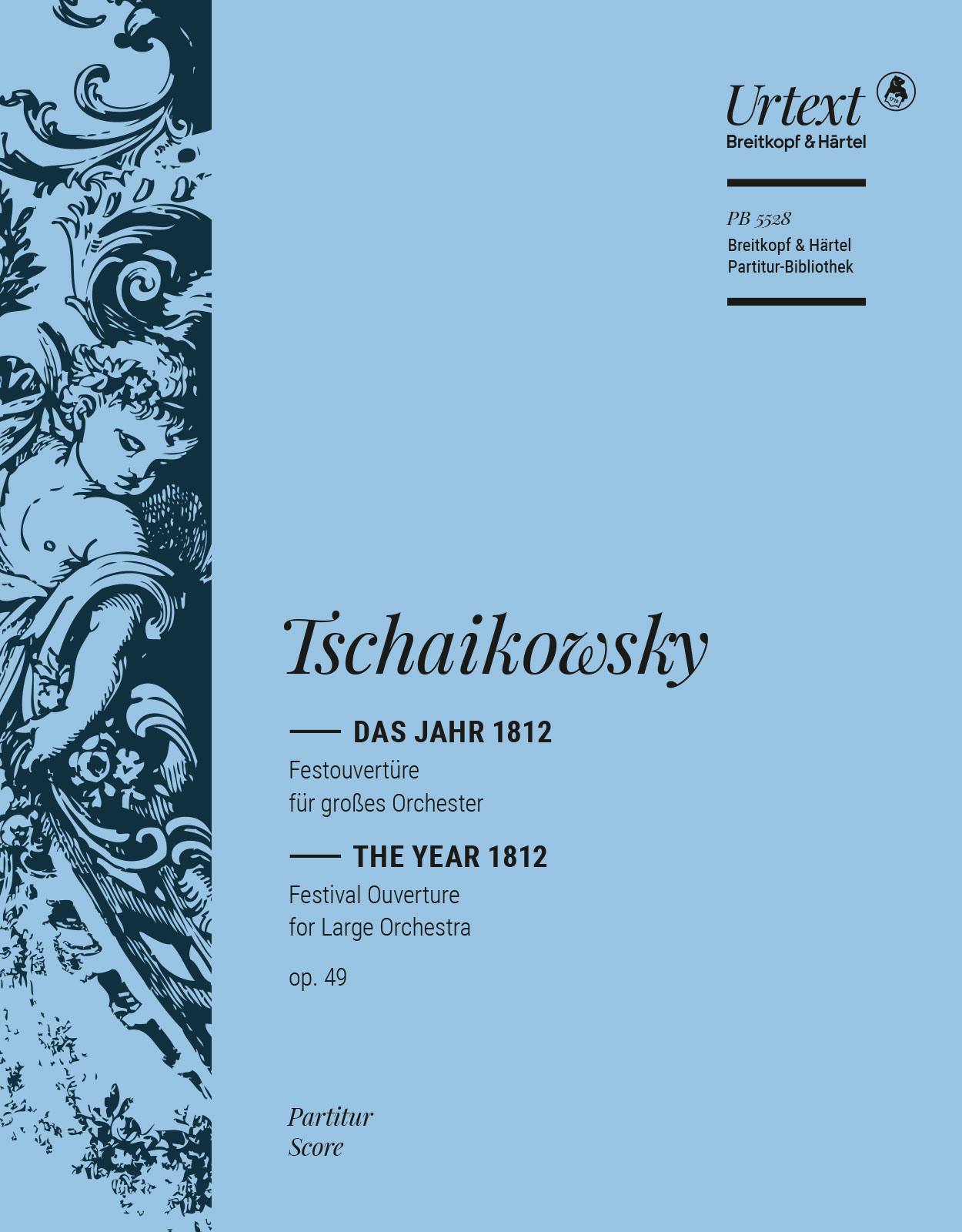
The Year 1812 Op. 49 (Solemn Overture), commonly known as the 1812 Overture, is a concert overture in E♭ major composed in 1880 by Tchaikovsky.
It commemorates the Russian defense against Napoleon’s invading Grande Armée in 1812. Composed in just six weeks in late 1880, Tchaikovsky famously disliked the piece, calling it “very loud and noisy” and lacking “artistic merit”.
The work premiered on August 20, 1882, in Moscow under a tent near the then-unfinished Cathedral of Christ the Saviour.
A Tchaikovsky Urtext is no longer a rarity in Breitkopfs orchestral catalogue. Polina Vajdman has edited a very popular repertoire work that the composer personally did not think very highly of. He even confessed to having written the work without the warmth of love.
Nevertheless, the piece is a masterful example of program music that seemingly casually interweaves two Russian folk songs, a liturgical melody of the Russian Orthodox Church and two national anthems, the Marseillaise and the Czars Hymn.
The work was written for the consecration of the Christ the Savior Cathedral in Moscow, which was erected in memory of the victory over Napoleon in 1812. The first edition of the score, which was carefully corrected three times by Tchaikovsky, is the principal source for this Urtext edition.
The wording of the title “The Year 1812” corresponds to the composers words, but was oddly never included in the first edition.