Category: Amplifiers

Amplifiers

  • Vox Pathfinder Amps

    Vox Pathfinder Amps

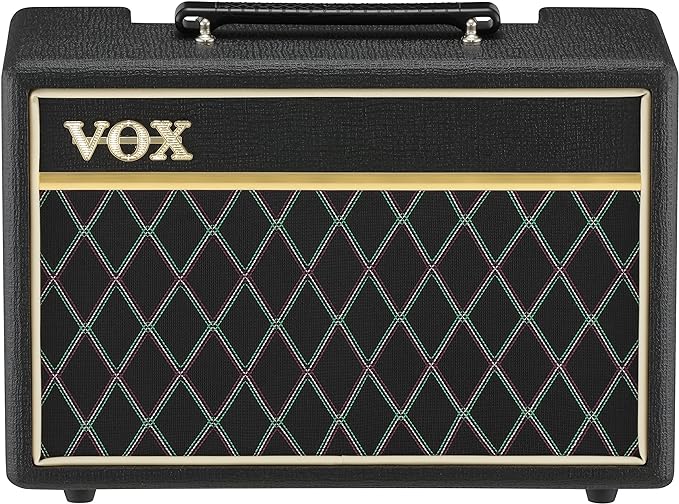
    I was thinking recently that surely running around in South America is an animal called an Illo. After all if there is an Armoured Illo there must be one without armour, otherwise how could you tell the difference? Well one is definitely armoured so the other one must not be. And thus it is with the Vox Pathfinder Amp. There are at least two, the ordinary Guitar amp and the Bass Guitar amp. The problem is they’re superficially identical.
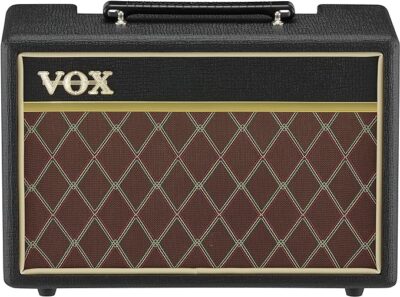
    Vox Pathfinder Amp
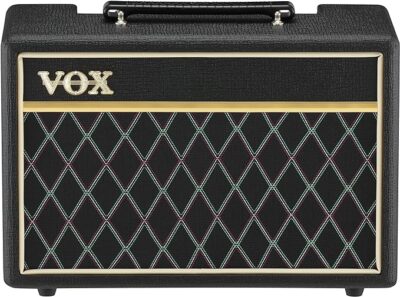
    Vox Pathfinder Bass Amp

    They even have the same number of knobs and sockets. They sound slightly different and are designed for the different guitars. While you can plug an ordinary guitar into a bass amp it’s always considered to be bad form to plug a Bass into a guitar amp. I was always told it’s because the lower bass frequencies don’t do the guitar amp speakers any good. I don’t know if that’s true, I’m not an acoustic engineer.

    At 38x14x17cm they don’t take up a massive amount of space and make great practice amps.

    The top of the box has 2 sockets at either end so you input at one end, tailor the sound to what you want, and it comes out the other end from the headphones/lineout socket. They’re both 4,5mm so you might need an mono to stereo to 3.5mm adapter for headphones. If your headphones have 4.5mm and are mono then you won’t need adapters. Obviously.

    Start with a knob marked ‘Drive’ then there’s a push button marked ‘Bright’ and knobs labelled Treble, Bass and Volume. None of these go all the way up to 11, they actually stop at 10! But then it’s only a practice amp so that should be OK, yes? I mean, you do have neighbours don’t you? But then, if you don’t have neighbours you probably won’t need a practice amp and can just plug in to your stage amp.

    You can take this from a decent bright enough sound to play some funk or dial the treble down to something almost exactly unlike an acoustic bass if you’re playing a bass guitar, with the obvious caveat; unless you’re using an acoustic bass.

    Value for money? At the time of writing you’ll pay around £87 to £99 (bass) for a 10W amp where you probably won’t, if you’re just doing this in your bedroom or at home, crank it up beyond 4. Or you could go for 40W competitors that’ll set you back £230, and not get beyond 2 before you get people banging on your door or walls screaming at you to turn the noise down, and you are a considerate people person aren’t you?
  • Roland Cube 10Gx

    Roland Cube 10Gx

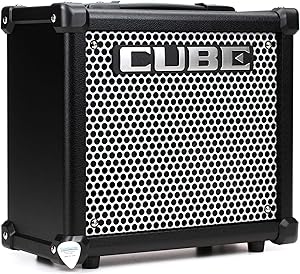
    The Roland Cube amplifier

    I’ve been using mine for over 10 years now and in that time a lot has changed in the world. I’m no longer out on the road playing gigs, hadn’t been for some time, and I wouldn’t have used this for my bass guitar anyway. Just too small and not enough power. I’d just moved in to a new flat and needed something in keeping; small, punchy but not loud enough to disturb the neighbours and with  a headphone socket in case I wanted to crank it up to 11. The Cube amp had been selling for 10 years when I bought the GX, nearly 10 years to the day writing this review so I thought I’d do a comparison looking at the 10Gx.  I’m a little disappointed. It’s still got the punch, still got the size but…

    The most obvious thing when I looked at the 10Gx was No Battery Compartment!   You mean I can’t take this new model down to the beach and plug in my Telecaster? Indeed, this isn’t a portable despite being portable.  Still, they’ve left the Cube Link port, or Aux-In, as it’s labelled, so you can, provided you buy the appropriate adapter for your phone (USB-C to 3.5mm audio for most modern phones), plug your phone into it and play a track from that though the amp. You can get some from Roland but basically if it’s on your phone you can play it through the Cube. great if you have a track-1 recording.

    On to the rest of the top panel. It’s a lot less busy, which is just another way of saying it’s got a lot less knobs on it.  Lets look at what we had in the past. On the lower row you have an instrument input (4.5mm) Gain, Volume and Tone controls with a master volume knob.  And a power button.  Above that there’s the afore mentioned Aux-In, a push switch labelled Memory (saves your set up) and 3 rotary knobs labelled Amp type (eight of them), EFX (3 areas: chorus, flanger, phaser) and Delay/Reverb (3 areas again, tremolo, delay, reverb) and a push button to turn the chromatic tuner on or off. It won’t tell which note your playing, just indicates if your note is sharp flat or actually a note.  And now to this bright future.  You’re down to 6 knobs and a selector switch split in to 3 sections.  from right to left you have the power switch, the Equaliser section of treble, middle and bass knobs, and the Amplifier section of volume and gain knobs and a selector switch for 3 amp types – Clean, Crunch and Lead, and the Input socket. What? You wanted to try the Brit Combo or Classic Stack amps of the GX?  All is not lost! You can download an app for your phone then upload the appropriate amp profile to your amp.  The Aux-In has moved to the rear, alongside the Rec/Phones and power socket.

    On both amps if you plug something into the Rec socket it mutes the speaker. Now this is a minor point, but basically when I’m recording something like a guitar I reserve a lot of channels for it in my DAW.  I use a splitter cable to divide the signal from the guitar and take one lead to the amp and another straight to the input interface for the DAW, with an input from the amp. Preferably two leads from the amp. Take a DI from the amp and stick a mic in front of the speaker for another. Yes, you do get a different sound using the mic because the room you’re in shapes the sound – unless you’re in an anechoic chamber of course.  Doing it that way gives you a clean signal from the guitar, a clean, although shaped, sound from the amp and something probably very dirty from the mic. That’s a good set of mixing options, with no overdubs and timing issues, and remember, you don’t have to use them all or you might choose to use some, or combinations, at various points. But I’d like to have that option. a Mute Speaker push button would be great, if only so’s you could take that phone call from the record company. Ok, we all have our dreams 🙂

    Prices: 

    The GX cost £108 back in 2014. At the time of writing in 2024, Amazon are doing the 10Gx for £129 (RRP £155}.

    Summary: 

    If all you want is a practise amp for your bedroom or (as in my case) my living room then the Cube is a good amp. Good sound flexibility, good practice options,  and easy to connect to to your chosen DAW, although you will probably need a 3.5mm to 4.5mm or XLA converter.  Unless you mic it up. You can’t take it busking unless you can rig up some external power supply, which is a shame, but then it’s only 10W so you might want to look elsewhere anyway.

    Value for money? Not bad given I also use it when recording my mandolin and various acoustic guitars.

The Music Realm
Privacy Overview

This website uses cookies so that we can provide you with the best user experience possible. Cookie information is stored in your browser and performs functions such as recognising you when you return to our website and helping our team to understand which sections of the website you find most interesting and useful.