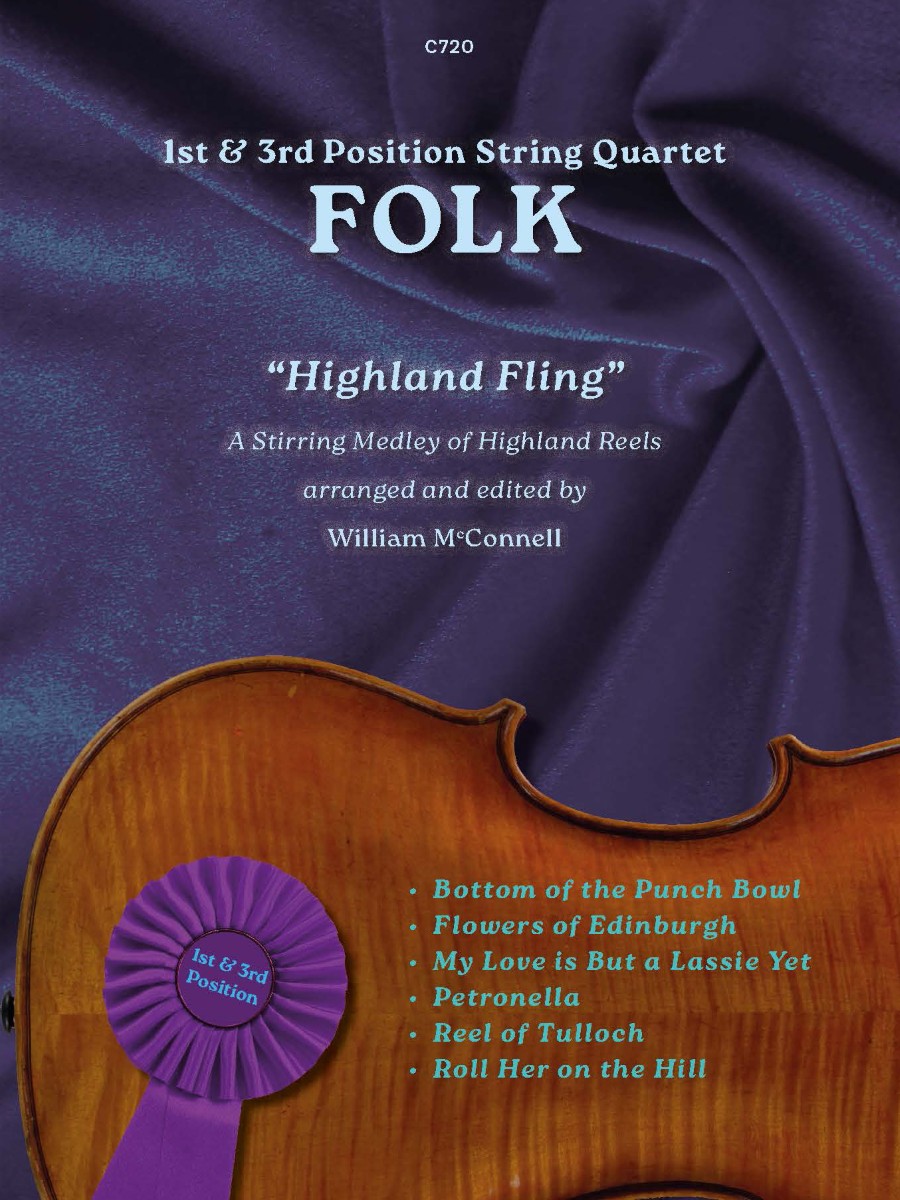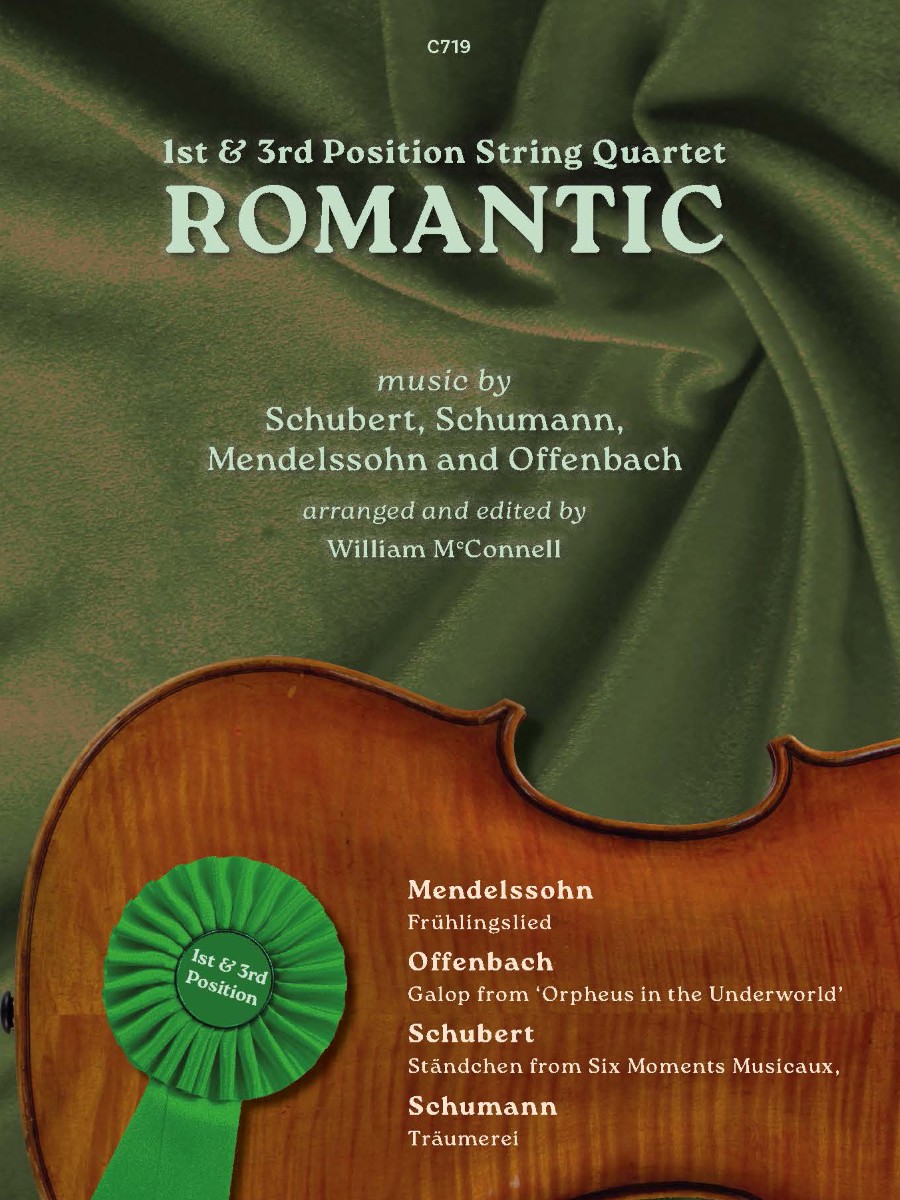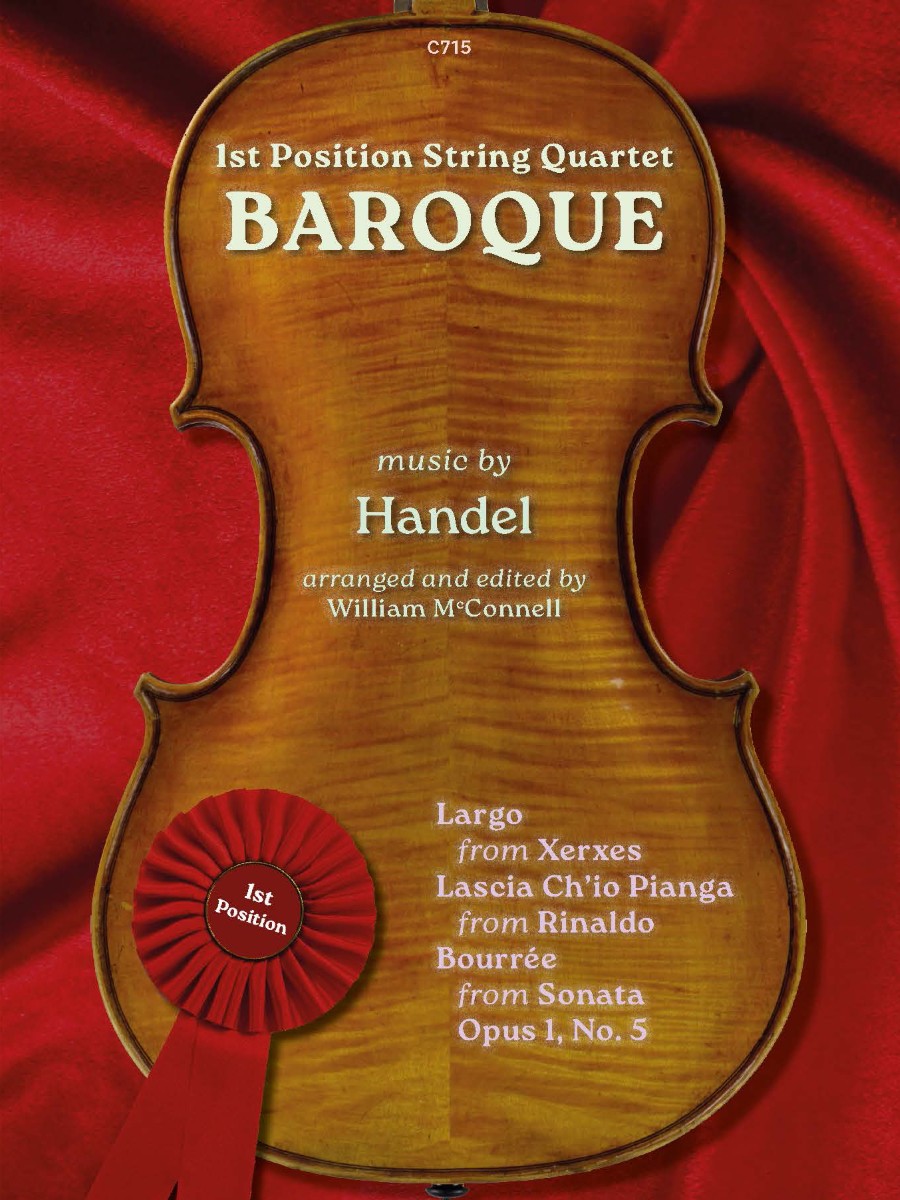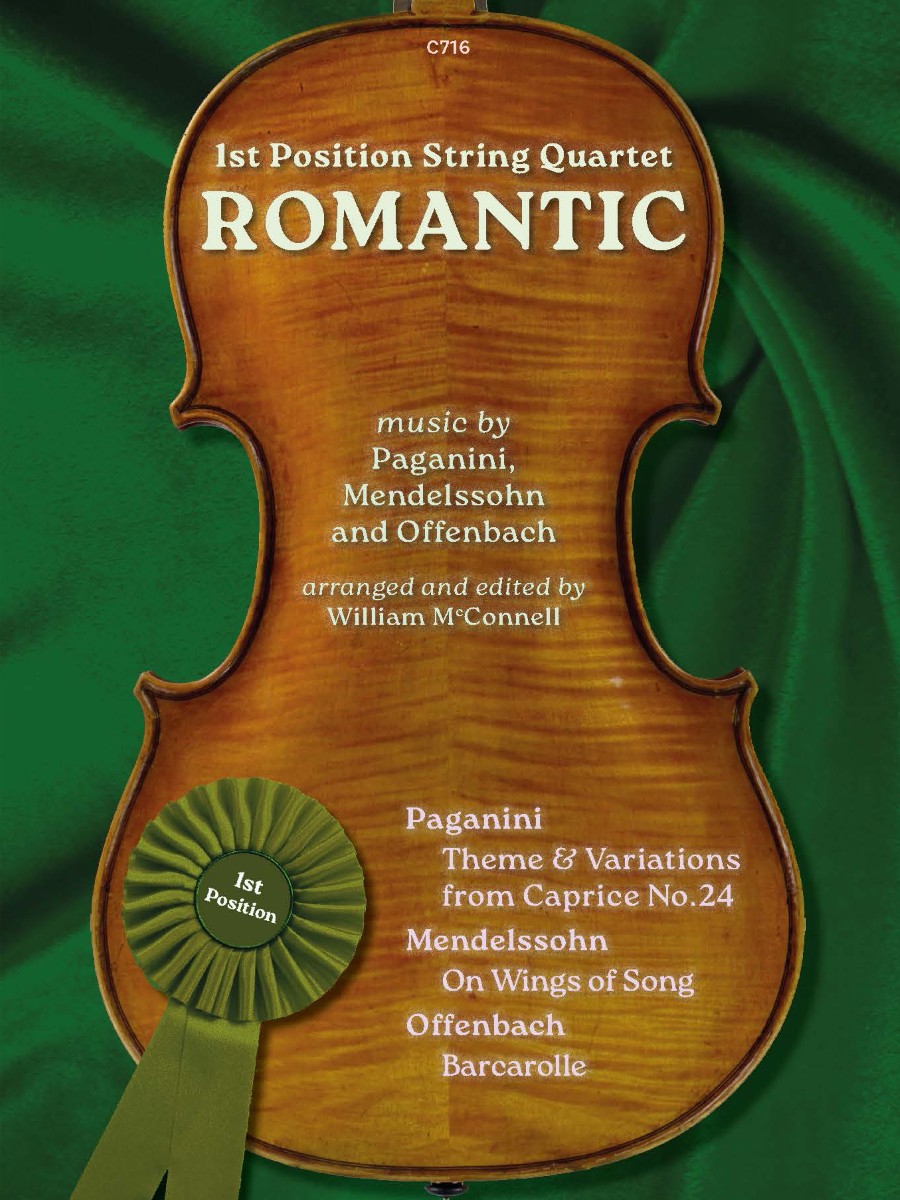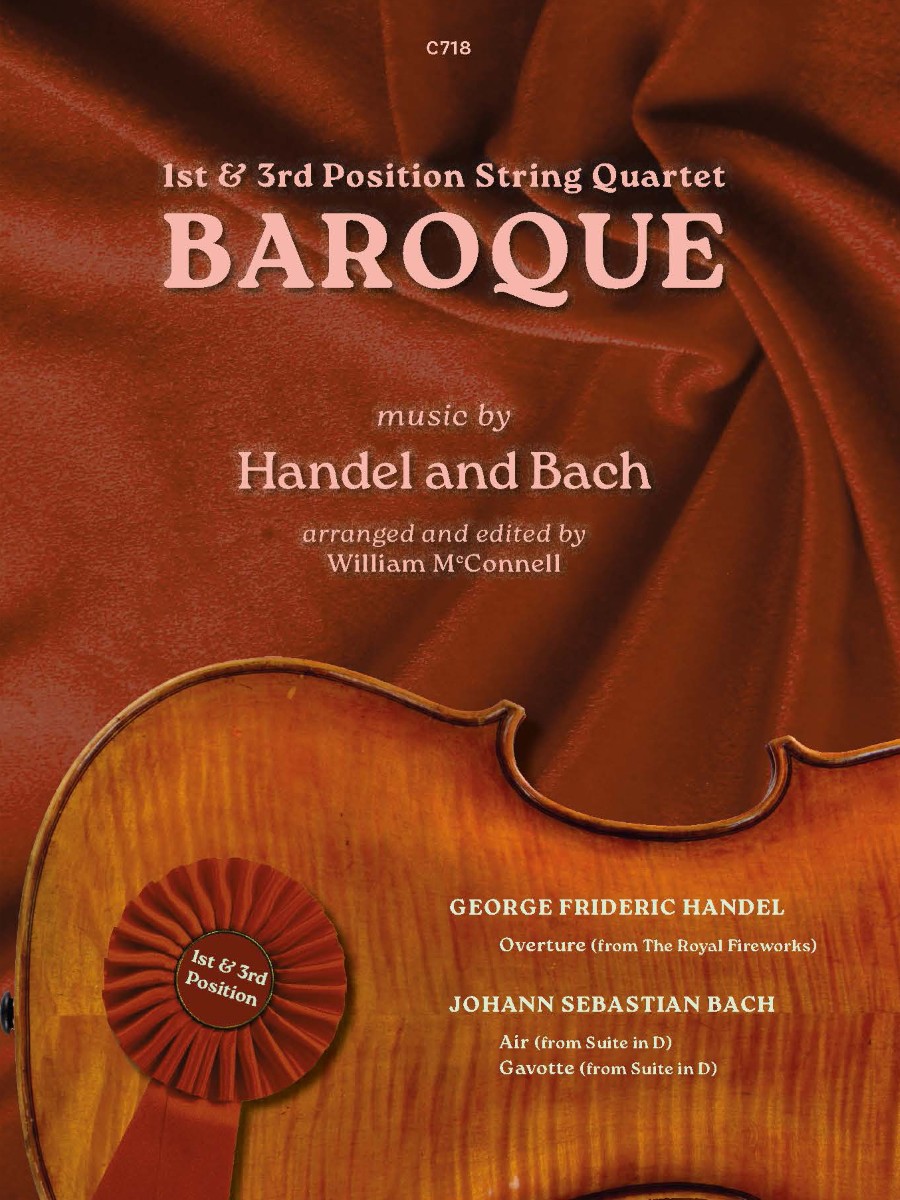
1st & 3rd Position String Quartet: Baroque
Digital Download – PDF
R.R.P £14.95
Our Price: £12.71
Composer: Bach, Johann Sebastian; Handel, George Frideric;
Arranger: McConnell, William;
Format: Score and parts
Publisher Clifton Edition
About the Composers
Bach, Johann Sebastian
Johann Sebastian Bach was a German composer and musician of the late Baroque period, born on March 31, 1685 (O.S. March 21), in Eisenach, Thuringia, Ernestine Saxon Duchies (now Germany). He passed away on July 28, 1750, in Leipzig.
Bach is now generally regarded as one of the greatest and most prolific composers of all time and is celebrated as the creator of the Brandenburg Concertos, The Well-Tempered Clavier, the Mass in B Minor, the St John and St Matthew Passions, the Christmas Oratorio and more than 300 cantatas (although only around 200 are extant. He numerous other masterpieces of church and instrumental music.
Bach’s abilities as an organist were highly respected throughout his lifetime, although he was not widely recognized as a great composer until after his death. Today, he is considered to be the master of fugue, the inventor of the solo keyboard concerto, and the greatest composer of the Baroque era.
His compositions include a wide variety of music such as orchestral music (e.g., the Brandenburg Concertos), solo instrumental works (e.g., the Cello Suites and Sonatas and Partitas for Solo Violin), keyboard works (e.g., the Goldberg Variations and The Well-Tempered Clavier), organ works (e.g., the Schübler Chorales and the Toccata and Fugue in D Minor), and choral works (e.g., the St. Matthew Passion and the Mass in B Minor).
Bach came from a highly musical family and was the last child of a city musician, Johann Ambrosius. After being orphaned at the age of 10, he lived with his eldest brother, Johann Christoph, and continued his musical education in Lüneburg. His career included working as a musician for Protestant churches in Arnstadt and Mühlhausen and at courts in Weimar and Köthen before becoming Thomaskantor (cantor at St. Thomas’s) in Leipzig.
In Leipzig, he composed music for the principal Lutheran churches of the city and for its university’s student ensemble Collegium Musicum. Despite difficult relations with his employer, Bach’s music flourished, and he enriched established German styles through his mastery of counterpoint, harmonic, and motivic organization, and his adaptation of rhythms, forms, and textures from abroad, particularly from Italy and France.
Bach’s legacy is immense, having enriched the German musical tradition and set a precedent in composition that would influence subsequent generations of composers.
Handel, George Frideric
Georg Friedrich Händel, was a German-born English composer of the late Baroque era, celebrated for his operas, oratorios, and instrumental compositions. He was born on February 23, 1685, in Halle, Brandenburg (now Germany), and passed away on April 14, 1759, in London, England.
Handel’s music is renowned for its grandeur, dramatic qualities, and depth of expression. Notably, he composed the most famous of all oratorios, Messiah (1741), and is also known for such occasional pieces as Water Music (1717) and Music for the Royal Fireworks (1749).
His early musical education was under the composer Friedrich W. Zachow in Halle. After his father’s death, Handel enrolled as a law student at the University of Halle but quickly gravitated towards a career in music. He served as an organist at the Reformed Cathedral in Halle for a year before moving to Hamburg, where he joined the opera orchestra and presided over the premiere of his first opera, Almira.
Handel traveled in Italy from 1706 to 1710, where he met many of the greatest Italian musicians of the day, including Arcangelo Corelli and Alessandro Scarlatti. His time in Italy was prolific, resulting in two operas, numerous Italian solo cantatas, and some Latin church music.
In 1712, Handel settled in London, where he spent the bulk of his career and became a naturalized British subject in 1727. His influence was such that he started three commercial opera companies to supply the English nobility with Italian opera. After a physical breakdown in 1737, he changed direction creatively, addressing the middle class with English choral works. Following the success of Messiah in 1742, he never composed an Italian opera again.
Handel’s legacy includes more than forty operas and a wealth of other works. His music was admired by Classical-era composers, especially Mozart, Haydn, and Beethoven, and remains a cornerstone of the Western classical music canon.
1st & 3rd Position String Quartet: Baroque contains pieces, from Handel's Overture from The Royal Fireworks and two matching movements from Bach's famous Suite in…
Page ? of ?