Antonio Vivaldi was an Italian Baroque composer, virtuoso violinist, and teacher born on March 4, 1678, in Venice. He is best known for his contributions to the development of the concerto form and for his numerous concertos for violin and other instruments. Vivaldi’s most famous work is “The Four Seasons,” a series of violin concertos that depict scenes appropriate for each season of the year.
Vivaldi’s early life was marked by his musical talent, which was evident from a young age. He began studying for the priesthood at the age of 15 and was ordained at 25. However, due to a health problem, he was given dispensation to no longer say public Masses.
Throughout his career, Vivaldi composed over 500 concertos, more than 40 operas, and numerous sacred choral works. Many of his compositions were written for the all-female music ensemble of the Ospedale della Pietà, a home for abandoned children in Venice.
Vivaldi’s influence during his lifetime was widespread across Europe, giving origin to many imitators and admirers. He pioneered developments in orchestration, violin technique, and programmatic music. Despite his success during his lifetime, Vivaldi died in poverty in Vienna on July 28, 1741.
After almost two centuries of decline, Vivaldi’s musical reputation underwent a revival in the early 20th century. Many of his compositions, once thought lost, have been rediscovered and continue to be performed and celebrated today.
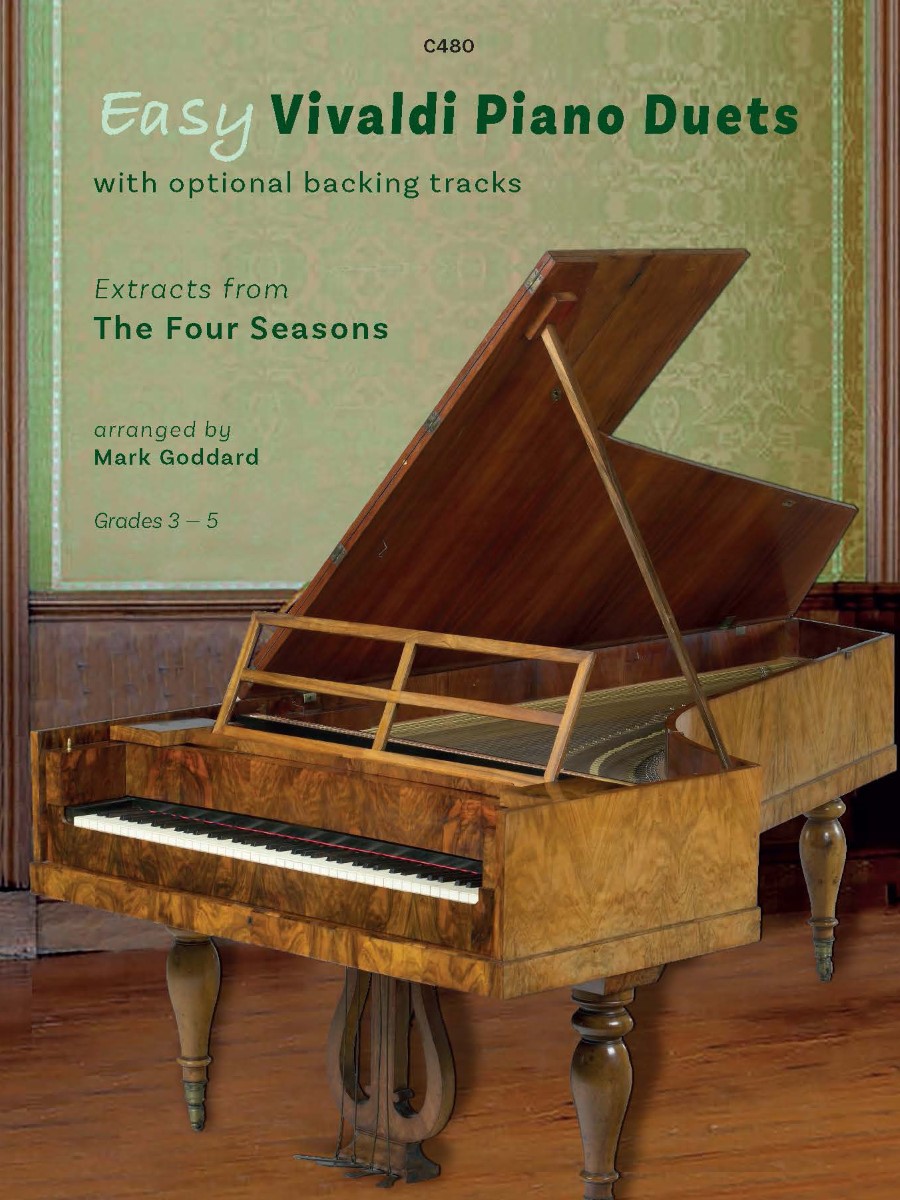
Easy Vivaldi Piano Duets is part of Clifton Edition's Easy Piano Duets Series which presents a selection of sensitively arranged piano duets, each with optional…
Easy Vivaldi Piano Duets is part of Clifton Edition’s Easy Piano Duets Series which presents a selection of sensitively arranged piano duets, each with optional backing tracks. In the interests of playability, these two wonderful tunes have been simplified, while still allowing the spirit of the originals to shine through.
Vivaldi’s The Four Seasons (Le quattro stagioni) is the name given to the four violin concertos Opus 8, No. 1-4. Composed in 1723, they remain among the most popular concertos in all music. The texture of each movement is varied, resembling its respective season. For example, Winter is dark and sombre, whereas Summer invokes a thunderstorm in its final movement. Vivaldi wrote four sonnets to be read with the concerti – here translated into English overleaf.