Category: Accessories

Accessories

  • Tuning your instrument

    Unless you are blessed with perfect pitch, at some point you will need to consider how to accurately tune your instrument. Of course, if you’re a pianist, you just get someone who has been trained to do it for you. Not cheap, but easy! So, there are choices to be made, and there is plenty out there to choose from. As usual, we’ve tried to give you a range of products we consider to be worth trying.

    No tech and environmentally friendly choices:

    Pitch pipes and tuning forks are both used for tuning musical instruments and helping musicians find the correct pitch. So far, so good. So how do they work and what is the difference?

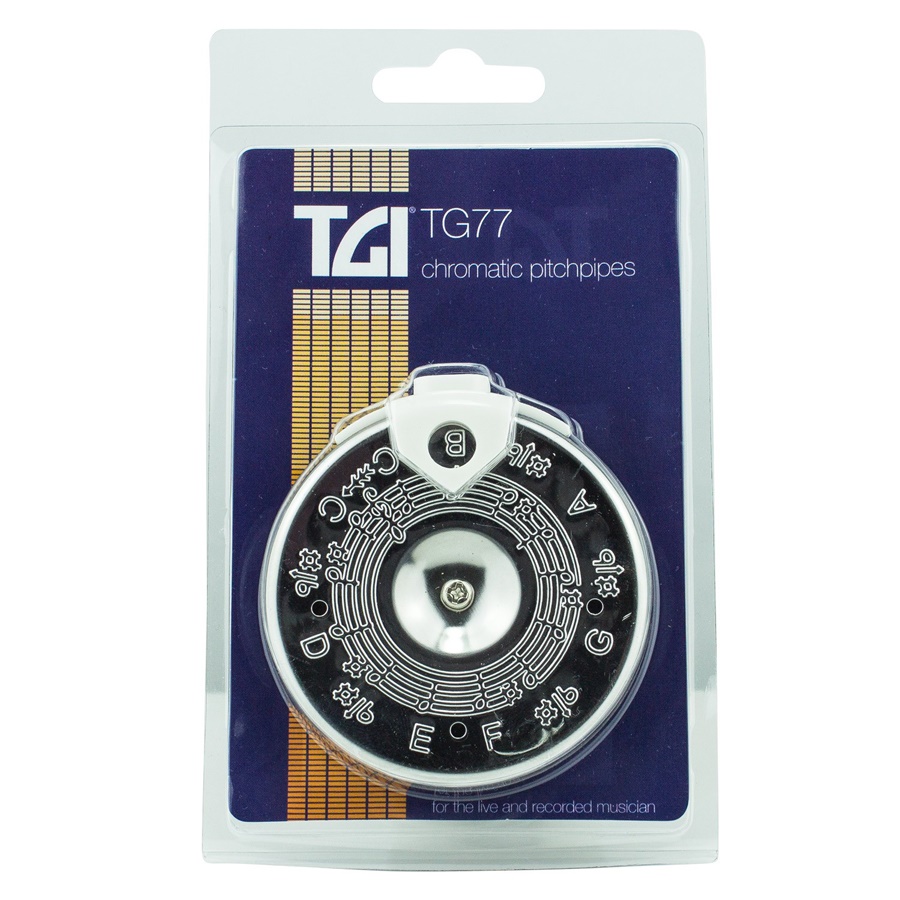
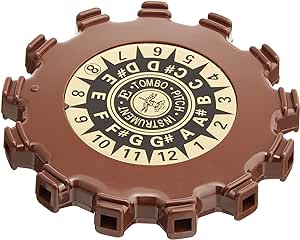
    A pitch pipe is typically a small device which when blown into produces a music pitch. Rather like a harmonica. Some pitch pipes are chromatic and will give an octave scale (producing all 12 notes of an octave), while others are tailored for specific instruments like ukuleles or guitars, so cover a smaller range of notes. Chromatic ones are more versatile and are especially useful for choirs and singers, where you may well be asked to start on any given note. The upside of pitch pipes is that they are very portable, and not reliant on a power source; you just blow! The down side is that the accuracy of the pitch is determined by your technique, so you need to get your breathing right. Don’t over blow or under blow.

    I’ve found the Tombo PE13e is a reliable product, with the TGI77 a good budget option.
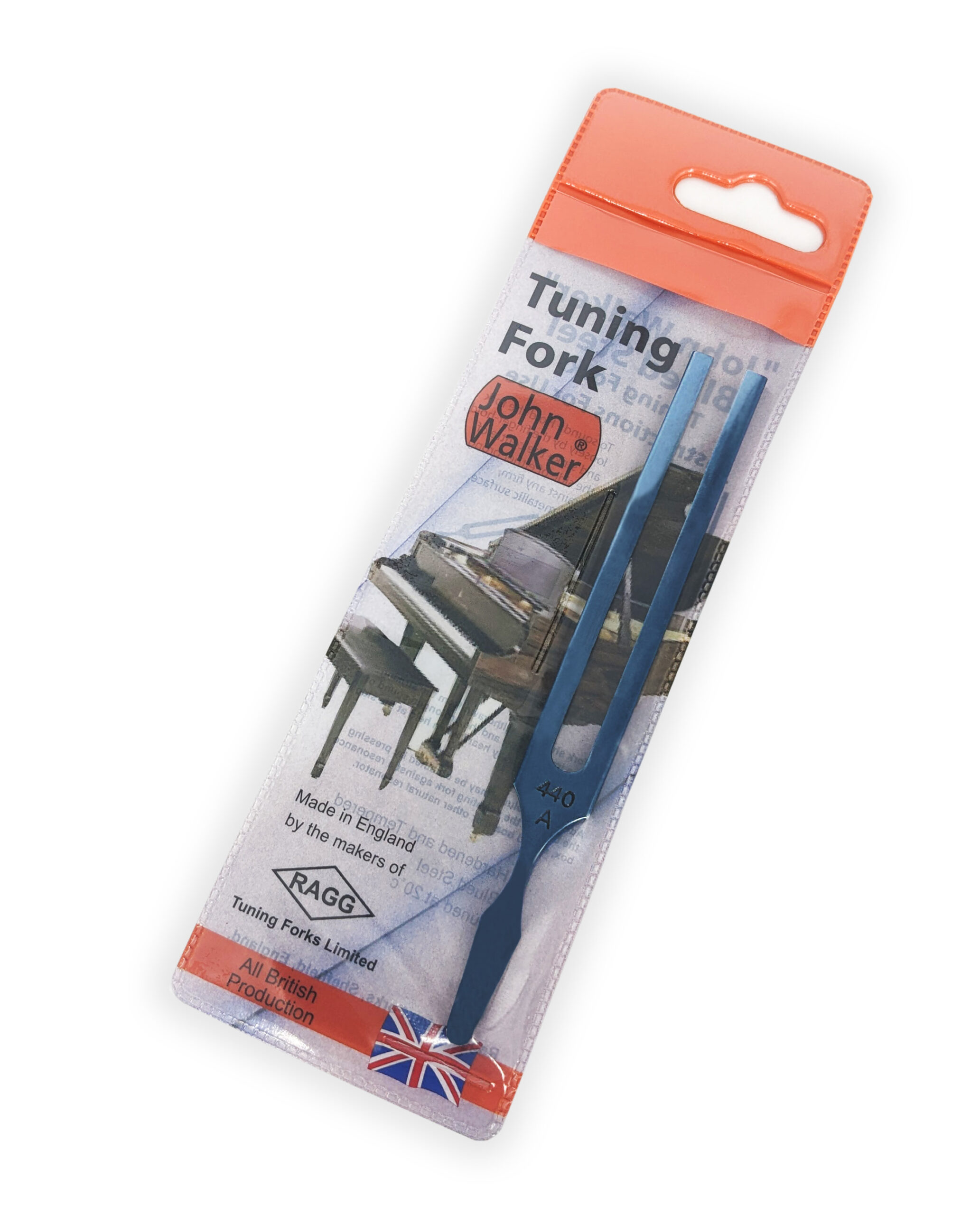
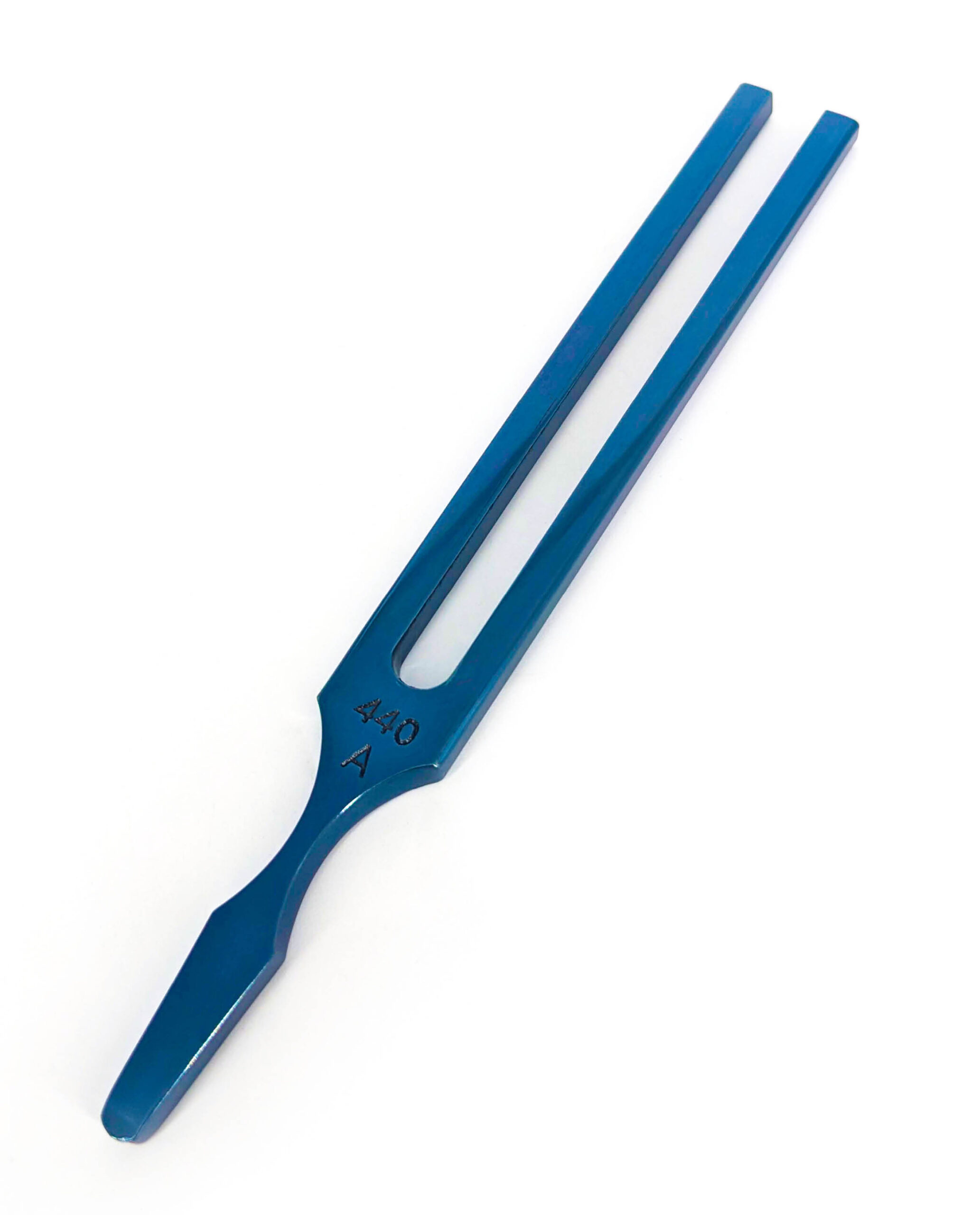
    Tuning forks have two metal prongs which resonate at a specific pitch when struck and placed on a surface which resonates to hear the pitch. You can get chromatic set, but these are eye-wateringly expensive (just over £200 last time I looked. Most people just buy one or two of a pitch they most commonly need (typically, C, G A, and, for guitarists, E -high or low). These days, tuning forks are mostly used by classical musicians and purists. Tuning forks give a very precise, pure tone, and because you only get one note, you have to learn how to tune the other notes of you instrument by ear. So, it improves your musicianship. These days there aren’t a massive number of manufacturers; I prefer those made by John Walker. They are a high-quality product and made in Sheffield.
    Medium Tech:

    Electronic, battery-operated tuners have become extremely popular, mainly due to their accuracy, and ability to enable you to easily tune more than one note. You can get clip-on tuners which are specific to certain instruments, but it’s always worth considering if there is a chromatic option as this will give you maximum amount of choice.  There are three kinds of battery tuners: Clip-on, stand-alone and pedal tuners.

    Clip-On Tuners are relatively small, and as the name implies, clip on to your instrument (either the headstock or the body), which makes them a good choice for any string instrument. They work by detecting the vibration of the string you are tuning and giving a visual display which indicates when the string is in tune. They’re generally easy to use, portable, and because they work by vibration, they are not affected by any background noise. My personal preference is the D’Addario Planet Waves range. They do a good range of both chromatic and instrument specific, with guitars, ukuleles, mandolins, banjos, violins, violas, cellos and double basses all specifically catered for. They’ve really thought out how these best attach to your instrument. As you can see, fro example, the violin micro tuner attaches to the body of the instrument with a non marring lever clamp, whereas the cello/bass tuner attaches to the bridge:

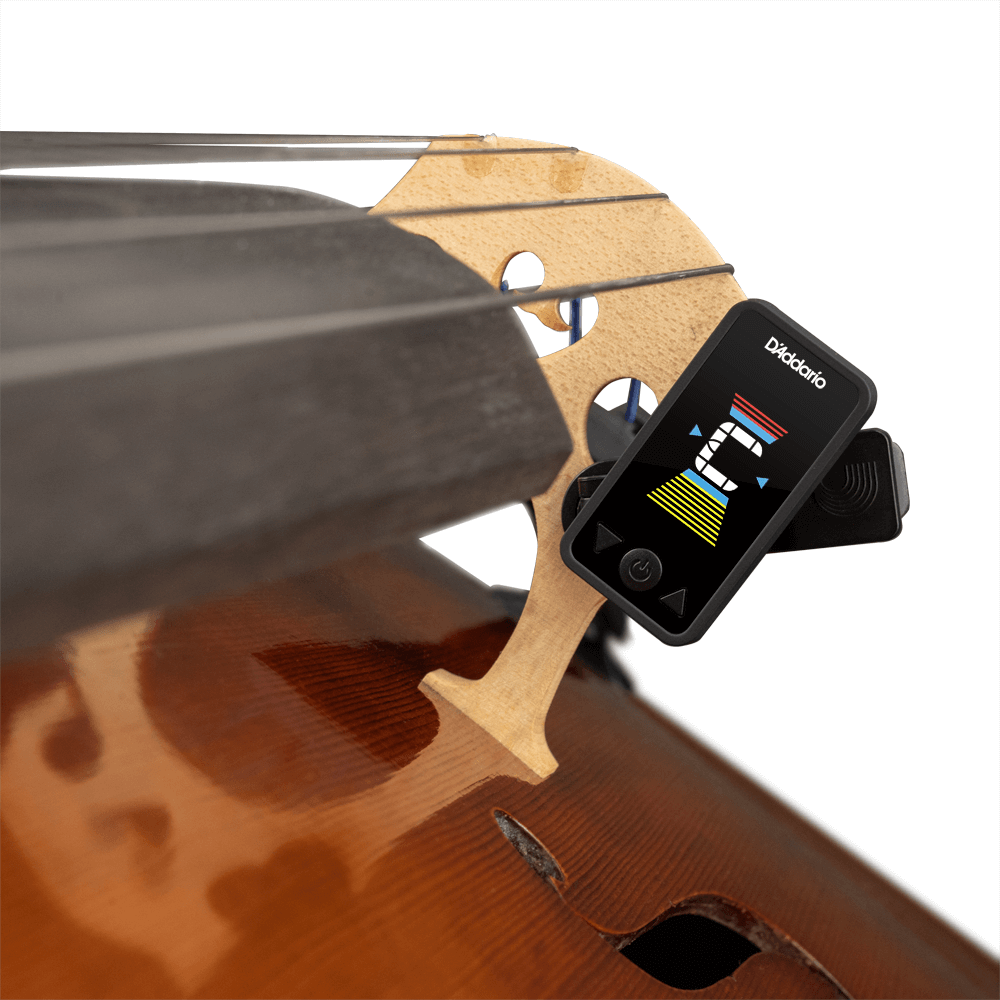
    D’Addario PW-CT-17 Eclipse chromatic tuner, which is available in various colours, if that sort of thing bothers you, is a best seller. It’s a very reliable, easy to use model. D’Addario have also produced a rechargeable version of the Eclipse tuner, the PW-CT-27.

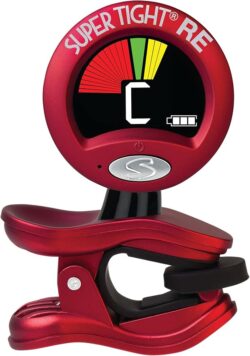
    I do also like the Snark Supertight ST-2 tuner. It’s chromatic, so will work on any instrument, and has a mic option as well as vibration, which means you don’t have to attach it to your instrument – you can just place it on any nearby surface. It also has full 360 degree rotation, and a very clear display. However, we did have a couple of returns where the head had become detached from the clip as the joint on the clip had broken. A good model, nevertheless, just handle with care!
    717Msi5DiDL. AC SY879 e1727015041883

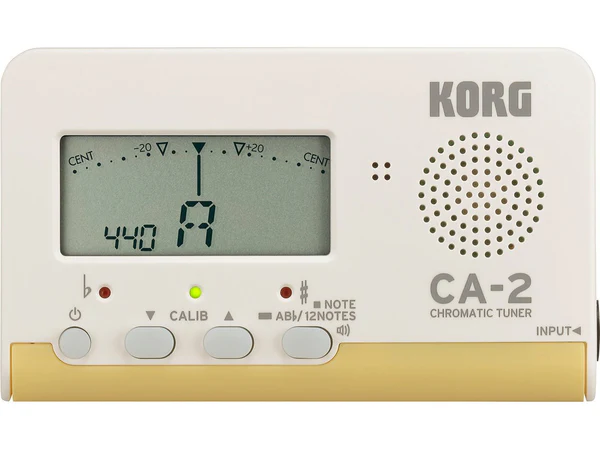
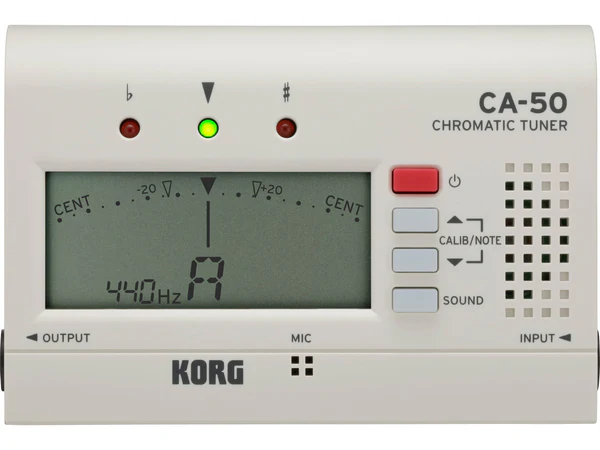
    Handheld or standalone tuners are small, portable devices with built-in microphones (for acoustic instruments) or input jacks (for electric instruments). For versatility, chromatic versions will work on any instrument, making them a popular choice. They display the pitch of the sound detected and indicate whether the note is flat, sharp, or in tune (usually by displaying in red for sharp of flat, and green for in tune). The Korg CA2 or CA50 chromatic tuners are both excellent choices. Just turn on, play, and the tune until the needle on the display is in the middle and the green light comes on, but sometimes the natural decay on the note affects the display. There is also in input and output for your instrument cable. Both models give allow you to calibrate your note precisely, and there is a little pull-out stand at the back which enables you to place the tuner in a more up=right position if you prefer. If you just guitar model the GA2 is a good option. All run on 2 AAA batteries which come with the tuner, so don’t throw the box out until you got the batteries out (they’re separated from the tuner in the ox, so open both ends).
  • (Near) Silence Is Golden

    As double bassists we have many pieces of equipment which are essential – the obvious ones are a bass, bow, rosin and case. Alongside these are other things which we use such as a tuner, a duster to clean the rosin off the strings, a mute and one of the most important things, which can be as rare as hens teeth in many bass sections – a pencil.

    Double Bass Wheel

    Double Bass Wheels

    We need something to transport the bass, such as a wheel or carrying strap and many other useful tools and gadgets, but one of the most useful things I have ever bought for my double bass is a practice mute. Not one of the smaller mutes which conductors insist on, even though they don’t always make much difference, but one of the hefty plastic or rubber mutes with five prongs.

    A practice mute fits across the entire bridge and really does deaden the sound. Sometimes I even add a duster or two across the bridge to soak up a few more of the vibrations.

    Double Bass Mute

    Double Bass Mutes and Accessories

    Why do I think a practice mute is so important?

    There are many reasons but it’s mainly to keep everyone in your house, and your neighbours, happy! Obviously, I realise how lucky they are to witness the wondrous tones of a double bass but sometimes even our nearest and dearest are immune to the instrument’s many charms. A practice mute allows us to ‘belt out’ whatever we are playing, but minus many of the usual decibels that we all love and cherish.

    One other benefit of a practice mute is to help develop a strong tone when it is employed, and then to hear and feel the difference when it is removed and the bridge is allowed to resonate freely. Suddenly you can feel the true power of your sound, which has been helped by using the practice mute, much like an athlete who uses resistance workouts to increase speed and agility.

    Which practice mute to buy? There are many to choose from and my mute is probably decades old, almost like new, and to me is worth its weight in gold. They are quite inexpensive, so it isn’t a big investment financially, but professionally it’s worth a fortune. Give it a go….

    David Heyes
    D’Addario Performing Artist
    4 September 2024

  • Trombone Stands

    We think the two offerings by Hercules and K&M are the best ones to choose from. They all offer good stability with rubber feet giving solid grip, and have good height adjustability.

    Two K&M offerings are the 14985 and the149/9 which is a bit more expensive but more robust in its’ construction.

    The best-selling 14985 has a 2-piece folding design. The height adjustable tubular design is made from solid steel with a fibreglass reinforced plastic base, it has an adjustable plastic peg. The foldable legs are of the socket style, rather than the swivel style of the Hercules models. Non-marring height-adjustment mechanism.

    The K&M upgrade is the 149/9. The trombone itself rests on a rubber cone which is designed not to damage your instrument. The tripod legs are braced for extra stability and can extend out to over 20 inches. This is a 2-part stand is made from tubular steel, and folds down quickly and easily, which is very compact when folded.

    From the Hercules brand the DS520B trombone stand is robust stand which will hold most. The sturdy tripod legs have cross braces which give good stability for most trombone models and the legs use Hercules usual swivel method of folding down. The top bracket has two slots and a catch to secure the slide braces. The Hercules TravLite Trombone Stand DS420B folds easily and compactly and stores inside the bell of the instrument; velvet pads protect the instrument. As the name implies, this is a lightweight stand designed for good portability. It’s very quick and easy to set up. The in-bell design means that the stand can be stored safely in the bell or your trombone meaning no extra space is needed in your case. It comes with a velvet base design protects the finish of the instrument.

    If price is an issue, then the Nomad NIS-C022 is quite good considering the price. This trombone stand has a one-piece folding design with tripod retractable legs, and the bell mount is cushioned. As you would expect, it’s not quite well designed and built as the K&M and Hercules models, but at £20.99 (at the time of writing) it is good value for money.  

  • Trumpet Stands

    The lightweight K&M trumpet stand (model number 15213) we think represents a good choice for your trumpet. There are 5 legs which fit inside the bell and give excellent stability, and the rubber peg tip and felt pads give a good secure hold and protects your trumpet from scratches. The entire stand can fit inside the bell of the trumpet making it a very portable stand.

    By comparison, the Hercules Trumpet/Cornet Stand DS510BB has really solid legs which give good stability, and a velvet peg which prevents scratches to your trumpet. It has a height adjustment lever and comes with a carrying bag as well. Locking pins hold the legs firmly in place. To fold the stand, just press the pins and swivel to fold. The stand comes with a carry bag.

    Of the budget offerings, the Nomad NISC011 stand is worth considering. It has a sturdy tripod design, but the manufacturing quality is not quite as good as the K&M or Hercules ones.

  • Saxophone Stands

    Saxophone stands are essential accessories for saxophonists, providing a safe and convenient place to rest the instrument when not in use. It’s just not practical to disassemble and put it back in its’ case when you’re going to resume playing in a few moments. Saxophones are fairly expensive and can be quite heavy so a good robust stand is essential. Look for a solid tripod or weighted base to make sure your sax doesn’t topple over. Before you buy your stand it’s worth thinking about if you want a single instrument stand, or one that will also hold multiple saxophones or your saxophone and another instrument. Also bear in mind that if you are travelling a lot with you instrument the portability and foldability of the stand is important.  

    Alto and Tenor Stands

    The Hercules DS-530BB is our pick for Alto and Tenor stands. The robust construction and stability given by the tripod base are hard to beat. The stand itself weighs just under 1kg and has a load capacity of 10 kg, which should be more than enough given that the average alto weighs just over 2kg and tenors about 3 kg. It has a folding yoke, an adjustable backrest, and locking pins that lock the stand in place. To fold the stand after use, you just press the pin and hold it in. It comes with a bag which makes carrying it around with you easy. are secure and stable for use with Tenor or Alto Saxophones. A storage bag included.

    K&M 14300 Alto/ Tenor Sax stand is a decent offering, and a little bit cheaper than the Hercules DS-530BB. The tripod base is sturdy, and the support arms have a protective plastic coating. The height of the lower support arm can also be adjusted as there are several locking positions, and the upper support arm is flexible and can be adjusted to different bell sizes. K&M also produce a couple of peg holders which can be used with this stand and you can also get a bag, but it is not included.

    Baritone Saxophone Stands

    The Baritone Sax Hercules DS535B stand has a folding yoke with locking pins to secure the upper yoke in the correct position. The backrest has a lever to adjust the height and the swivel legs also have locking pins which lock the stand in place There is a peg hole if your stand needs to hold another instrument. The pegs are sold separately and will hold instruments like soprano saxophones, trumpets clarinet and flute, but the peg won’t hold an alto or tenor sax. If you need a bari stand that also holds an alto or tenor sax, take a look at the DS536B which comes with a detachable fitting.

    Of the K&M offerings the 14410 is our choice as it has an extra-sturdy tripod base with cross braces giving the legs extra load capacity and a two-piece folding design. The support bracket has several locking positions. As you would expect, the height is adjustable, and as with their alto/tenor sax stand the support arms are covered with special non-marring (i.e. non-damaging) plastic to protect instrument. One caveat; this stand has limited suitability for baritone saxophones with a low Bb, due to the shape of the bell flare.

    Soprano Sax Stands

    The solid tripod legs on Hercules DS531BB provide good stability and there is a height adjustment lever (this stand will also hold a flugel horn). The velvet covered peg is detachable and the stand comes with a carrying bag.

    Rather than a tripod base, the K&M 15290 stand has 5 legs which provides really good stability for the instrument. The detachable metal leg base screws into the peg so that the entire unit can be stored in the bell of the instrument for easy transport. The black plastic peg is covered with a felt ring to protect the instrument.

    If you have a curved soprano sax then the K&M 14315 is worth a look.

    Multi Sax stands

    The Hercules DS537B will hold 2 alto/tenor saxophones has a one-piece folding design with the locking pins providing a secure solid stand. To fold the stand, you just press the pin and fold. This is a robust stand which has a total weight capacity of 19.95 kg.

    For a combined alto/tenor stand which will hold a soprano sax, the Hercules DS-533BB and has all the features you expect from this manufacturer.

    And the DS538B will hold a staggering 2 alto/tenor saxophones, 1 soprano saxophone and 2 clarinets or flutes.

    For the full range of Hercules and Konig & Meyer stands, click on the buttons below.

  • Which Bass Rosin Should I Buy?

    Not a problem, I’ll look online – BUT: suddenly I am faced with dozens and dozens of different rosins, so which is the right one for me?

    There are so many factors to take into account. If you are an orchestral player, you will probably need one of the stronger rosins but if you are a beginner, maybe a more general rosin might be better. Baroque players need something different again, some soloists prefer violin rosin, so where do I start?

    Do you live in a hot or cold country? That will determine which rosins are most suitable for your climate, and possibly which ones to avoid.

    There are so many questions but also a similar number of answers. Over the years I have used rosins by Hidersine, Eugene Cruft, Pops, Carlsson, Nyman and Leatherwood Bespoke, maybe even more, and at the time the one I was using was my favourite. For many, many years I used Nyman’s rosin, which most of my students also liked, and which seemed ideal for the British climate, apart from the hottest spells when many a bass or bow case has been covered in a sticky rosin residue, which seems to glue everything together for weeks, but overall, it was good for all my playing needs – solo, chamber music and the occasional orchestral date.

    A few years ago everyone was raving about the new Leatherwood Bespoke rosin (the amber range), which seemed inordinately expensive, but many friends from around the world raved about the rosin, so I ordered two pots from Australia and settled on 20% and 25%, because I do more solo than orchestral playing nowadays, and waited for the post to arrive. It duly did and I absolutely fell in love with the 25% which produced a clear tone across all the registers and suited my bass and strings perfectly. I now only use Leatherwood and love everything about the rosin and am about to order two new pots, although I see they no longer produce a 25% mix so I’ll buy a 20% and 30% and use one swipe from each to hopefully create something like a 25% rosin which I like.

    Which rosin is best for you? There are so many different ones to choose from, alongside different string types, playing styles and temperatures, and my advice would be to ask your teacher, a friend or colleague, who will give you good advice from a local perspective, or read some of the online reviews (like this one 😊) and take a chance that it’s the right one for you. Rosin, on the whole, is inexpensive so it isn’t such a big investment if you don’t like the one you have bought.

    Personal recommendation is a good starting point and my first pot of rosin was at the back of a cupboard in our music department at school alongside a hardback copy of the Simandl Method, and that’s how I started. I can’t remember which rosin it was but it would have been old, I am certain of that, but other bassists and teachers were happy to help with suggesting different rosins and I never looked back. I know what I like, I know what I don’t like, but there is something out there for everyone.

    Happy rosin hunting.

    David Heyes
    D’Addario Performing Artist
    4 September 2024

  • Metronomes

    Firstly, let’s get the boring stuff about what a metronome is out of the way. Contrary to what the name may suggest these are NOT very small people living in the darkened tunnels of the London Underground.

    You will all know (I think/guess/hope/imagine) that a metronome is a device used by musicians to keep a consistent tempo during practice or performance. It produces a regulated pulse, often in the form of a ticking sound or a visual cue, to help musicians maintain a steady beat. There are various types of metronomes from mechanical, to digital, software apps.

    Traditional mechanical metronomes are operated by winding up a spring mechanism (rather like an old-fashioned watch or clock) with the tempo set by moving a weight on the pendulum. There is no need for batteries, which is environmentally friendly, but need to be placed on a level surface or they will develop a limp. Some models can be set so that a bell rings on the on the first beat of the bar. You also need to be careful not to overwind the spring as well or it will stop working. A lot of people like the visual help given by seeing the pendulum swing as well. The disadvantage is that they can be bulky, especially the pyramid style ones, and expensive.

    Wittner are, in my opinion, the best traditional clockwork metronomes with the Piccolo models like the Wittner Taktell Piccolo Metronome, which has the advantage over the pyramid shaped ones of being more portable, but if your metronome is going to stay at home, there are some lovely options available.

    Electronic of digital metronomes have the advantage of giving a consistent beat as they are battery operated, and as a result are highly accurate. My favourite is the Seiko SQ-50. It has a dial which you turn to set your tempo and uses traditional metronome timings, and means it is quick to set the tempo and I like that the sound of the beat is of a more analogue style. There is also a red light on the top of the metronome which flashes with the beat. This metronome also gives a A or B-flat tone to tune to if needed, and has a volume control and has a mono 3.5mm stereo mini jack. Reliable and easy to use model. It runs on a 9v battery which is supplied with the metronome.

    Of the digital offerings the Korg MA2 is probably the best out there if you can get past the sound which is very “digital” (for want of a better word). As with the Seiko SQ50 it has a volume control and will give you an A to tune to. The advantage it has over the Seiko is that you can sub-divide the beat which can be useful but sounds completely manic on faster tempos! It uses (and comes with) AAA batteries, which you can probably nick from your tv remote if necessary. This model also has a 3.5 mm stereo mini jack.

    These are the offerings on Amazon, though for the life if me I don’t know how they can get the black/blue combo (my preferred colour choice) rather than black/red as I haven’t been able to get these for years.

    Finally, it is also worth thinking about tuner-metronomes if you also need the combined functionality of a metronome and a tuner. My favourite, by a country mile is the Korg model TM70. The tuning range (c1 to c8) and the metronome range (30 -252) will cater for most requirements, and there is a transpose function which works well for wind and string instruments.

  • D’Addario EFT15

    Acoustic Guitar Strings, flat tops, Phosphor Bronze, Extra Light

    According to the label. they have a warm, semi-bright tone. A semi-flat ultra smooth surface, perfect for slide playing, flat picking and recording, with reduced finger noise.

    Well the last part’s right, the finger noise is reduced from the beginning. First impressions on re-stringing them was that they were very bright. V.V. Bright Indeed. Any brighter and you could use them as fog lamps. But….

    I don’t think I’ve ever had a set of strings settle down quite so quickly. At the start, finger picking seemed to make the strings buzz, flat picking you could hear the noise of the pick on the string over the sound of the note. But I played them for several minutes (John Denvers’ Annies Song if you’re interested – because of the rapid chord changes) gave them their 4th stretch of the day and tried again.

    Now they resemble the blurb.

    They come in a phosphor bronze coloured pack, or as we say in England, Brown, wrapped in a plastic pouch with a number on it that you’re encouraged to enter into the D’Addario website Players Circle rewards program. Join this and you can send your strings back for recycling and gain extra (Brownie?) points. The strings aren’t individually wrapped but they are colour coded on the end of the string you stick in your guitars body. They’re coiled together in pairs, E-A, D-G, B-e. I’m not going to tell you how to restring a guitar; there’s enough tutorials out there to help you, though I’d suggest you learn the very simple Luthiers Knot and find a tutorial that shows you that if you don’t already know it. Also take the opportunity, with the strings off, to clean your guitar thoroughly.

    Give your strings a stretch: over the sound hole (or cone cover on a resonator) hook you’re forefinger under each string and pull up quite hard, the run the forefinger of your other hand from the neck to the highest fret, keeping in contact with the fretboard, 3 or 4 times.

    Retune

    Try to play. Note how you go out of tune very quickly. Repeat the stretch. try to play. About the 3rd time you’ll be able to play for a few minutes and after the 4th for a while longer. Keep your tuner to hand and, for this first day at least, keep stretching the strings. When that doesn’t change the tuning, you can stop stretching.

    Now you’ll also hear the strings as they’ll sound for some time to come. How much time? I’ll come back to this blog and let you know.

    Update

    It’s about 2 months since I strung my guitar with these strings. They’ve been played regularly, every day at home and for about 21 days (not in a row) in one of the most hostile environments known to half naked people – The Beach. 20mph winds, temperatures up to 26c, salt air and sand being blasted everywhere.,

    Despite this the strings maintained their tone and kept their tuning quite well – until this last week before writing this update. This week I’ve had to retune several times a day, and a day means 3 to 4 hours or constant playing. In a less hostile environment they don’t need retuning all that much. The sound has diminished but still isn’t bad. However I wouldn’t want to do a studio session with these strings as they are now.

    One other thing that I’ve noticed was that after a couple of weeks playing bends became radically easier. Although my previous strings were also lightweight it was never really possible to get much more than a half-tone bend, but with these I’ve managed close to, if not actually on, a full tone bend. Blues players might find that noteworthy.

    So, recommended usage.

    These strings will do quite well in a studio environment, especially if your guitar is left there for the whole session. you might want to think about replacing them after about 3 weeks, closer to 2 if you’re going to be doing a lot of overdubs on your previous recordings. You might be able to get 4 weeks out,

    Gigging constantly, maybe 3-4 weeks, depending on what sort of sound you want.

    A professional rehearsing for studio or tours, or maybe song-writing. 5-6 weeks, although you might still be happy with the sound at that point so stick with them until you aren’t. Change them a couple of days before any performance, but I shouldn’t need to tell you that 🙂

    Recreational player? You could get 6 to 9 months, maybe longer.

    Like all things the timings given above are just guidelines. You need to make your own mind up about the condition of your strings and whether you need new ones. The variables are how often and hard you play, how hot or humid it is, what type of music you play, finger or flat picking? I can’t tell you what will happen in your world, only what happened in mine.

    At the time of writing these could be bought for £23.99 with a RRP of £27.90

  • Flute Stands

    Flute stands are essential accessories for flutists. Designed to securely hold and display flutes when they are not in use, a good stand helps prevent damage to the instrument and provide easy access during performances or practice sessions. Before you buy, it’s always worth considering if you just need a single flute stand, or one which can hold a second instrument – most commonly a piccolo, clarinet or an alto flute (if you have one). Look for stands with a sturdy base to prevent tipping: Tripod bases are common and provide good stability.  Ensure the stand has padding or rubberized surfaces at the contact points to protect the flute’s finish from scratches and damage, and if you need to transport the stand frequently, consider foldable or collapsible designs that are easy to carry.

    Stands are typically made from plastic, metal, or wood. Metal stands are durable but heavier, while plastic stands are lightweight but may be less robust.

    Ultimately, the “best” flute stand will depend on your specific needs, such as whether you need it primarily for home, studio use, or frequent travel (the Hercules Travlite is a good choice here). It’s well worth taking time to consider what you want in terms of stability, portability, and overall build quality to make the right choice for your situation.

    My favourites, as usual are Hercules, which are renowned for their stability and durability and K&M whose high-quality stands with adjustable features and robust construction are among the best you will find.

    The Hercules DS640BB is a high-quality single flute stand which has a velvet-covered peg to protect the instrument from scratches. As an alternative the K&M 15232 is a compact and foldable single flute stand with a stable base. The Nomad NIS-C015 is a popular, and reliable, choice for those on a budget.

    If having a stand which fits in your flute case, the Hercules DS460B Travlite stand offers easy to set up and provides a strong, stable base for the instrument. The Compact In-Bell Design allows stand to store safely in the bell of the instrument taking no space in the instrument case, and the velvet on the base of the stand protects the finish of the instrument.

  • Clarinet Stands

    Before you buy, it’s worth considering if you just need a single clarinet stand, or are you going to need a stand which holds another instrument, such as a flute, as well. Either way, you will need a stable stand which has a good solid base or a tripod design. Padded pegs for the instrument to sit on are a good idea, as this prevents your instrument getting scratched. Make sure your stand fits inside your instruments case of gig bag if you frequently travel with your instrument.   

    Hercules Stands and K&M both have high quality offerings and are about the best available.

    Known for their robust construction and innovative designs, the Hercules DS640BB clarinet stand is a solid, heavy-duty stand, and has a velvet covered peg. It comes with a bag, which is handy because it probably won’t fit in your case. König & Meyer offer high-quality stands with excellent stability and durability. The K&M 15228 Pavilion stand is well-regarded for its foldable design and gives good stability from the 5 metal legs. It can also be stored insdie the bell of the clarinet which gives good portability. If price is an issue the Nomad NIS-C043 stand is an excellent choice; the folding design collapses quickly, but isn’t quite as stable or robust as the Hercules or K&M models mentioned above.

    If you want a really compact stand, the Hercules DS440B clarinet stand is a good option as it fits inside the bell of the clarinet. Alternatively, the K&M 15222 Compact Clarinet Stand is a good quality stand 4 leg stand which is small enough to fit in most cases.

The Music Realm
Privacy Overview

This website uses cookies so that we can provide you with the best user experience possible. Cookie information is stored in your browser and performs functions such as recognising you when you return to our website and helping our team to understand which sections of the website you find most interesting and useful.