Category: General Interest

This is for those general interest articles that don’t relate to a specific product. They might just be ideas, concepts or just something fun that we felt like putting in.

  • James Pritchard Waud and James Haydn Waud

    James Pritchard Waud and James Haydn Waud

    The history of the double bass has always held an enormous fascination for me, especially the players, teachers and composers, and over the past 40 years I have enjoyed rediscovering overlooked, long forgotten or unknown works. Each piece of music is part of the rich double bass heritage, every composer has made a unique contribution whether large or small, and the double bass world is where it is today thanks to the great work and pioneering endeavour of so many bassists. I enjoy finding neglected composers and repertoire and giving each a helping hand by writing about them or preparing new performing editions for the 21st-century.

    Over the past 40 years I have commissioned more than 700 original works for double bass, from one to twenty basses, and from complete beginner to virtuoso. It has been an absolute pleasure to work with so many wonderful composers but that part of my life, for now, is on hold and my plan over the next ten years is to devote my time to increasing and developing repertoire for the beginner bassist and also to creating new editions of music from the past. The names of JP Waud and James Haydn Waud have long been consigned to the archives, known only by a few diehard bass nerds like myself, and Recital Music [www.recitalmusic.net] has one publication by each of them in its catalogue.

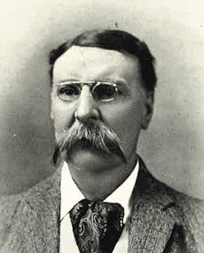
    James Haydn Waud is the more eminent of the two, with an article about his life in The Strad, alongside a wonderful photograph of him sporting a walrus moustache, which would have been the fashion of the day. James Haydn Waud was the nephew of JP Waud and, thanks to the internet and a gift from a friend in Canada, I have been able to unearth more information about the uncle.

    Joseph Pritchard Waud was born in Chelsea (London) on 30 July 1833 and in the 1861 census he was 26 years old and described as ‘proffesser of music’, but in later census entries he was a ‘teacher of music’. He married Eliza Walford in 1858 and the disparity in age between husband and wife, taken from each census, ranges from two or four to seven years. They had three children, a son who died at the age of four or five, and two daughters who also became music teachers. JP Waud’s biography on a family tree website states: “He performed on the pianoforte, double bass and violincello, is engaged at the Crystal Palace in the permanent band of the company also at the Theatre Royal Haymarket, and at various concerts. He also has private teaching. He lived at 306 King Street, West Fulham (renamed from 9 Grove Place in 1884)…” Joseph Pritchard Waud died on 7 July 1905 in Hove, West Sussex at the age of 71 and his will states that he left “all his money in his Post Office Savings Bank, all his land at Caterham Surrey and two double basses now in possession of nephew James Haydn Waud…” to his youngest daughter Miriam Priscilla Waud, described as a spinster.

    All very ordinary and nothing much of interest apart from being the composer of a Progressive Tutor for the Double Bass which was published in about 1895 by Augener & Co. (18 Great Marlborough St, London). I produced a volume of 30 studies from the Tutor some years ago but knew very little about the composer until now, thanks to a gift from my friend Wilmer (Bill) Fawcett. Bill and I have corresponded by email for a few years, recently about the music of Max Dauthage, and he mentioned that he had some music by JP Waud, and asked if would I like the copy? Of course I said yes, particularly because it was something I didn’t have but also knew nothing about.

    The package arrived a few weeks later and included two pieces by Othmar Klose alongside 6 Solo Studies for the Double Bass with Pianoforte Accompaniment by JP Waud. There is no publication date and the only clue to the publisher is ‘S.E.E. 321’, which sadly doesn’t mean anything to me, but my bass history appetite was whetted. The six pieces look very playable, with simple and supportive accompaniments, and it will be nice to bring them back into print over a century after they were first published. They are a similar ability level to the Eccles Sonata, primarily in bass clef, but venturing into thumb position, and would be ideal for the progressing bassist who is starting to play in low thumb position.

    Having searched the internet today I found more information about JP Waud and discovered that there are also two pieces for ‘Contra Bass (Double Bass) and Piano’, also arranged for cello, and four books of studies for violin or cello and piano. An Adagio in C and Andantino in A feature a description ‘These are within the capabilities of any ordinary double bass player; will be found very useful for practice; are excellent for teaching purposes; and well adapted for Concert Solos.’ They were published by Haynes & Co. (14 Gray’s Inn Rd, London), advertised in the June 1896 edition of ‘Strings: The Fiddler’s Magazine’, and it’s the first time I have found any information about JP Waud or his music.

    I contacted The British Library, who were very helpful but didn’t have a copy of either piece, so my journey begins today. The publisher no longer exists and where to start my search? The one thing I know is that patience is the key and it’s amazing how many pieces of music have surfaced in recent years, thanks to internet friends across the world. I’ll start looking, keep asking fellow bassists, and I am certain that copies will eventually be found.

    Are any of these long lost masterpieces? I doubt it or they wouldn’t have been forgotten, but they are still interesting footnotes in the development and history of the double bass in the UK at the end of the 19th-century. It would be nice to create new versions for the 21st-century and copies will be sent to The British Library, alongside many other national and international libraries, so that the music is available for future generations.

    David Heyes

    April 2025

    Recital Music Publications containing works by J.P Waud and J.H. Waud can be found here:
  • The Fascinating Life of Karel Reiner

    The Fascinating Life of Karel Reiner

    Sonata for double bass & piano

    “Karel Reiner (1910–79) – a major missing voice in Czech music – suffered under both of twentieth-century Europe’s major tyrannies. As a Jew he was imprisoned by the Nazis, miraculously surviving a series of atrocities: Terezín, Auschwitz, a camp near Dachau and a death march. Then, back in Prague after the War, he was accused of ‘formalism’ by the Communists.”

    Karel Reiner was born on 27 June 1910 in the small town of Žatec (Bohemia) into a middle class Jewish family. He studied composition at the Prague Conservatoire with Josef Suk, alongside theory and quarter-tone composition with Alois Hába – a pioneer of new musical trends. Reiner was much sought after to play Hába’s specially built quarter-tone piano and performed his final examination piece (Piano Sonata No.1) at the Vienna Contemporary Music Festival in 1932. He continued to compose, including music for the influential avant-garde theatre in Prague, but after the Nazi invasion of Czechoslovakia in 1938, he was unable to perform or publish any of his music.

    However, his works were played at many ‘underground’ concerts and the compositions continued to be written. From the middle of 1943 to September 1944 Reiner was a prisoner in Terezín (Theresienstadt) concentration camp, close to Prague. He was allowed to give concerts, played much contemporary music and also gave many music lessons, alongside writing theatre music for children and adults. In September 1944 he was sent from Terezín to the Auschwitz death camp, and then to Dachau, surviving a deadly typhus epidemic in Dachau, and he was the only Jewish composer to survive the atrocities of the Second World War.

    Reiner returned to Prague and believed that his music should now communicate and be available to everyone. Between 1950-54 his work slowly changed and evolved and he successfully combined traditional composition with contemporary musical expression. After the end of the war Reiner joined the Communist Party of Czechoslovakia and composed a number of political songs, which didn’t meet the expectations of the Party. Doris Grozdanovičová, a fellow Terezín inmate, remembers “…He met increasing resistance from the authorities: his style was too individualistic, too ‘formalist’, it didn’t conform with socialist prescriptions…And so he fell into a kind of isolation that had considerable consequences for his music…I think that the tragedy which explains why Reiner has remained unknown has to do above all with the fact that political developments meant that he couldn’t be played in public any more. His musical language was largely rejected by the authorities and so there were only a very few performances…In the aftermath of the ‘Prague Spring, he left the Communist Party of Czechoslovakia in 1970 and had to renounce all his official positions and performances of his music were banned.”

    Karel Reiner was a prolific composer, was liked by the musicians he worked with, wrote in almost every genre, and his music is certainly worthy of revival in the 21st-century. He died in Prague on 17 February 1979. Reiner’s Sonata for double bass and piano dates from 1958 and was published by Panton (Prague) a year later. It is dedicated to Professor František Hertl, one of the most important and active Czech bassists of the time, and is in three movements. Reiner decided to write a work for an instrument which didn’t have a huge repertoire and the result is a great work of enormous contrasts and breadth. Although the composer may not have been a double bassist, the solo line fits the instrument remarkably well and it is possible that Hertl, or another Czech bassist, helped with the technical aspects of the work. The three contrasting movements demonstrate a composer with an excellent knowledge of the capabilities and limitations of the double bass, is in a modern idiom, but is always lyrical and expressive. It was out or print for many years before Recital Music prepared a new edition in 2003, with the approval and help of the composer’s widow, Mrs Hana Reinerová, and it was reviewed soon after by Double Bassist magazine: “Karel Reiner’s Sonata for Double Bass and Piano (1958) opens in an aggressive and intensive way which immediately grabs the listener’s attention. The piece is full of strident dissonances; the bassist playing at full or near-full volume over a harmonically ambiguous piano accompaniment. While the piece is largely tonal, this tonality is constantly threatened by pungent semitones that populate its thematic material. Indeed, the strong presence of tonic and dominant relationships throws these contrasting dissonances into sharp relief. Those who know the Expressionist music of Alban Berg will find themselves on familiar ground here: this piece was written by a Holocaust survivor and the work’s ominous, dark atmosphere – full of shrill yet lyrical writing, dissonance and tonal ambiguity – seem to speak of the pain and anguish of the human condition rather than its triumphs. Technically, this is a very comfortable piece to play because most of the melodic material is based on thirds (particularly minor) and semitones, with few large leaps. The three movements vary significantly from one another: in the mournful second movement, marked Poco grave, the accompaniment explores various keys, which are constantly undermined and resisted by the double bass as it meanders around a semitone melody. Amid the tension created by this conflict, major and minor triads emerge dramatically. According to the notes accompanying the music, the third movement, Allegro vivo, is based on a Czech dance. While the harmonic language does not particularly lend itself to creating the sound of a joyful dance, this movement nevertheless has a spirited energy and concludes on the chord of B major. This is an interesting addition to the double bass repertoire; whether modern audiences will appreciate its brash and unremitting dissonance is open to debate.”

    American bassist, Michael Cameron, who has an excellent and exciting project to promote, perform and commission sonatas for double bass places Reiner’s Sonata as “…one of the top ten double bass sonatas in any period.” – with which I completely agree. He disagrees with some of Double Bassist’s review, especially the words “brash and unremitting dissonance” and writes “…this is hogwash. While not exactly a sunny piece, it is consistently tonal, and often quite lyrical.” Michael Cameron understands the work completely, which I am not sure the reviewer did, and its use of tonality and atonality, always within a lyrical and melodic approach, produces a modern piece which is accessible to players and audiences alike.

    Much like the Hindemith Sonata, the performance is dependent on the approach of the double bassist who is able to bring out the warm lyricism of both works or their more strident and acerbic qualities. The outer movements have great drive and energy, with a slow and passionate central movement which feels almost like a funeral march. The first movement (Allegro energico) is grand and confident with an opening theme of heroic quality and sets the tone for the movement. Both performers begin together, there is no piano introduction, and Reiner sets the dramatic and urgent mood immediately. The accompaniment is broad and imposing – sometimes a wash of colour and texture and at other times with a rhythmic impetus which drives the music along – and the composer makes effective use of the lower orchestral register, producing music which is richly dramatic and inventive. The slow movement (Poco grave) makes use of a chromatic influenced melody, again with no piano introduction, and creates an opportunity for the double bassist to sing in all registers and demonstrate far more than simply technical prowess. The opening theme is described as “…an aching lament expressing human sadness” in the text from the first edition of the work, and offers much to the bassist who can produce a warm and cantabile tone throughout the range of the instrument. The third movement (Allegro vivo) is different again. “… in a scherzo form and is in reality the finale of the whole composition. It’s musical expression, recalling in places the Czech “mateník” (an old Czech dance in variable time), is full of humour, both impetuous and playful. The lyrical contrasts give a picture of repose and relief. The basic character of the movement is its energetic humour…” There are many challenges for the bassist, both musical and technical, and the movement has a drive and momentum from beginning to end. The contrast of powerful and urgent rhythmic themes against lyrical and expressive episodes produces music of enormous breadth and appeal. Reiner takes his task seriously and the end result is a contemporary work which explores many facets of the solo double bass in all its glory. Both the musical and technical skills of the performer are challenged, producing a work which deserves to be better known, and although it has been recorded at least twice, it is still somewhat in the shadow of the Hertl, Hindemith and Mišek sonatas. Each composer offers the performer something different and possibly Reiner’s musical language is less obvious than the others, but is still a work which is worth exploring and should appeal to the serious double bassist, offering much to performers and audiences alike. I completely agree with Michael Cameron and think Karel Reiner’s Sonata is definitely in the top ten of sonatas from any period. How about you?

    Karel Reiner’s Sonata for double bass and piano will be available as a digital edition from Recital Music towards the end of 2025.

    David Heyes. March 2025.

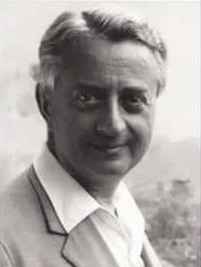
    Picture courtesy of David Heyes. Gifted to him by Hana, the widow of Karel Reiner.

  • Recital Music – A Retrospective

    Recital Music – A Retrospective

    Where have the years gone? Recital Music is 39 years old this year and 1986, when we first published two salon pieces by Vojta Kuchynka (Canzonetta & Desire) and Vincent Novello’s Aria: Thy Mighty Power for soprano, double bass and piano, seems like a lifetime ago.

    I was an enthusiastic 25 year-old in 1986 and, having just returned from a series of lessons in Prague with František Pošta, who had recently retired as Principal Bass of the Czech Philharmonic Orchestra, decided that this was the time to found Recital Music. František had given me copies of the two Kuchynka pieces and, as they were almost unknown to bassists, they seemed like a good place to start. 39 years later, I am still enthusiastic but marginally older, and so much has changed, not least the move from printed to digital editions, which have created many new opportunities, not least combining more than one piece in a publication. There are now no postal costs or delays, problems with customs and, with the click of a mouse, you can have the music instantly delivered to your Inbox.

    Many of our publications were transferable as pdf downloads, so we were able to hit the ground running when we started selling downloads with Double Bass HQ, adding Presto Music, Chimes Music and The Music Realm over the past two years. We are grateful to the four websites for their amazing support of Recital Music and the move to downloads was one of the best decisions I ever made for Recital Music. Many of our older editions were not available in pdf format and the difficult decision was which ones we should re-typeset, to retain in our catalogue, and which pieces to retire. Overall, I think we have made the right decisions and our bright new catalogue offers music from one to twenty basses, and from complete beginner to virtuoso, with many more publications still in the pipeline.

    Re-typesetting pieces has been a wonderful opportunity to reconnect with many pieces and one which is in preparation is Arietta for 12 double basses by Teppo Hauta-aho (1941-2021). Originally for 16 basses, the composer revised it before publication, realising that four parts were simply doubling things played by others and removing them made little difference to the piece overall. Arietta is a one-movement work, played entirely in harmonics across the entire range of the double bass, apart from bass 12 which grounds the ensemble with a confident pizzicato line in the lower register of the double bass. Teppo once joked that this was his only minimalist piece, which I think is true, and the repetitions create an evocative wall of sound which is something to behold in performance.

    Arietta has been played a few times at Bass-Fest, also at the Rotterdam Conservatoire, and would be ideal for any university or conservatoire department who are looking for an original piece which makes an instant impact. It isn’t particularly difficult, although Basses 1-4 may may need oxygen as they play in the highest register, otherwise it is a wonderful exercise in colour and texture, and demonstrates a different aspect to the usual perception of the double bass. I doubt that Arietta will sell thousands of copies but I am so pleased that it will be returning to our catalogue and hope that younger bassists will see the beauty and quality in this amazing piece.

    [David Heyes / 22 January 2025]

    Photograph courtesy of Sarah Poole.

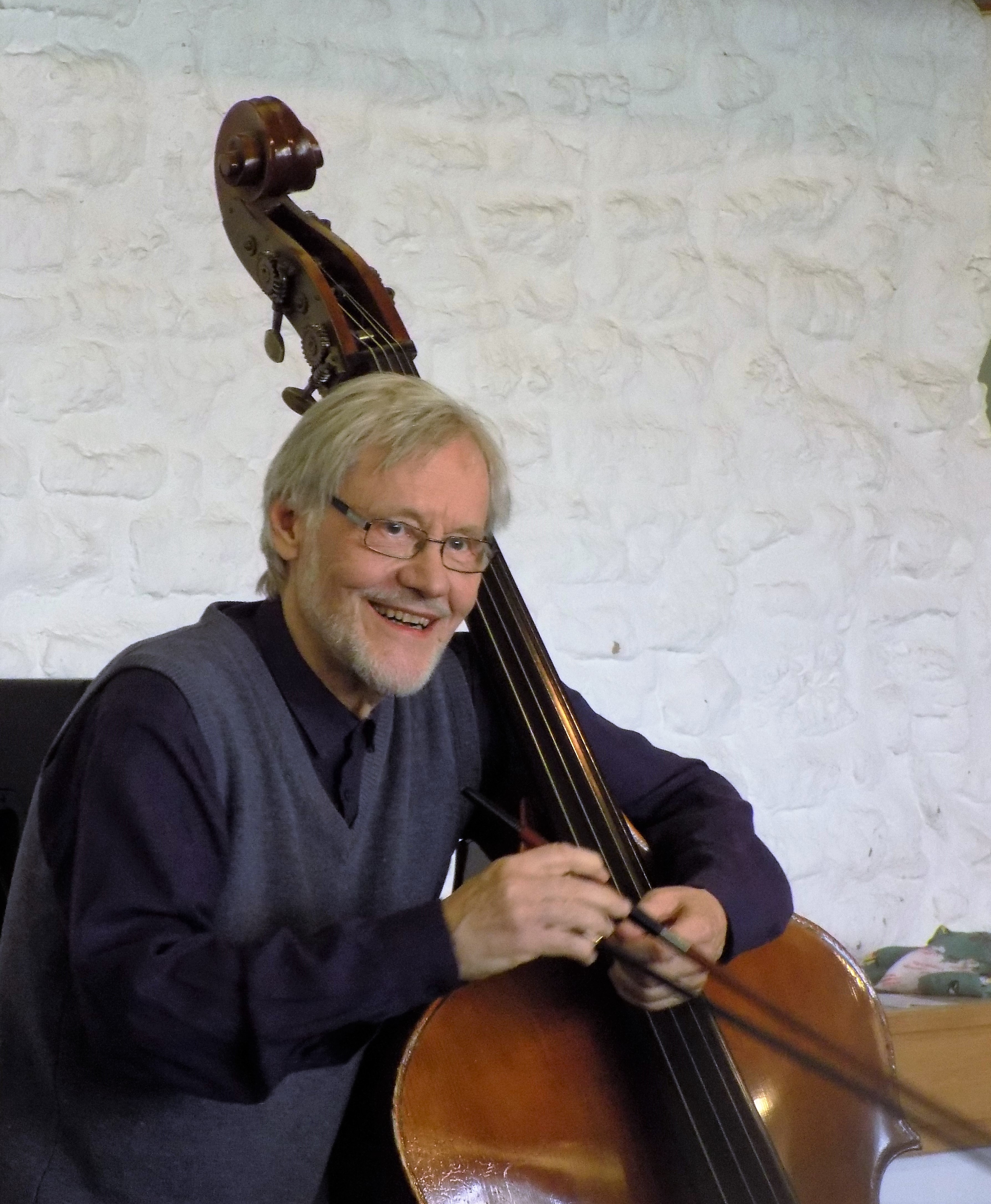
  • The double bass is a strange instrument!

    The double bass is a strange instrument!

    We are part of the string family when it suits our smaller instrumental cousins and excluded when it doesn’t. Not that anything has changed during my 41-year career as a professional bassist.

    Many Heads of Strings have been wonderful to work with, some less so, and my final one always thought I should know my place…which I most certainly didn’t and never have! Looking back, I have had to fight my corner many times so that my students have the same opportunities as violinists, violists and cellists.

    Chamber music is an essential part of the education of young string players and double bassists are no different. The enlightened institutions realise that a happy double bass teacher creates a happy double bass department and do include chamber music for bassists, usually a double bass quartet, as part of the music programme.

    When I first started to organise double bass workshops I quickly realised that the published quartets bore no resemblance to the ability levels of the bassists who were taking part, hence the need to arrange music for massed basses and also to commission new pieces. Quartets can often be played by massed forces and over the years I have arranged and commissioned hundreds of pieces for three or more bassists. The Elephant, Can-Can and Pizzicato Polka are three of my favourite transcriptions.

    Recital Music has an unrivalled catalogue of double bass trios, quartets, quintets and more, for most ability levels, and a current project is to create new repertoire for the youngest bassists, enabling chamber music to be part of the learning process from the earliest lessons. We now publish a number of trios and quartets by Michael Montgomery (USA) and David Heyes (UK) which only use open strings and easy bass percussion, all in 4/4 time, using both arco and pizzicato.

    The second part of the project features music for a slightly more advanced level, but only using 1st position, bass percussion and a few easy harmonics in 4th position to add height and clarity. Completed works to date include suites of pieces inspired by The Wind in the Willows, Moby Dick, Big Bad Wolf (aka Little Red Riding Hood) and The Legend of Sleepy Hollow, and these will be published imminently.

    Aesop’s Fables are being raided by English composer-bassist Christopher Field for the project and future ideas will possibly include The Jungle Book, Alice in Wonderland, Pinocchio and The Wonderful Wizard of Oz.

    I love nothing more than a new project and the present one to create a new repertoire for beginner bassists is one I am relishing. It’s amazing how things have changed over the past 40 years, which is surely a Golden Age for the double bass, and how exciting to be part a tiny part of this revolution.

    The double bass quartet as a music ensemble only dates back to the early 1930s and 90 years later young bassists are now able to be join this amazing world of chamber music. Onwards and upwards.

    David Heyes (2 December 2024)  

  • The Elephant

    Whether we like it or not, the double bass will be for ever linked with the large, lumbering and lugubrious elephant – much as the cello is with the elegant swan, or the tuba with Tubby!                                                                                                    

    It wasn’t always the case however, and certainly in the 18th-century the double bass was an important and respected solo instrument with a vast repertoire of concertos and solo works by Dittersdorf, Vanhal, Hoffmeister, Pichl, Kohaut, Mozart, Koželuch, Sperger, Zimmerman and Haydn. In the 19th-century Giovanni Bottesini (1821-1889) was able to dispel the myth that the double bass was only an orchestral or bass-line instrument, and one report noted that his bass sounded like a ‘cage full of nightingales’.

    From 1886, the year of its composition, and 1922, the year of publication, the image of the double bass was changed for ever. The Carnival of the Animals by Camille Saint-Saëns (1835-1921), a perennial favourite at children’s concerts, represented the double bass in a humorous ‘pomposo’ way and we are now blessed with our own ‘national anthem’. The Carnival of the Animals is one of Saint-Saëns’ most popular works and it is perhaps ironic that, in a career lasting almost seventy years and having composed operas, concertos, symphonies, choral works and chamber music, he should be best remembered for a work that was only written as a musical relaxation.

    Saint-Saëns’ misgivings about the popularity of The Carnival of the Animals overshadowing his many other great achievements was entirely accurate, and it was not released for publication until after his death in 1921. The complete work was published the following year, just over thirty-five years after its composition, and The Elephant was released into the musical community. It is a rare work of musical humour which never fails to thrill its audience, young or old.

    The Elephant exists in a variety of editions, was used as background music for a series of television adverts for a well-known UK superstore, and inspired the ever-popular The Elephant’s Gavotte by New York bassist, David Walter. One other enduring image is of an almost endless line of bassists standing along the promenade in Port Erin, performing The Elephant during the 1978 Isle of Man Double Bass Competition & Festival. Director, John Bethell, astride a large inflatable elephant, conducted the assemble bassists as Clifford Lee manfully provided the accompaniment on a piano which had been dragged across the beach. This was an excellent publicity opportunity, recorded by the BBC, and what else could they play?

    The Elephant is the fifth movement of The Carnival of the Animals and, although only 52 bars long and lasting a little over a minute, it has really captured the imagination of the concert-going public. In E flat major and in 3/8 time, it remains in the lower orchestral register for much of the time and is a musical joke par excellence. Saint-Saëns created a work of great invention and imagination, whether we like it or not, and he has imbued the work with great skill and humour which is typical of the suite as a whole.

    The Elephant begins in a grand and heroic style, with a strong four-bar chordal introduction, although bars two and four lack a downbeat, which is one thing a waltz-inspired piece needs above all things, and the double bass is ‘wrong-footed’ immediately with an upbeat theme which begins on the first beat of the bar. Extracts from Berlioz’s Danse des Sylphes (The Damnation of Faust) and Mendelssohn’s Scherzo from A Midsummer Night’s Dream, adapted in an elephantine style and several octaves lower than the original, are used to offer the double bass and opportunity to dance elegantly.

    The original music returns, but now with a light harp-like accompaniment, and little by little the two instruments come together until they play in unison followed by a two-bar scalic-run from the lowest register of the double bass, offering one brief pirouette for the heroic pachyderm, before a two-bar coda confidently states “That’s All!” with its final two chords.

    The music is witty and cleverly written to describe the elephant and is a minor musical masterpiece. It is probably the first piece to introduce the double bass to a general audience and, although the double is so much more than this one piece, we all embrace it to the present day and I can guarantee that every bassist will have played it at least once in their musical career.

    David Heyes
    D’Addario Performing Artist
    16 October 2024

  • When I Grow Up I want to Be a …

    What did you want to be when you grow up? Amazingly, at the age of about 16 or 17 I wanted to be a publisher with a company specialising in music for the double bass, and do you know what? I achieved my dream and in two years time Recital Music will be 40 years old.

    I started playing the double bass at school at the age of 14, when all music lessons were free, and my passion for our repertoire and the composers who wrote for us, quickly took hold and hasn’t changed in all that time. Yorke Edition, founded in 1969 by Rodney Slatford, published music for double bass and I played many of their pieces for the ABRSM grade exams; I read about American bassist Bert Turetzky and his pioneering work to encourage contemporary composers to write for the instrument, and my second teacher, Laurence Gray, told me about the Paris Conservatoire and their decades long project to commission one new double bass piece to be performed by the graduating bassists in their final recital. All these influences played their part in my plan.

    Magazines from the USA-based International Society of Bassists opened up a world of possibilities for me and in 1986, having just returned from studying in Prague with František Pošta, Recital Music was started with two salon pieces for double bass and piano by Vojta Kuchynka (1871-1942), which I had brought back with me from Prague and were not available in the West and they remain in our catalogue to this day.

    38 years later, Recital Music has now moved to digital editions, encouraged by the changing music business and musical world, and we have the largest catalogue of double bass music in the world. We publish music for every ability level, from complete beginner to virtuoso and from one bass to twenty, including music from the 15th-century to this year. Many significant double bass composers of our day are featured in our catalogue, alongside composers from the past, and we publish a wealth of transcriptions of all styles and idioms.

    Having bought and played many of the double bass pieces on the ABRSM grade lists in the 1970s, Recital Music is now the largest independent publisher on the grade lists of both the ABRSM and Trinity College (London), and my name is also  there as a composer, editor and arranger. 

    The journey from my dream of starting a publishing company to now has been eventful and exciting but I wouldn’t have changed one minute of it. How lucky am I? Even as a schoolboy I knew I wanted to be a professional double bassist and start a publishing company and I achieved both dreams and far more than I could have imagined. Dare to dream and it’s amazing what you can achieve if you have belief and a little bit of luck!

    David Heyes
    D’Addario Performing Artist and Founder of Recital Music, (probably the best collection of Double Bass music on the planet)

  • Music Theory for Parents – or anyone looking for ideas.

    Playing an instrument is fun… or at least it should be. Theory? Well, the existence of any fun factor can be a little more difficult to find, but we have to try if only “because you have to” will only get you so far! Fortunately, there are things that can help.

    So, what is the fun stuff you can do?

    I like flash cards because they can be a really fun way to learn. What on earth, you may well ask, are flash cards? Well, basically, they are small cards which have various musical symbols (notes, key signatures, intervals etc) printed on one side with the answer to what that symbol is on the other side of the card. This means you can have some fun with guessing game type questions. And (possibly) pretend to know more than you really do! My personal favourites are the Poco Studio series by Ying Ying Ng. They are a little bit dearer than some of the others, but are well-thought out, with lots of content, and kids seem to love the colours. Not me so much though – my cataracts are kicking in!

    One of the pioneers of this approach was Maureen Cox. Her “Theory is Fun” series have been best sellers since they were first published in the early 1990’s, and her series of books are regularly up-dated to take account of changes to the exam board syllabus requirements. They are useful back up books to help give students extra help, and are aimed at getting through an exam. These days there is much more to choose from. Lina Ng’s colourful Theory of Music Made Easy and My First/Second/Third Theory are designed at a pre-grade 1 level and are packed with examples and exercises. Well worth looking at.

    Sooner or later, your child (or you) will have to or want to take grade exams with either the ABRSM, Trinity or the London College of Music. Written specifically for string players, the Hey Presto books by respected teacher Georgia Vale are excellent in this respect, and are available to download here. There also there are lots of extra books which can help. Guy Cremnitz’s book have loads of examples to work through which make them good value. I also particularly like Loh Phaik Kheung’s “Theory of Music Made Easy” series, which is one of the few books published independently of the examination boards that actually goes up to Grade 8. And if I were doing Grade 8 music theory, I would take all the help I could get!     

    Buy from Amazon

  • Which Bass Rosin Should I Buy?

    Not a problem, I’ll look online – BUT: suddenly I am faced with dozens and dozens of different rosins, so which is the right one for me?

    There are so many factors to take into account. If you are an orchestral player, you will probably need one of the stronger rosins but if you are a beginner, maybe a more general rosin might be better. Baroque players need something different again, some soloists prefer violin rosin, so where do I start?

    Do you live in a hot or cold country? That will determine which rosins are most suitable for your climate, and possibly which ones to avoid.

    There are so many questions but also a similar number of answers. Over the years I have used rosins by Hidersine, Eugene Cruft, Pops, Carlsson, Nyman and Leatherwood Bespoke, maybe even more, and at the time the one I was using was my favourite. For many, many years I used Nyman’s rosin, which most of my students also liked, and which seemed ideal for the British climate, apart from the hottest spells when many a bass or bow case has been covered in a sticky rosin residue, which seems to glue everything together for weeks, but overall, it was good for all my playing needs – solo, chamber music and the occasional orchestral date.

    A few years ago everyone was raving about the new Leatherwood Bespoke rosin (the amber range), which seemed inordinately expensive, but many friends from around the world raved about the rosin, so I ordered two pots from Australia and settled on 20% and 25%, because I do more solo than orchestral playing nowadays, and waited for the post to arrive. It duly did and I absolutely fell in love with the 25% which produced a clear tone across all the registers and suited my bass and strings perfectly. I now only use Leatherwood and love everything about the rosin and am about to order two new pots, although I see they no longer produce a 25% mix so I’ll buy a 20% and 30% and use one swipe from each to hopefully create something like a 25% rosin which I like.

    Which rosin is best for you? There are so many different ones to choose from, alongside different string types, playing styles and temperatures, and my advice would be to ask your teacher, a friend or colleague, who will give you good advice from a local perspective, or read some of the online reviews (like this one 😊) and take a chance that it’s the right one for you. Rosin, on the whole, is inexpensive so it isn’t such a big investment if you don’t like the one you have bought.

    Personal recommendation is a good starting point and my first pot of rosin was at the back of a cupboard in our music department at school alongside a hardback copy of the Simandl Method, and that’s how I started. I can’t remember which rosin it was but it would have been old, I am certain of that, but other bassists and teachers were happy to help with suggesting different rosins and I never looked back. I know what I like, I know what I don’t like, but there is something out there for everyone.

    Happy rosin hunting.

    David Heyes
    D’Addario Performing Artist
    4 September 2024

  • Hen’s teeth & other rarities

    Hen’s teeth & other rarities

    So, this will probably seem a bit weird. Just to clarify things; we are an online company. Which means no shop, no premises, etc. However, here is the thing; I’ve worked since 1981 in various music shops. Yes, you’ve read that right, and it does make me quite old. In that time, if there is one thing I have learnt, it is that your local music shop (if you have one, and that is a big “if” these days – they are becoming as rare as hen’s teeth) can be the most wonderful thing. A treasure trove of knowledge, help and information. I personally think they are irreplaceable, but there are few left these days, particularly the kind I worked in – a shop which had a range of products from accessories, instruments and printed music.

    I have had the most amazing luck to work with people who know an incredible amount about music. The people I worked with were musicians, which means that by the time they walked through the door they already had 15 years (or more) of real-life experience about music. They have usually started playing when they are 5 or thereabouts and already know about composers, repertoire, which reeds or strings to use, and so on. And my brother has bought 3 guitars from Wunjo in Denmark Street, even though he doesn’t live anywhere near London, largely because of the quality of advice he has had from the staff there.

    Online shopping has its’ value (convenience, price, choice and so on), but for me there is nothing quite like walking into a shop and looking at what they have and asking for help and advice – after all, no online site can restring your violin for you! 

  • It’s All About the Performance, Stupid!

    It’s All About the Performance, Stupid!

    Look, I know you might find that title offensive, but it’s not all about you. In fact in this case it’s not even about you. But it is about me. OK….. it might be about you as well. It depends if you’re going through what I went through when I started learning music. learning to play the piano.

    There are, broadly speaking, two types of people in the world, the Show-offs and the !Show-offs. The ! before the word means “Not”. You’ll see this a lot in Maths and programming, as in if( ! is_product() ) return $content; meaning if it isn’t a product show the content field. You probably had/have one in your class, always playing around hoping to distract everyone from the fact that he hasn’t a clue but also stopping you finding out what you want to know. And then there’s you. Whilst not a shrinking violet you don’t really want to come forward and take the spotlight.

    And you’re learning to play a musical instrument.

    Welcome to the select club of people who actually decided to do something about making musing instead of just listening to (and criticising) those who do make it.

    You know, I used to wonder why so many pianists I’d watch on TV used to sit hunched over, then start moving their bodies about, and lifting their arms up high before gently touching down on the keys. Couldn’t possibly make any difference could it? I mean, you push the key down, the hammer is triggered and strikes the strings. How much control do you have there? I’ve been playing some Beethoven recently where I’m trying to make the last note of a piano sonata movement so quiet a listener might think I’d not played the note at all. Just a hint of a sound. I found the only way I could really do that was theatrically. Even if there’s no-one else to hear I find I’m still putting on a performance, and that is the essence of playing music.

    Another post on this site notes that the Japanese have a 3 word concept of the learning process – Shu, Ha, Ri. Learn by copying. Adapt to your personality and physique. Reinvent the wheel, by which I mean create a new type of music.

    How often has a teacher told you to pay attention to the phrasing? Because it’s the phrasing that’s going to help you perform the piece. When my teachers were saying that to me I just didn’t get it. What I was reading on the page didn’t make any sense to me. Over the years I grew to understand the concept of phrasing but still what I was reading just didn’t work for me, and one day I realised that what I was reading was just Someone Else’s Idea of how the music should sound. I didn’t have to like it. I tried it out in a grade exam (probably not the smartest move to make) on a piece where I really didn’t like either the dynamics or the phrasing. The examiner asked my why I didn’t play the dynamics as scored. I replied that I thought they sounded wrong that way.

    That performance got me the best marks of the three pieces I played that day.

    Now I don’t have a teacher and I can play anything the way I like and want to play, can try different things out and see how they work. Maybe I want to play something by a band that had 5 guitarists and 4 singers, and there’s just me and my ol’ six-string (but not the one from the 5-&-Dime – I broke that some years ago. See the post on Instrument Stands for the reason). I can’t sound like there’s 5 of me on guitar, and the best multiple personality in the world still can’t make you sound like 4 people singing. Why not use a rasgueado in a song that talks about dancing with senoritas when the band had a whole mariachi trumpet section or put church bells in over Hotel California?

    But I realise, now, that even in that exam I took, and those that followed, I was just putting on a performance. OK, so there’s only one in the Audience but that was a very important One. and then I realised that you actually have to practise the performance elements of music as well. There’s this weird word that gets tossed around – Musicality. It’s not the song, it’s how you sing it, it’s not the prelude it’s how you play it. You can make the Twelve Variations on “Ah vous dirai-je, Maman” by Wolfgang Amadeus Mozart (Twinkle Twinkle Little Star in English) sound like the most amazing repertoire piece – if you perform it right. But if you practise it like you’re Pinocchio you’ll get on stage and play it the same way. Should you choose to do that I’d suggest wearing a crash helmet (I’ve played some rough venues – Kindergartens – those kids are mean!!) .

    It doesn’t matter if you’re in a band, orchestra or a soloist practise each piece as if you were playing it on a stage at Glastonbury because you need every finger and arm movement seriously embedded in your muscles. You seriously do NOT want to be thinking about how to move your fingers in front of 100,000 people. You do want to be looking at them and thinking how you can play this bit better and if you’ve got that firm foundation from all that practise you can experiment a little in the live performance. Better still do that experimentation in front of a small crowd at your local pub. The Rolling Stones used to do that, so they worked all the kinks out (no, not the band) before their big tours.

    And remember, even if you’re just busking, or sitting round the camp fire, or just on the beach playing your instrument you’re still putting on a performance. the people with you want to be entertained by what you play, not bored to death.

    To paraphrase Big Bill, Life’s a stage and we are but players on it. We have a part to play, be it mandolin, flute, guitar, or vocalist.

    I thought we’d end this post with a bit about one of the best vocal performers of the 1960s, Janice Joplin, performing Ball and Chain at the Monterey Pop Festival. This was a live performance, unchoreographed as most were, straight from the heart. In the audience was another one of the 60s best female vocal artists, Mama Cass. Her reactions to this performance? Judge for your self.

The Music Realm
Privacy Overview

This website uses cookies so that we can provide you with the best user experience possible. Cookie information is stored in your browser and performs functions such as recognising you when you return to our website and helping our team to understand which sections of the website you find most interesting and useful.